
Shops using bin labels over the long term
For bins and shelves that are handled or cleaned frequently, the material, adhesion and legibility all matter. Test the tape on the actual surface.


First, choose a label material and size to suit the surface, how long you need it to last and the space available on the part or bin. Laminated tape is an option for narrow labels that need to remain legible over time. Roll labels can suit repeated printing, but Zebra Technologies says direct thermal prints are less suitable for prolonged exposure to heat, light or wear. Then check the feed method and compatible supplies, and test a sample label on the actual surface.
For bins and shelves that are handled or cleaned frequently, the material, adhesion and legibility all matter. Test the tape on the actual surface.
If you regularly create stock labels or barcodes, consider the label sizes available and how codes can be entered as part of your workflow.
If you only make a label now and then, the choice between entering text on the printer and designing labels on a phone or tablet may be a deciding factor.
Start by considering the conditions in which the label needs to remain legible. Then check the space available and the code you need to print, before choosing an input method and supplies that fit your workflow.
| What to consider | What should you check? | Who is this important for? |
|---|---|---|
| Adhesion and legibility | Test the label on the actual bin, shelf or part, and consider its expected exposure to heat, light and friction. | If I need labels for bins that are handled or cleaned frequently, I want to know whether the tape and adhesive suit the surface. Around 36% of consumers put long-lasting legibility first. |
| Size and product code | Measure the available labelling area and print a sample of the longest code or barcode you use. | For consumers who need to read codes on small bins, the label must fit and leave room for the code. Around 29% give the greatest priority to a suitable size and legibility. |
| Input and printing | Check whether you want to enter codes on the printer, through an app or from a computer, and which connection the model supports. | If I make individual labels in different locations, I want an input method that suits my workspace. Around 21% of consumers prioritise how they enter and print information. |
| Supplies | Check which widths and materials are compatible, and whether the printer you choose needs tape, labels, ribbon or ink. | For consumers who want to match their supplies to their labelling tasks, availability and model compatibility matter. Around 14% make this their first consideration. |
Zebra Technologies says direct thermal labels are less suitable for prolonged exposure to heat, direct sunlight or wear. In these conditions, the print may not remain suitable for long-term identification.
Consider how long the label needs to remain legible and what conditions it will face. For labels used over the long term, compare suitable laminated tape or a thermal transfer model.
If a print becomes illegible in the conditions it is used in, you may need to print and apply a new label.
According to DYMO, the DYMO LabelWriter 550 works only with DYMO-branded labels. Other printers may require tapes or ribbons made for specific models.
Before choosing a printer, check which material is compatible with the exact model and the label size you need.
Remember to factor in the compatible tapes, labels and, if needed, ribbon or ink for your chosen printing method.
The Zebra ZD421 range includes direct thermal and thermal transfer models. The printing method and compatible materials are therefore not the same for every version.
Before choosing a model, check the full specification, printing method, resolution and the labels or ribbons it needs.
P-touch models are worth considering for narrow tape labels, with input options including a keyboard, USB or Bluetooth, depending on the model.
The LabelWriter 550 is an option for roll labels at a fixed workstation.
The ZD421 desktop range is worth considering for stock and barcode labels on rolls.
The CW-C4000e series is designed for situations where labels genuinely need colour information.
This selection includes mobile label printers for occasional tasks and a Brother P-touch model for tape and shelf labels.
 No image available
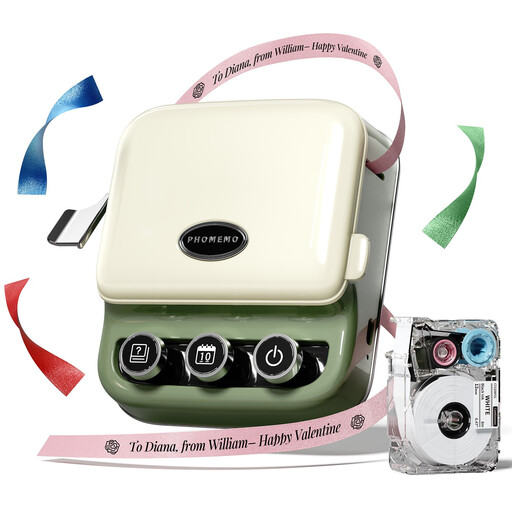
Suitable for occasional labelling tasks when you want to design and print labels on the go.
Bluetooth, built-in rechargeable battery and label widths of 20–50 mm. The product description mentions barcode and QR code printing, Excel import and batch printing.
 No image available
A mobile option for stock labels when you want to process codes in batches.
The product description mentions Bluetooth, a rechargeable battery, label widths of 20–50 mm, barcode and QR code printing, Excel import and batch printing.
 No image available
Worth considering for mobile identification using codes on small labels.
The product title lists a label width of 0.59 inch. The product description mentions Bluetooth and barcode and QR code features in the app.
 No image available
A mobile label maker to consider for short labels designed on a smartphone or tablet.
The maximum label width is 1,2 cm. The product listing mentions a roll of white paper labels included.
 No image available
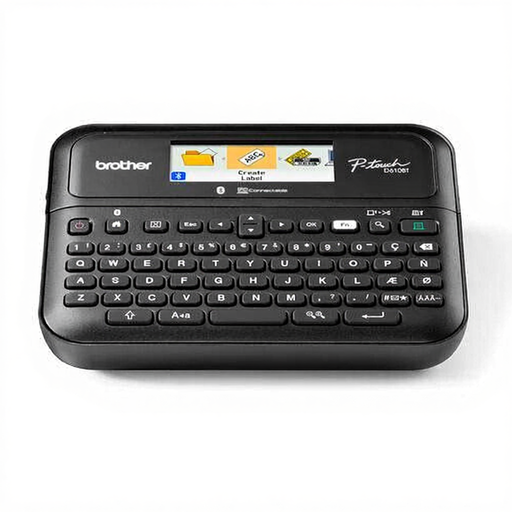
Suitable for bin and shelf labels if you value a choice of TZe tape widths and operation via a phone or PC.
Brother lists TZe widths of 3,5, 6, 9, 12, 18 and 24 mm. The product listing mentions thermal transfer and Bluetooth; check that the tape you choose suits the surface.
No. Check the exact model, supported width and material. Brother lists tapes up to 18 mm for the PT-D410VP; DYMO says the LabelWriter 550 works only with DYMO-branded labels.
Print your longest actual code at the intended label size and test it on the actual bin or part with your own scanner. For labels exposed to heat, light or wear over a long period, Zebra Technologies describes direct thermal prints as less suitable.
The Brother PT-D410VP has a built-in keyboard. According to Brother, you can design and print with the PT-P710BT using a mobile app and Bluetooth, or from a computer; check which input method is supported by the exact model.
Check which tapes or labels are compatible with the printer and whether thermal transfer printing requires a ribbon. Do not assume materials are interchangeable; also check which software and controls are supported by the exact model.
According to Ondernemersplein, the manufacturer must apply a CE marking to the electrical appliance if it has been tested and meets the applicable requirements.