
Manager of frequently used parts
Needs codes on boxes and frequently handled parts to remain legible. Choose tape to suit the surface and conditions.


Choose a printer with its own keyboard if volunteers need to make labels on the spot without a phone; an app-based model is a good fit if using a shared mobile device works for your team. First, decide which tape suits the surface and how it will be used, then check the cassette family and permitted tape width for each printer. Brother and DYMO describe the features of their tapes; these descriptions are not the result of comparative durability testing.
Needs codes on boxes and frequently handled parts to remain legible. Choose tape to suit the surface and conditions.
Wants to be able to type a label by the stock cupboard without first having to arrange a phone or app.
Wants to use consistent names or codes, and pays attention to tape width and suitable refills.
Choose how to operate the printer based on who will be making labels and where; then match the tape to the boxes or parts you want to label.
Choose this when: different volunteers need to enter text or codes on the spot without a phone or app.
Consider: designing on a computer requires a USB connection for the Brother PT-D410VP; also check which cassette is included.
Choose this when: a phone or tablet is available at the storage area for designing labels.
Consider: operation depends on using an app; Brother states that the PT-P300BT supports TZe tape up to 12 mm and has an optional adapter.
Choose this when: labels for clean, flat boxes or parts are all you need.
Consider: DYMO describes D1 Durable as a separate option for tougher conditions; choose a cassette to suit the surface.
Before buying, also check that the tape suits the surface and the code width you need, and is compatible with the printer. Brother describes TZe as laminated tape; DYMO distinguishes between D1 Standard and D1 Durable. These are the manufacturers’ descriptions, not a guarantee that the tape will work on every surface.
| What to consider | What should you check? | Who is this important for? |
|---|---|---|
| Legibility and adhesion | Match the tape to the surface and conditions; try a representative label on a similar box or part. | If I label parts that are handled often, I want the label to suit the surface and how it will be used. Around 40% of consumers prioritise legibility and adhesion. |
| Direct operation | Check whether users can type without a phone, or have access to the device and app. | If several volunteers make labels by the stock cupboard, I want to be able to enter text there straight away. Around 30% of consumers prioritise direct operation. |
| Tape and refills | Check the cassette family and permitted width for the exact model, and which refills are compatible. | For regular label use, I want to be able to find refills that fit the printer. Around 20% of consumers prioritise tape compatibility and refills. |
| Consistent codes and designs | Decide whether you need fixed templates or barcodes, and which device you will use to design them. | If we use consistent names or part codes, I want to be able to create them in a consistent way. Around 10% of consumers prioritise repeatable designs. |
TZe and D1 are different cassette families, and available widths and uses vary by model and tape.
Before ordering refills, check the full printer model, cassette family and required width.
DYMO describes D1 Standard as suitable for clean, flat surfaces and lists D1 Durable as a separate option for tougher conditions.
Choose tape to suit the surface you’ll actually be labelling, and test the combination first on a similar box or part.
The Brother PT-P300BT is operated via a mobile app; the PT-D410VP has its own keyboard.
Decide who will make labels on site and check that the required device and suitable power supply are available.
The PT-D410VP combines a keyboard with USB; the PT-P300BT uses a mobile app. These are features of these specific models, not every Brother product.
The LabelManager 160 is a compact printer for D1 tape labels. DYMO describes Standard and Durable cassettes for different uses.
LabelWorks is a relevant product range to consider as an alternative. According to Epson Netherlands, the Epson LW-600P mentioned here has been discontinued.
This Joybuy selection includes Bluetooth printers for use with a mobile device, as well as Brother models for different labelling workflows. For each printer, check which cassette or label material suits the parts and boxes you want to label.
 No image available
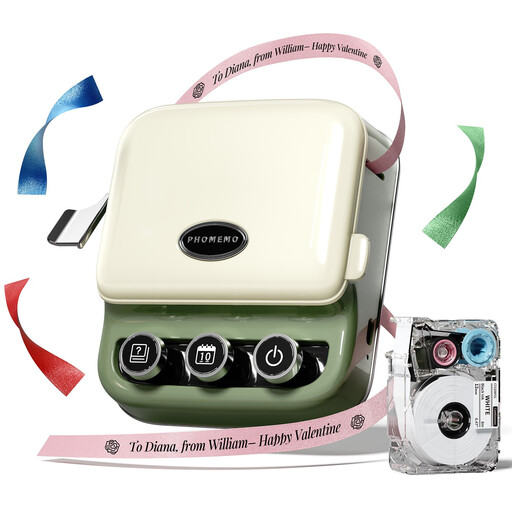
Suited to a workflow where labels are made using a mobile device; the product information mentions Bluetooth and the Print Master app.
The title mentions a label roll and an included refill.
 No image available
Suited to a workflow where labels are made using a mobile device; the product information mentions Bluetooth and the Print Master app.
The product name describes this model as portable.
 No image available
Suited to a workflow that uses app control; the product information mentions Bluetooth and operation via an app.
It requires four AA batteries, which are not included.
 No image available
Suited to a workflow where a phone or tablet is available for making labels; Brother describes this model as app-operated.
Brother states that it supports TZe tape up to 12 mm. According to Brother, the optional adapter is not included.
 No image available
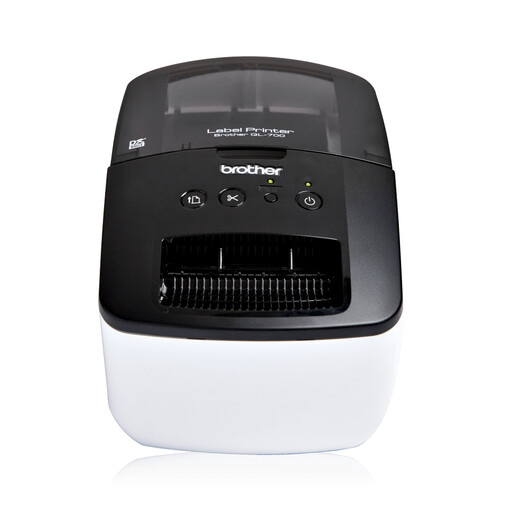
May be a good fit if labels for stock or archive folders and computer use suit the way your team works.
The product name lists DK label material, thermal printing, 300 x 300 DPI and 150 mm/sec. Check that the label material suits the intended use.
Choose tape to suit the surface and conditions. DYMO describes D1 Standard as suitable for clean, flat surfaces and D1 Durable as suitable for tougher conditions; Brother describes TZe as laminated tape. Check cassette compatibility and test your chosen combination on a similar surface. These are manufacturers’ descriptions, not an independent comparison.
No, it depends on the model: the Brother PT-D410VP has its own keyboard, while the Brother PT-P300BT is operated via an app on a phone or tablet, according to Brother.
Check the cassette family and tape width for the exact printer model. Also make a note of who is making the purchase: ACM information about the statutory consumer guarantee does not necessarily apply to a purchase made primarily for business purposes or on behalf of an organisation.
According to the European Union, CE marking is required when applicable harmonised product rules specify it; a CE logo is not a performance test. The Dutch government states that the take-back scheme mentioned for retailers under the old-for-new rule applies to equipment from private individuals, not businesses. So first establish who owns the printer and which return route applies.