
Shop that sends parcels
You create your own shipping labels, so check that the printer, labels and format from your shipping software are compatible. Brother Netherlands lists 100 × 150 mm as a supported size for the QL-1110NWBc.


If you mainly print address labels for envelopes, a compact printer for narrow labels may be all you need. For 100 × 150 mm parcel labels, you’ll need a model that actually supports that size. First check the format provided by your shipping software, then make sure the printer has the right connection and is compatible with suitable label rolls.
You create your own shipping labels, so check that the printer, labels and format from your shipping software are compatible. Brother Netherlands lists 100 × 150 mm as a supported size for the QL-1110NWBc.
You mainly print small address labels. You won’t necessarily need a wide-format parcel label printer: Brother Netherlands lists address labels as one of the uses for the QL-700.
You may want to print from different devices or workstations. Check the connections on the exact model: Brother Netherlands and TSC Printers EMEA describe different connectivity options across their models and printer series.
Choose this option: if you mainly print labels for envelopes and small address stickers, and don’t need 100 × 150 mm parcel labels.
Bear in mind: according to Brother Netherlands, the Brother QL-700 has a maximum label width of 62 mm, so it can’t handle the full width of a 100 × 150 mm label.
Choose this option: if your shipping software produces 100 × 150 mm labels and you want to print them yourself.
Bear in mind: check the supported label size and connection for the exact version. PostNL warns that labels from its Labelling API should not be resized.
Choose this option: if you only send a parcel occasionally and don’t need a dedicated label printer.
Bear in mind: you’ll need a suitable way to print and attach the label for each shipment. For one of its listed shipping options, PostNL also describes printing at a PostNL point; check whether this works with your business shipping process.
| What to consider | What should you check? | Who is this important for? |
|---|---|---|
| Size and barcode readability | Compare the format from your shipping software with the printer width, then print a test label. Don’t resize a label from the PostNL Labelling API without checking first. | If I print parcel labels, the size needs to work with my shipping workflow and the barcode must remain sharp. Around 33% of consumers prioritise parcel label size and readability. |
| Width for address labels | Measure your stickers and check the maximum label width; Brother Netherlands lists a maximum of 62 mm for the QL-700. | For sending letters in envelopes, I want a printer that suits my small address labels without needing a parcel-sized format. Around 27% of consumers prioritise narrow address labels. |
| Compatible label rolls | Check the brand, size and roll compatibility for the exact model. DYMO says the LabelWriter 5 series doesn’t accept third-party labels. | I want to know in advance which rolls will work with my printer, so I can keep using a suitable one. Around 20% of consumers prioritise compatible labels and their availability. |
| Connection for each workstation | Decide which devices you’ll print from and check that both the printer connection and your shipping software are compatible. | If several people or workstations need labels, I want the version I choose to work with that setup. Around 20% of consumers prioritise shared printing. |
According to Brother Netherlands, the Brother QL-700 accepts labels up to 62 mm wide, while PostNL offers 100 × 150 mm shipping labels. A printer for small stickers may therefore be too narrow for that parcel label size.
Before choosing a model, compare the format from your shipping software with the specifications for both the printer and the roll.
If the size isn’t compatible, you may need a different printer or another way to print.
DYMO says the LabelWriter 5 series doesn’t accept third-party labels. So check the roll compatibility of the exact printer model.
Compare which label rolls you can use and whether their size suits the labels you want to print.
TSC describes different connectivity options across the DA series. So the connections on one model don’t necessarily tell you what to expect from another model in the series.
Check the full model number and make sure its connections work with the devices and software you actually use.
Brother describes the QL-700 as suitable for address labels and the QL-1110NWBc as a model for wider shipping labels.
According to its product information, DYMO designed the LabelWriter 5XL for wide shipping labels and lists USB or LAN connectivity.
The Zebra ZD220 is a desktop printer worth considering if you’re looking for a wider printer with USB connectivity.
TSC describes the DA series as a range of desktop models for uses including shipping labels and small offices.
These Joybuy product picks are worth considering for label printing in a small shop. For each model, check that the label width, label roll and connection are right for your address or shipping labels.
 No image available
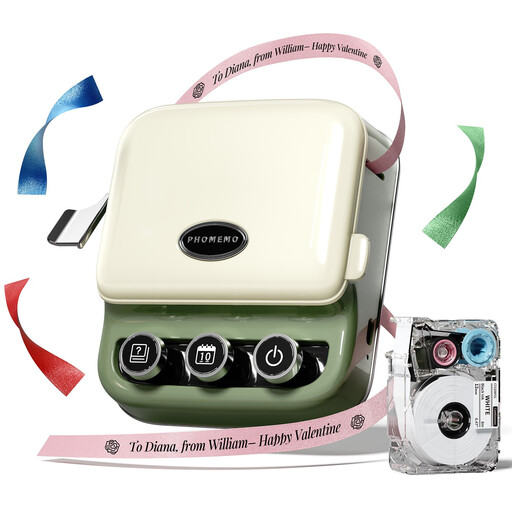
The product description mentions Bluetooth printing from a phone, tablet or PC.
The description distinguishes between label printing and ribbon printing; check which function and refill are right for your labels.
 No image available
The description mentions address labels and use in shops; check that the size is right for your labels.
Supported label widths: 20–50 mm. The product description mentions Bluetooth printing via the Print Master app.
 No image available
The description mentions using it with a phone or tablet at home or in the office; check that the label width is suitable for your address stickers.
The title lists a label width of 0.59 inch. The description mentions Bluetooth and a rechargeable battery.
 No image available
The product description mentions portable use and printing from a phone or tablet; check whether the labels are suitable for your needs.
The description lists Bluetooth and a maximum label width of 1.2 cm. The title mentions compatibility with iOS and Android.
 No image available
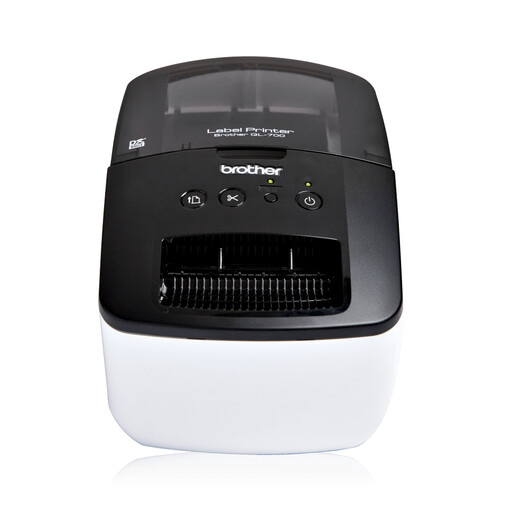
The product description mentions address labels for envelopes; this model is suitable for that job if your labels are no wider than 62 mm.
The description lists USB, an automatic cutter and software for Windows and Mac. The product title lists a print speed of 150 mm/sec.
No, not necessarily. For one of its listed shipping options, PostNL also describes printing with a standard printer or at a PostNL point. Check whether this approach works for your business shipping process.
Don’t assume you can. PostNL says labels from the Labelling API should not be resized. Use the format provided by your shipping option and check that your printer supports it.
Install the software and drivers for the exact model, then test a label using your shipping workflow. DYMO has separate cleaning instructions for the LabelWriter 5 series; check whether the maintenance guidance applies to your model.
As well as the printer, check which label rolls are compatible with the model. The Dutch government says the 14-day cooling-off period that applies to consumers doesn’t apply to business-to-business purchases; check the seller’s terms before ordering.
Use customer information for a clear purpose and don’t use it for another purpose without good reason. The Dutch Data Protection Authority considers names and addresses to be personal data. Ondernemersplein’s information about electrical safety and CE marking is aimed at businesses that place devices on the market or trade them; buying a printer for your shop doesn’t automatically make you one of those businesses.