What should you consider when choosing?
Start with the surface and the expected wear and tear. Then decide whether you need to print in different locations or create batches of labels, and compare the tape or rolls that are suitable.
| What to consider |
What to check |
Who should pay particular attention? |
| Adhesion and legibility |
Choose tape to suit a smooth, rough or curved surface and the expected wear and tear. Test the combination on a similar item first. |
If you label tools that are used frequently, you want the identification to remain legible without unnecessarily damaging the surface. Around 33% of consumers prioritise adhesion and legibility when choosing for school workshops. |
| Printing in different locations |
Check whether the device works independently or needs a phone, tablet or computer, and look at the power supply for that model. |
If items are spread across workbenches, printing next to each item may suit the way you work better than managing everything from one fixed computer. Around 27% of consumers prioritise mobile labelling. |
| Batch labelling |
Check whether the printer suits your approach to reusable designs, the roll width you need and the label material you have chosen. |
If you need the same labels for several boxes or cupboards, it helps to be able to reuse designs. Around 20% of consumers prioritise repeatable batch labelling. |
| Consumables |
Check the exact code, width and material type of the compatible tape, cassette or roll before ordering. |
If you want to compare ongoing costs, look at the suitable supplies for the exact model and intended use. Around 20% of consumers prioritise consumables when choosing. |
Label printers at Joybuy
These products are suited to making labels on the move at workbenches or producing batches from a fixed workstation. For each model, check that the corresponding tape or roll is suitable for the item you want to label.
 No image available
Phomemo M110 portable label printer with one label roll
Suitable for creating inventory labels in different locations when printing from a mobile device.
The product description lists Bluetooth, batch printing and label widths of 20–50 mm. Print and create designs using the Print Master app on iOS or Android.
View at Joybuy
 No image available
DYMO LetraTag 200B Bluetooth label printer with one roll of white paper labels
Suitable for portable labelling from a smartphone or tablet, as long as the label type you choose suits the intended use.
The product description lists Bluetooth, app control on iOS or Android and labels up to 12 mm wide. Label types listed include paper, plastic and metallic.
View at Joybuy
 No image available
Brother PT-P300BT Bluetooth label printer
Suitable for labelling items at workbenches if you want a portable printer that uses TZe tape.
The product description lists Bluetooth, battery operation and TZe widths of 3.5, 6, 9 and 12 mm. Choose a cassette to suit the surface and intended use.
View at Joybuy
 No image available
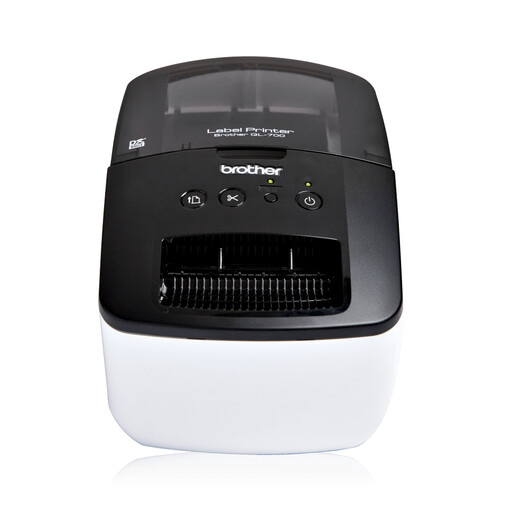
Brother QL-700 label printer for DK rolls
Suitable for batches of labels for boxes or cupboards that you design and print from a fixed computer.
The product description lists USB, an automatic cutter and a maximum label width of 62 mm. It says the printer works with Windows or Mac software. Check that the specific DK roll suits the item; a paper roll is not automatically suitable for items that are handled or cleaned frequently.
View at Joybuy
 No image available
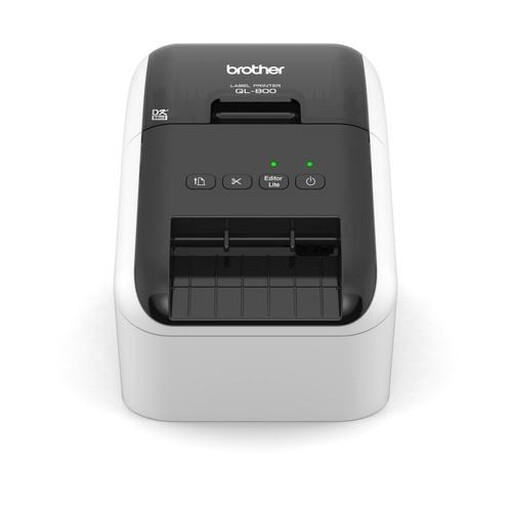
Brother QL-800 label printer for DK label rolls
Suitable for centrally created identification labels when you use the printer from a fixed workstation.
The product description lists USB, DK label rolls and support for QR, EAN and UPC codes. Check that the roll and label type you choose suit the item and its environment.
View at Joybuy
Frequently asked questions
Which tape is right for a smooth box, a rough tool case or a cable?
Choose tape designed for the surface and intended use, and check that your exact printer supports it. Brother describes standard TZe tape for flat, smooth surfaces, stronger-adhesive varieties for rough surfaces and Flexi-ID for cables. This is manufacturer advice; adhesion is not guaranteed for every item.
Can I use the Brother QL-700 for tool labels without any further checks?
No. First check the specific DK roll and the conditions in which it will be used. Brother lists both paper and film rolls for the QL-700; the properties of laminated TZe tape do not automatically apply to these rolls.
How can I avoid damage when removing a label?
If the surface needs to remain intact, test your chosen tape in an inconspicuous spot first. Brother warns that removing strong-adhesive tape may cause some damage.
Can a school print pupils’ names on shared equipment?
It depends on the purpose and the information needed; there is no general permission or blanket ban that applies to every situation. The Dutch Data Protection Authority states that schools must comply with the GDPR and must not process more personal data than necessary. Consider whether an inventory code would be enough, and follow the school’s privacy policy.
Do take-back schemes for old appliances also apply to schools?
Not automatically. The Dutch government states that the ‘old for new’ and ‘old for nothing’ schemes mentioned for discarded household appliances apply to private individuals, not businesses. The school should check the relevant disposal route and any arrangements with the supplier separately.


