For equipment that gets frequent use, start by choosing tape and label material suited to the surface and how it will be used. For files and stock, a printer that uses office rolls may be more practical. Brother Netherlands lists TZe tapes from 3.5 to 18 mm for the PT-D460BTVP, while the QL-700 uses DK rolls. Also check the connection, compatible consumables and your school’s policy on apps. These are manufacturer specifications, not the findings of an independent endurance test.
Who is this choice relevant to?
School equipment manager
You want equipment to remain identifiable with regular use and cleaning. Don’t choose based on the printer alone: check that the label material is suitable for the surface. Brother Netherlands and DYMO Netherlands describe different tape systems for their printer models.
School administration staff
You mainly print labels for files, stock and boxes. Choosing a suitable printer and roll makes it easier to match the label shape and width to the task. Brother Netherlands lists DK rolls for the QL series.
Staff who label items on site
Sometimes you make labels away from your usual workstation. In that case, the input method and available connection matter too. Check whether your school’s policy allows you to use a mobile device or app.
What should you look for when buying?
First, work out what you’ll usually be labelling and what kind of label material it needs. Then compare the compatible cassette or roll, input method and connection.
| What to consider |
What should you check? |
Who is this important for? |
| Clear equipment labels |
Check which materials are compatible with the printer and whether the label is suitable for the intended surface. Print a test label first and check its legibility and adhesion. |
If I’m labelling frequently used equipment, I want the material to suit the surface. Around 36% of consumers put durable equipment labels first. |
| Office labels |
Compare roll types, maximum label width and compatibility with the office computer available. The Brother QL-700 supports DK rolls, USB and labels up to 62 mm wide, according to Brother Netherlands. |
If I’m mainly labelling files, boxes or stock, I want a practical way to handle regular administrative tasks. Around 29% of consumers give office printing top priority. |
| Printing on site |
Check that an approved school phone or tablet and the required app will work. DYMO lists Android 10 or later and iOS 13 or later for the LetraTag 200B. |
If I want to make labels where the items are, I don’t want to rely on a fixed workstation. Around 21% of consumers prioritise mobile use. |
| Consumables |
Note the compatible cassette or roll family and compare packs on a like-for-like basis, such as the number of usable labels. TZe, D1, LetraTag and DK are different families. |
If I use the printer regularly, I want to know in advance which type of cassette or roll to reorder. Around 14% of consumers put recurring label costs first. |
Buying pitfalls
-
Assuming every office roll is suitable for equipment labels
The Brother QL-700 uses DK rolls; P-touch printers use TZe tape. These are different consumables, and one type is not automatically suitable for the same uses as the other.
First, note what you want to label. Then check the printer-and-tape combination and whether it’s suitable for the surface.
-
Assuming the tape included is suitable for every use
DYMO lists paper labels for the LetraTag 200B. For a different printer family, DYMO separately describes D1 Durable tape; this doesn’t make the materials interchangeable.
Before choosing a printer for equipment labels, check the material of the supplied labels as well as compatible replacements.
-
Choosing an app-controlled printer without checking school policy
The DYMO LetraTag 200B works via a mobile app and, according to DYMO, requires a compatible Android or iOS device.
Before buying, check that an approved school device and the required app are available.
Brands to consider
Brother
Brother describes P-touch models with TZe tape and QL models with DK rolls as separate printer systems.
- Brother Netherlands lists a keyboard, USB, Bluetooth and support for tape up to 18 mm for the PT-D460BTVP.
- According to Brother Netherlands, the QL-700 supports DK rolls and USB.
- Check the specific tape or roll type: features listed for TZe labels don’t automatically apply to DK rolls.
DYMO
DYMO describes the LabelManager 280, which uses D1 tape, and the LetraTag 200B as a separate system operated using a mobile device.
- DYMO lists D1 Durable tape as compatible with the LabelManager 280 and attributes certain resistance properties to the tape.
- The LetraTag 200B uses LetraTag cassettes. DYMO lists paper labels for the tape supplied with it.
- For the LetraTag 200B, check that a compatible mobile operating system and app are available on an approved school device.
Zebra
Zebra positions the ZD421 as a desktop option for uses including inventory and barcode labels.
- Zebra describes direct thermal and thermal transfer versions.
- The technology and some connections vary by configuration. Check the full specification, not just the series name.
Joybuy products
This selection includes mobile label printers, models that use TZe tape and a desktop printer for office and inventory labels. Check that each model suits your label material and workflow.
 Image unavailable
Phomemo M110 portable label printer with 1-unit label roll
A portable option if you want to make inventory labels in different locations.
The product name specifies a portable printer and a 1-unit label roll.
View at Joybuy
 Image unavailable
Brother PT-P300BT TZe label printer with Bluetooth
An option if you want to make labels using a P-touch tape system and Bluetooth.
The product name specifies direct thermal printing, 180 × 180 DPI and 20 mm/sec. Check which tape and width suit the labels you want to make.
View at Joybuy
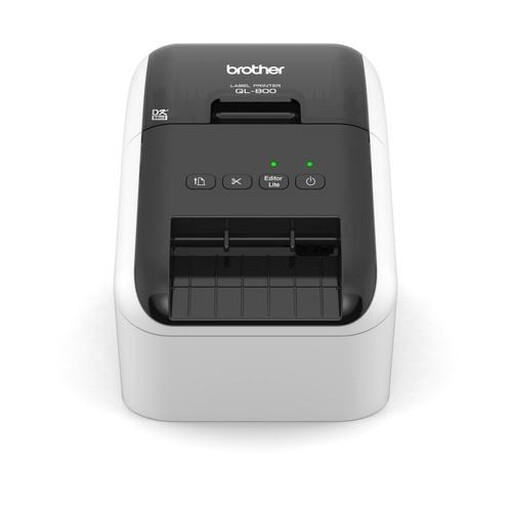 Image unavailable
Brother QL-800 DK label printer, wired, colour version
A desktop option for office and inventory labels from a fixed workstation.
The product name specifies DK, a wired connection, a colour version, 300 × 600 DPI and 148 mm/sec. Check which roll and label width you need for your use.
View at Joybuy
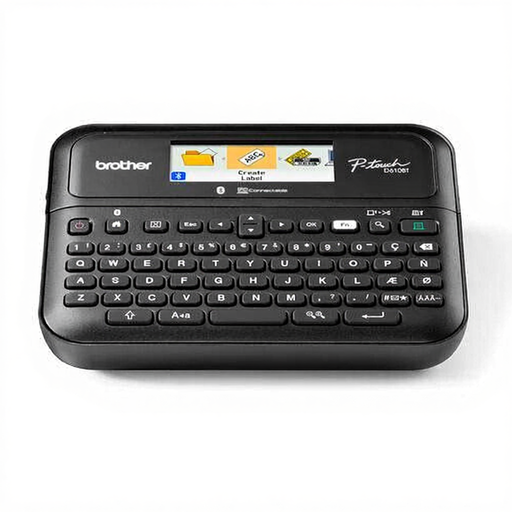 Image unavailable
Brother PT-D610BTVP thermal transfer label printer with TZe and Bluetooth
An option if you want to label equipment using a printer from the P-touch tape range.
The product name specifies thermal transfer printing, 180 × 360 DPI, 30 mm/s and wired and wireless connections. Check which tape variant suits the intended surface.
View at Joybuy
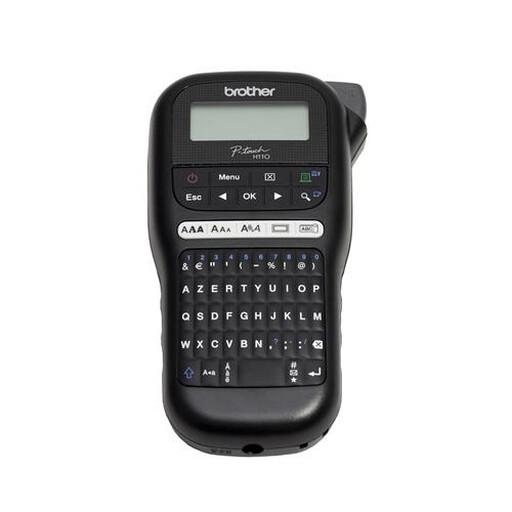 Image unavailable
Brother PTH110 handheld label maker, Italian version, black
A handheld model to consider if you want to enter labels on the spot. Check that the Italian version and controls suit the user.
The product name specifies a handheld label maker in black.
View at Joybuy
Frequently asked questions
Can I use the same roll or tape for all school equipment?
No. Check the cassette or roll family for the exact model, as well as the material’s suitability for the surface. The P-touch, LabelManager, LetraTag and QL models reviewed use TZe, D1, LetraTag and DK consumables respectively.
How should I get started with equipment labelling?
First, print a test label using your chosen printer and tape. Check that the code is legible and that the label stays on a representative surface. This lets you assess the combination for your intended use; one test doesn’t guarantee the same results on other materials or in different conditions.
What should I ask the school office about buying and aftercare?
Ask which consumables are available, which software can be installed on school devices and what service terms the seller offers. The Dutch government’s guidance on European consumer rights applies to purchases made as an individual, so don’t assume it also explains the rights that apply to a school purchase.
Can a school print pupils’ names on visible equipment labels?
First, consider whether a visible name is needed for the purpose, and discuss the choice with the person responsible for privacy at your school. The Dutch Data Protection Authority states that schools have an accountability obligation under the GDPR; an internal inventory code may be an alternative worth considering.


