For containers labelled before freezing, the printer and its tape both matter: Brother P-touch with laminated TZe tape and DYMO LabelManager with D1 Durable tape are well-supported options. If volunteers need to label containers that are already frozen, first check the minimum application temperature for the exact label. A low storage temperature alone does not mean the label will stick to a cold or damp surface.
Who is this relevant to?
Volunteers labelling containers before freezing
If you’re applying labels to dry containers, look for straightforward operation and tape that keeps the text legible during storage. Brother UK and DYMO describe the properties of their respective tapes, but this does not prove that they will stick to a frozen surface.
Volunteers adding labels to existing frozen stock
For containers that are already frozen, the temperature at which the label can be applied is a separate consideration from how well it withstands storage. Etikon specifies a minimum application temperature of -20 °C for its own freezer label.
People managing shared food supplies
Stock labels can help you identify contents and relevant dates. If the community centre offers food to visitors, its procedures also determine what information needs to be provided to consumers. The Netherlands Food and Consumer Product Safety Authority (NVWA) distinguishes between prepacked and unpackaged products.
What should you look for when choosing?
When choosing labels for shared freezer containers, start by considering when they’ll be applied: to a dry container before freezing, or to one that’s already cold. Then choose the operating method and tape that best fit the volunteers’ workflow.
| What to consider |
What should you check? |
Who is this most important for? |
| Adhesion and legibility in cold conditions |
Check both the operating temperature and the minimum application temperature for the exact tape. Also look at moisture resistance and printer compatibility, and try out your process on the containers you use. |
If I can only label containers after they’ve been frozen, I want to know whether the label can be applied in those exact conditions. Around 36% of consumers in this survey prioritise adhesion in their actual working conditions. |
| Contents and relevant dates |
Make a test label using the words and dates the community centre uses, then check that everything is easy to read. Separately, establish whether food will be offered to visitors. |
If several people use shared stock, I want to be able to identify the contents and date information on containers easily. Around 29% of consumers prioritise having this information on the label. |
| Ease of use for volunteers |
Check whether the printer can be used on its own or needs a phone or tablet with an app. Ask the intended users to make a test label. |
If volunteers take turns making labels, I want an input process that works for everyone. Around 21% of consumers prioritise ease of use for the volunteers involved. |
| Suitable consumables |
Check the exact tape code for the printer and whether the material is suitable for your intended labelling process. Remember to keep the right rolls or cassettes in stock. |
If the community centre needs to relabel stock regularly, I want to be able to keep using compatible tape without accidentally ordering a different tape range. Around 14% of consumers prioritise the availability of suitable consumables. |
Common mistakes
-
Assuming ‘resistant to -40 °C’ means ‘sticks at -40 °C’
A stated operating temperature range doesn’t automatically tell you whether a label can be applied to a frozen, potentially damp container. DYMO gives D1 Durable a range of -40 °C to 80 °C, but this does not confirm a minimum application temperature.
Ask for the minimum application temperature of the exact tape, and test your chosen process on the containers you use.
If a label comes off, you’ll need to label the container again.
-
Assuming the roll supplied with the printer is suitable
A roll included with a printer isn’t necessarily suitable for freezer containers. The DYMO LetraTag 200B listing specifies white paper labels, which doesn’t prove they’re suitable for freezer use.
Check the code and properties of the exact consumable, not just the printer name.
You may need different label material or another printer for your intended use.
-
Confusing an internal stock label with complete food information
A label showing the contents or date doesn’t automatically provide visitors with all the information they need. The NVWA distinguishes between prepacked products, which must display allergen information on the label, and unpackaged products, for which that information must be provided to consumers in another way.
First establish how the community centre offers food, then make sure the information you provide is suitable. Anyone who prepares, handles or sells food should also check which food safety requirements apply.
Brands to compare
Brother
P-touch printers are an option for short labels, using compatible TZe tape. The PT-D210VP has its own keyboard and, according to Brother, supports TZe tape up to 12 mm wide.
- Brother describes TZe labels as resistant to cold and moisture.
- These tape properties don’t confirm that a label will stick to a frozen or condensation-covered container. Also check that your text will fit on the chosen width.
DYMO
The LabelManager range offers a handheld option with compatible D1 tapes. LetraTag is a separate printer and tape range.
- DYMO gives D1 Durable an operating temperature range of -40 °C to 80 °C and lists the LabelManager 160 as compatible with this tape.
- The temperature range doesn’t specify a minimum application temperature. Don’t assume that standard D1 or LetraTag tape has the same properties either.
Epson
LabelWorks with LK-3WBW is an option if you want to assess a printer and extra-strong adhesive tape together.
- Epson describes LK-3WBW as waterproof and resistant to heat and cold, and lists compatible LabelWorks models.
- Epson marks the LW-Z710 and LW-600P as discontinued. Check the current status and compatibility of the exact printer model. The product information described here doesn’t specify a minimum application temperature for LK-3WBW.
Products at Joybuy
This selection includes printers for stock and text labels. Check that the material is suitable for labelling freezer containers with each specific model and tape. The fact that a printer is a label printer doesn’t automatically mean its tape will stick to a cold surface.
 No image available
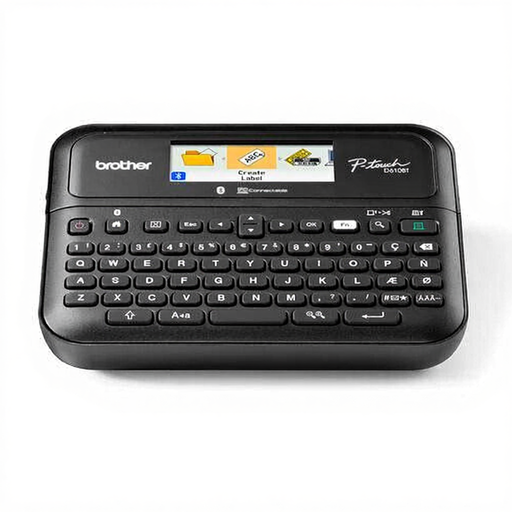
Brother PT-D610BTVP label printer
An option if you want to use Brother TZe tape. Brother describes TZe labels as resistant to cold and moisture, but this doesn’t confirm that they’ll stick to a frozen container.
The product name specifies thermal transfer, 180 x 360 DPI, 30 mm/s, wired and wireless connectivity, TZe and Bluetooth.
View at Joybuy
 No image available
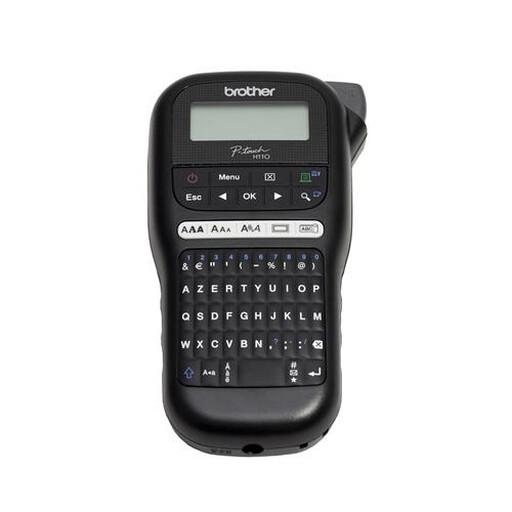
Brother P-touch H110 handheld label maker, Italian version
A handheld model to consider if labels need to be made on the device. First check that the version and tape suit the volunteers’ workflow.
The product name specifies a handheld label maker and the Italian version.
View at Joybuy
 No image available
Phomemo M110 portable label printer
A portable option for product labels. Check that the material you choose is suitable for the containers and the conditions in which they’ll be stored.
The product name mentions product labels, logo stickers and one label roll.
View at Joybuy
 No image available
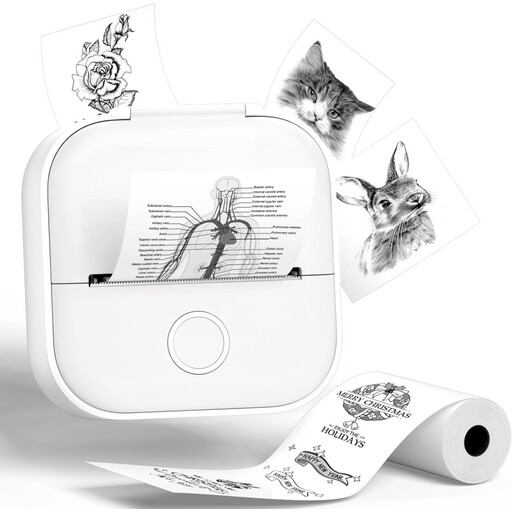
Phomemo T02-WH portable mini printer
The product name mentions study notes and stickers. Before choosing this model for freezer containers, check that the material and print are suitable for text labels.
The product name specifies a portable mini printer for study notes and stickers.
View at Joybuy
 No image available
DYMO LetraTag 200B Bluetooth label maker
This app-controlled printer could suit volunteers who want to create labels using a phone or tablet. DYMO’s product information doesn’t confirm that LetraTag tape is suitable for freezer use.
The Joybuy product listing includes one roll of white paper labels; this doesn’t prove that the roll is suitable for freezer containers.
View at Joybuy
Frequently asked questions
Can I stick a freezer label onto a container that’s already frozen?
Only if the exact label is suitable for application at that temperature. Etikon specifies a minimum application temperature of -20 °C for its own freezer label. Also check that the material is suitable for the container and printer.
Does the printer itself need to be kept in the freezer?
No. For the process described, you can print the label outside the freezer. The key thing is to check that it can be applied to the container and remains legible and firmly attached during storage. Don’t leave food outside safe storage conditions for longer than necessary.
Is an internal container label enough if the community centre gives food to visitors?
Not without considering how the food is offered. The NVWA states that allergen information must appear on the label of prepacked products, while for unpackaged products it must be provided to consumers in another way. An internal stock label is therefore not automatically a complete consumer label. If the community centre prepares, handles or sells food, also check which food safety requirements apply.


