
Workshop manager responsible for lots of shared cables
Wants to identify charging cables consistently and be able to print the same labels again later. Brother says the PT-D610BTVP can store label designs.


First decide whether the label should wrap around the cable or stick out like a flag so it can be seen from the side. Then check that the printer and cassette are compatible. A portable printer with cable labelling templates is a good fit for marking individual cables on the workshop floor; saved designs can be useful if you need to print the same identifiers repeatedly. Also check the cable diameter and what’s included in the pack: a compatible printer doesn’t automatically mean every cassette is suitable for cables.
Wants to identify charging cables consistently and be able to print the same labels again later. Brother says the PT-D610BTVP can store label designs.
Needs a portable printer with direct input and layouts for cable wraps or flag labels. Brother and DYMO describe these features for specific models.
Checks the cable label material and whether the cassette is suitable for the printer and cable diameter. The compatible size varies by cassette.
First decide how the label should sit on the cable and which side it needs to be readable from. Then compare the suitable materials, printer compatibility and whether you’ll mainly print on the spot or need to print labels repeatedly.
| What to consider | What should you check? | Who is this most important for? |
|---|---|---|
| Easy identification | Check whether the printer can create the wrap or flag layout you need, and whether the tape is suitable for the cable. | If I want to identify shared cables quickly by a set name or code, visibility matters more than having a compact label. Around 33% of consumers prioritise being able to identify shared cables easily. |
| Cable material | Check the exact cassette number, printer compatibility and stated cable diameter. | When choosing a label for a curved or heavily used cable, I want a material that’s suitable for that cable. Around 27% of consumers prioritise choosing a suitable cable label material. |
| Printing on the spot | Check the input method, power supply and cable templates available for the exact model. | If I’m labelling individual cables around the workshop, I want to enter and print text next to the cable. Around 20% of consumers prioritise being able to print on the spot. |
| Reusable designs | Check whether you can save designs, and which refill cassette and pack contents are available for the model. | When the same names or codes come up again, I want to print them easily and manage the right refills. Around 20% of consumers choose repeat printing as their main priority. |
A printer that takes tape doesn’t make every material suitable for a curved cable. Brother offers, among other options, flexible ID tape and cable flags.
Choose the label style first, then check the exact printer model and cassette number.
According to Brady, the 2,00–3,00 mm range applies to the specific M21-750-427 self-laminating cassette, not to all label materials.
Measure the cable and compare it with the specifications for the cassette you want to use.
You’ll also need the right cassette for cable labelling; compatibility and pack contents vary by model.
Check which cassette is included and which compatible refills are available for the printer.
Worth considering for portable cable labelling and for reprinting labels you use regularly.
The M210 is a portable option to compare for cable identification, with materials specified for individual models.
The Rhino 4200 is worth comparing for cable wraps and flag labels, with keyboard operation and shortcut keys.
The LW-Z710 provides features you can compare, but it isn’t a current buying recommendation.
This selection includes portable label makers and Brother QL label printers. For each model, check that the printer and available tape are suitable for the cable wrap or flag label you need.
 No image available
This portable model may suit printing in different locations. Check that the available labels are designed for cable labelling and are suitable for your cable.
The product information describes Bluetooth printing from iOS or Android devices.
 No image available
The product description lists cables as a possible use. Check that your chosen label material is suitable for a wrap or flag on your cable.
The stated label width is 0.59 inch.
 No image available
Before using it on charging cables, check that the label material and chosen label style are suitable for the job.
The model has Bluetooth and is listed with one roll of white paper labels.
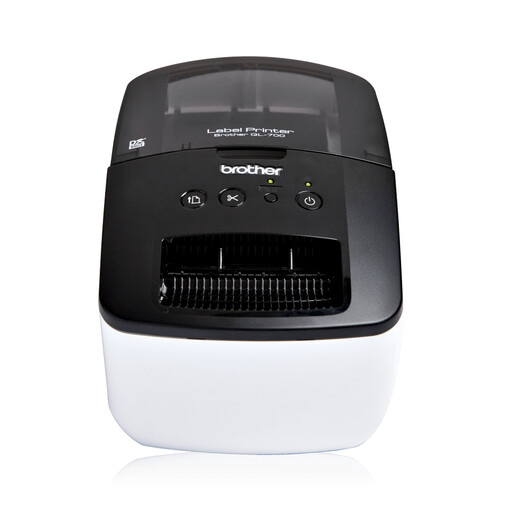 No image available
Check whether DK material for this printer is available in a format suitable for your cable labelling needs.
The product name specifies direct thermal, 300 x 300 DPI, 150mm/sec and DK.
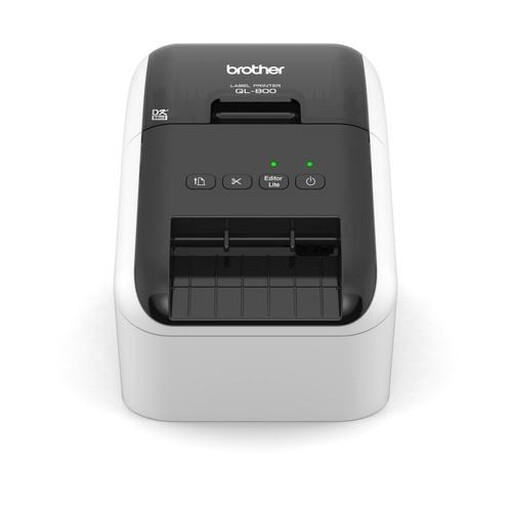 No image available
Check whether the available DK tape is suitable for the cable format and application you’ve chosen.
The product name specifies direct thermal, 300 x 600 DPI, 148 mm/sec, a wired connection and DK.
Choose a wrap if you want the label to sit closely around the cable, or a flag if you want to read the text from the side. For either style, check that the printer and cassette are suitable for the cable and the layout you need.
No. According to Brady, the stated range of 2,00–3,00 mm applies to the specific M21-750-427 cassette. Measure the cable sheath and check the cassette specifications; this range isn’t a general measurement for all Brady labels or printers.
If your Rhino displays a ‘Tape Stall’ message, DYMO Support recommends, among other things, cleaning the print head and platen roller. Follow the manufacturer’s instructions for your exact model.
For a consumer purchase in the Netherlands, the seller is responsible for providing an appropriate solution if the product doesn’t perform as you could reasonably expect during normal use, according to ACM ConsuWijzer. Consumer rules don’t necessarily apply to purchases for a business workshop; check the terms that apply to your purchase.
No. Arboportaal describes maintenance and inspections under applicable conditions; the employer must establish which inspection requirements apply. A readable cable label isn’t an inspection.