
People managing shared folders
You want colleagues to be able to find the right year folder quickly. The space available on the folder spine and the contrast both affect which layouts will work, as Brother Netherlands explains.


First, choose a label width and text contrast that will work on the folder spine, then consider how often the folders will be handled. A keyboard model is a good fit if colleagues need to create labels without a phone, while app control works well if users are comfortable with that approach. Also check which tape range is compatible with the device and what power supply it needs.
You want colleagues to be able to find the right year folder quickly. The space available on the folder spine and the contrast both affect which layouts will work, as Brother Netherlands explains.
You want labels to remain legible when folders are handled regularly. Brother Netherlands describes wear tests for laminated TZe labels, but these manufacturer tests do not prove how well a label will stick to every folder material.
You can choose between entering text on the device and creating labels with a phone or tablet. Brother Netherlands describes keyboard models, while DYMO describes app control for the LetraTag 200B.
For year folders in a shared workshop, key considerations include the usable width of the folder spine, how the folders are used, the input method and which replacement tape is compatible.
| What to consider | What to look for when buying | Who is this important for? |
|---|---|---|
| Legibility on the folder spine | Measure the usable space and check the supported tape width and contrast. | I want the year to be easy to spot when folders are lined up next to each other. Around 33% of consumers put legibility on the folder spine first. |
| Staying legible with frequent use | Check the type of tape and test how well it sticks to a folder made from the same material. | If folders are handled often, I want to know whether the label will stay legible. Around 27% of consumers prioritise keeping labels legible with frequent use. |
| Use by multiple people | Choose between a built-in keyboard and app control, and check that users have access to a suitable mobile device. | When several colleagues are making labels, I want an approach that works for everyone. Around 20% of consumers make shared use their top priority. |
| Compatible replacement tape | Check the exact tape range and the widths supported by the device you choose. | If I update year labels regularly, I want to know which tape range I need. Around 20% of consumers prioritise having suitable replacement labels as a consumable. |
A device works with a specific tape range. For example, DYMO distinguishes between LetraTag labels and D1 tape for LabelManager models, while Brother describes TZe cassettes for P-touch models.
Make a note of the full model name and its compatible tape range before choosing replacement labels.
The wear data published by Brother Netherlands relates to laminated labels under the test conditions described. It does not show how a label will hold up on every surface.
Test the cassette you choose on a folder made from the same material, then check its adhesion and legibility in the conditions in which you plan to use it.
Label makers can use different tape ranges and power sources, so you need to consider the device alongside the consumables and power supply it requires.
For the model you choose, check separately which cassette and power source it needs.
P-touch models offer different ways to create labels and a choice of tape sizes for folders.
LetraTag offers an app-controlled label maker, while LabelManager is a separate product range that uses D1 tape.
The range includes portable thermal printers and thermal-transfer models as alternatives to tape label makers.
These product picks are suited to year labels and folder labels, with app control, on-device controls and a range of tape widths.
 No image available
Suitable for app-controlled folder labelling if you want to work from a mobile device.
Bluetooth and the Print Master app; according to the product information, the app works with iOS and Android.
The listed label widths range from 20 to 50 mm. Labels are designed and printed through the app.
 No image available
Suitable for users who want to enter year labels using a phone or tablet.
Bluetooth and control through the LetraTag Connect app; the maximum label width listed is 1.2 cm.
The product information lists four AA batteries, which are not included.
 No image available
Suitable for app-controlled labelling of files and folders.
Bluetooth and direct thermal printing; the product information lists TZe tapes in 3.5, 6, 9 and 12 mm widths.
 No image available
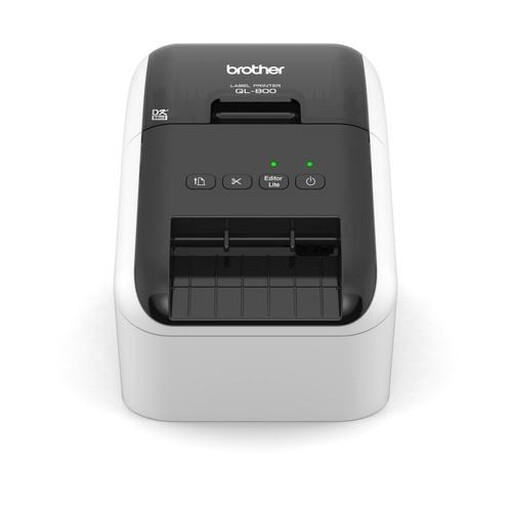
Could be a good fit if you’re looking for a wider label for folder identification; measure the available space on the folder spine first.
The product information lists DK tape up to 62 mm, black-and-red printing and a wired USB connection.
QR code and other barcode support is also listed.
 No image available
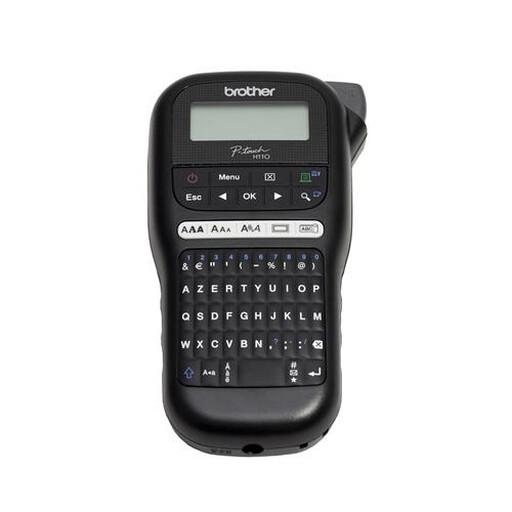
Suitable for entering labels directly on the device when colleagues need to label folders without a phone.
The product information lists a QWERTY keyboard, LCD screen and TZe tapes up to 12 mm wide.
According to the product information, the device runs on AAA batteries. The product title specifies the Italian version, so check that this version has the controls you need.
First, measure the usable area on the folder spine and create a sample layout with the full year. Then check the widths supported by the exact device: Brother lists a maximum of 12 mm for the PT-D210VP and 18 mm for the PT-D410VP.
Use a cassette that is compatible with the device and check the label if the print becomes less clear. For LabelManager models, DYMO recommends keeping the print head and platen free of dust, adhesive residue and tape obstructions. For other devices, follow the relevant manual.
For a consumer purchase in the Netherlands, the seller must offer a solution if a product does not meet the terms of the agreement; a manufacturer's warranty does not replace your statutory rights. This answer applies to consumer purchases and does not explain the rules for business orders.
Check which tape range and width are compatible with the exact model, and what power source the device uses. The product information may, for example, list batteries and say whether they are included; don’t assume that different models use the same cassette or power supply.
According to the Dutch government, used batteries must not be put in general waste. For old electrical equipment, the government describes, among other options, a take-back scheme for household appliances when buying a new one; this scheme does not apply to businesses.