What should you consider when choosing?
For instrument cases in a school office, your choice mainly comes down to the case surface, how you want to work and how much space you have for legible text.
| What to consider |
What should you check? |
Who is this important for? |
| Adhesion and protection |
Check the cassette family and whether the tape is designed for the surface; test a label on the case itself. |
I want a label on a frequently used case to remain legible and suit the surface. Around 36% of consumers prioritise adhesion and keeping the print intact. |
| How you work |
Check whether the model lets you enter text on the device itself or needs a compatible phone, app or computer. |
If I print individual names or codes at the desk, I want to know whether I can do so without a phone. Around 29% of consumers prioritise ease of use. |
| Legible text |
Measure the flat area where you’ll apply the label and compare the text you need with the tape widths supported by the exact model. |
I want a name or code to fit legibly in the space available. Around 21% of consumers make readability within that space their main priority. |
| Cassettes and running costs |
Check the cassette family, the tape included and which cassette you plan to use for the cases later on. |
If we replace labels regularly, I want to know in advance which compatible cassette we’ll need. Around 14% of consumers prioritise ongoing tape costs and cassette choice. |
Label makers at Joybuy
These products are suited to mobile design, different tape families and label printing in a school office. Check which cassette and way of working suit your instrument cases for each version.
 No image available
Phomemo D30 label maker
Suitable if you want to design labels using a mobile device. Check in advance which app and labels are right for your needs.
The product name lists a label width of 0.59 inch. Phomemo lists direct thermal labels that are compatible with the D30.
View at Joybuy
 No image available
DYMO LetraTag 200B
An option for designing labels over Bluetooth using a smartphone or tablet. Bear in mind that you’ll need to use one of these devices.
The product title mentions Bluetooth and support for iOS and Android. DYMO LetraTag uses a different tape family from LabelManager D1.
View at Joybuy
 No image available
Brother PT-P300BT CUBE
Suitable for labels designed on a mobile device. You’ll need a compatible mobile device to use Bluetooth.
Brother UK lists TZe tape up to 12 mm wide for the PT-P300BT. Check which cassette width will suit your text and the space available.
View at Joybuy
 No image available
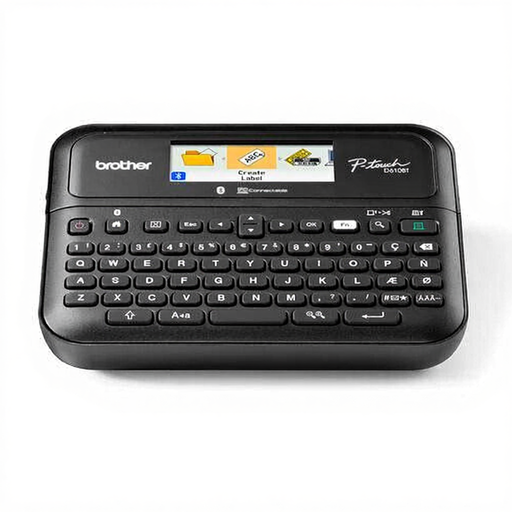
Brother PT-D610BTVP
An option if you want to design TZe tape labels using a Bluetooth connection to a mobile device or PC.
The product name mentions thermal transfer printing, Bluetooth and TZe tape. Check which cassette width you need for your case and text.
View at Joybuy
 No image available
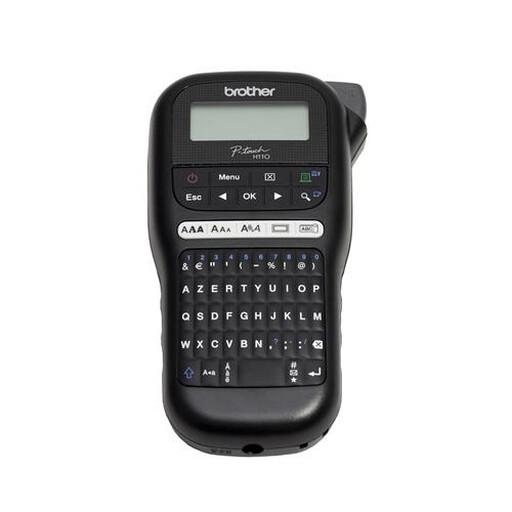
Brother PTH110 handheld label maker, Italian version
A handheld model for printing individual labels. Check that the Italian version and its controls are suitable for your school office.
The product name lists the colour as black and identifies it as the Italian version. Check the included cassette and the label width you need before ordering.
View at Joybuy
Frequently asked questions
Should a pupil’s name go on the outside of an instrument case?
Not necessarily. First consider which personal information is needed for the purpose. The Dutch Data Protection Authority says schools must comply with the GDPR when processing pupil data and must not process more information than necessary. An internal inventory code could be an alternative to consider.
Can I use D1, LetraTag and TZe tape interchangeably?
Don’t assume so: the cassette family must match the exact device. DYMO specifies D1 cassettes for LabelManager and LetraTag tape for LetraTag devices. Brother describes TZe tape for compatible P-touch label printers. Check the supported width too.
How can I stop a label coming off a case too quickly?
Choose tape that the manufacturer says is suitable for the surface, and test it on one of your own cases. DYMO describes standard D1 as suitable for clean, flat surfaces and D1 Durable for more challenging surfaces. These properties don’t automatically apply to other tapes.
Where can I dispose of an old label maker?
The Dutch Government says you can hand in old devices that need mains power or batteries at a collection point or local recycling centre, among other places. When you buy a new, similar appliance, the take-back scheme for old appliances applies. For equipment owned by the school, check which collection route the school uses.


