
People who handle their cases often
You want names to stay readable with repeated use, so you compare the label material and adhesion, not just the machine. Brother Netherlands describes laminated and extra-strength adhesive TZe versions.


Start by checking the available space on your instrument case, then choose tape with a suitable width and material. A model with a keyboard is ideal if you want to type without using your phone; with an app-enabled model, you can design labels on a compatible mobile device. Test the adhesion on the actual case surface and check which replacement cassettes are compatible with the machine.
You want names to stay readable with repeated use, so you compare the label material and adhesion, not just the machine. Brother Netherlands describes laminated and extra-strength adhesive TZe versions.
You want the text to fit the available space, so you check the tape and cassette width. Brother Netherlands and DYMO list 12 mm tapes for specific models; Brother also offers a 9 mm extra-strength adhesive TZe cassette.
You want to create labels on a mobile device, so you check that the app and device are compatible. DYMO says the LetraTag 200B works with the LetraTag Connect app.
First, measure the area where the label will go and decide which material is suitable. Then choose a printer that supports the right cassette and suits the way you want to enter text.
| What to consider | What should you check? | Who is this important for? |
|---|---|---|
| Readability with use | Check the material of the exact cassette and test its adhesion on the case surface. | If I handle my cases often, I want the name to stay readable, so I start by choosing a suitable label material. Around 29% of consumers consider readability with repeated use their top priority. |
| Space for the label | Measure the flat area and compare it with the tape width and supported cassette. | If the surface is narrow or uneven, I want the label to fit without making the text unnecessarily small. Around 29% of consumers put tape fit first. |
| Controls | Choose between a built-in keyboard and control via a compatible app. | If I want to enter names next to the cases, I look for a model with its own keyboard; if I want to design labels on a mobile device, I check the app. Around 21% of consumers consider the controls their main priority. |
| Replacement cassettes | Note the full printer model and check which cassette family and widths are compatible. | If I plan to label more cases later, I want to be able to find the right cassette easily. Around 21% of consumers focus mainly on finding compatible replacement cassettes. |
P-touch TZe and DYMO LetraTag cassettes are different product families. A cassette must also be compatible with the specific machine and the width you need.
Before you buy, check the full printer model, cassette family, material and available width.
Brother describes the features of its laminated and extra-strength adhesive tapes, but this does not confirm how well they will stick to every instrument case.
First, apply a test label to the actual surface and check the adhesion before labelling several cases.
The DYMO LetraTag 200B requires a compatible mobile device and the LetraTag Connect app. If you want to type without using a phone, consider a model with a keyboard.
DYMO says the standard version requires four AA batteries, which are not included.
So, if you choose the standard version of the LetraTag 200B, remember that you’ll need to arrange the batteries separately.
P-touch handheld models are worth considering if you want to enter labels on the machine and choose from TZe cassettes.
The LetraTag range includes handheld models with built-in controls, as well as the 200B, which works with a mobile app.
A brand to explore if you’re considering a compact model or a different printing technology.
This selection includes label makers controlled via a mobile device, as well as models for use with a computer or with a built-in keyboard. For each model, check which cassette and width will suit the available space.
 No image available
Ideal if you want to design labels on a compatible smartphone or tablet. The listing mentions a connection to iOS and Android devices, 12 mm LetraTag tapes and a roll of white paper labels. The standard version requires four AA batteries, which are not included.
 No image available
Ideal if you want to make labels using a smartphone or tablet. The product information lists Bluetooth, direct thermal printing and TZe tapes in 3.5, 6, 9 and 12 mm widths.
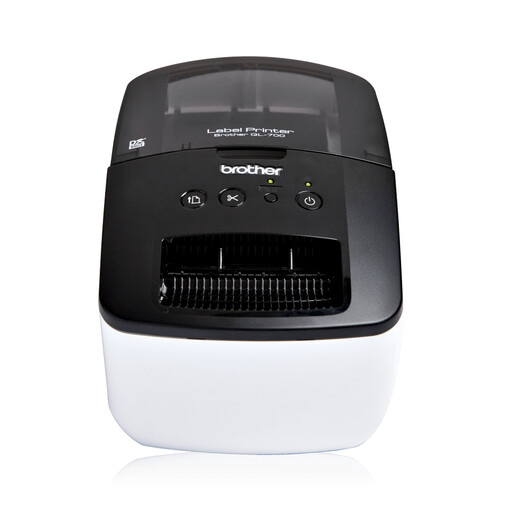 No image available
Ideal if you want to create labels from a computer at your workplace. The product information lists USB, software for Windows and Mac, DK tape, an automatic cutter and a maximum label width of 62 mm.
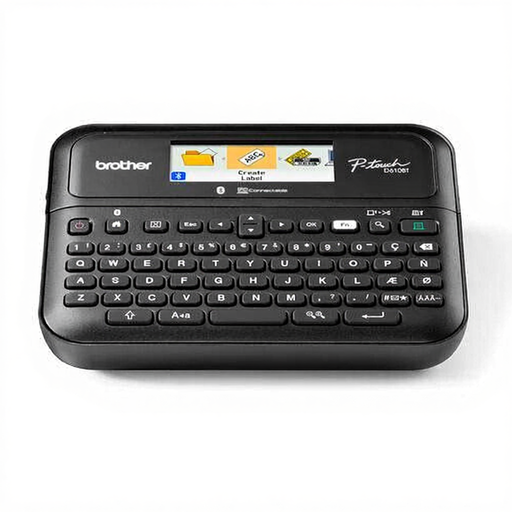 No image available
Ideal if you want to use TZe tapes and create labels via Bluetooth or a computer. The product name lists thermal transfer, a resolution of 180 x 360 DPI and a print speed of 30 mm/s.
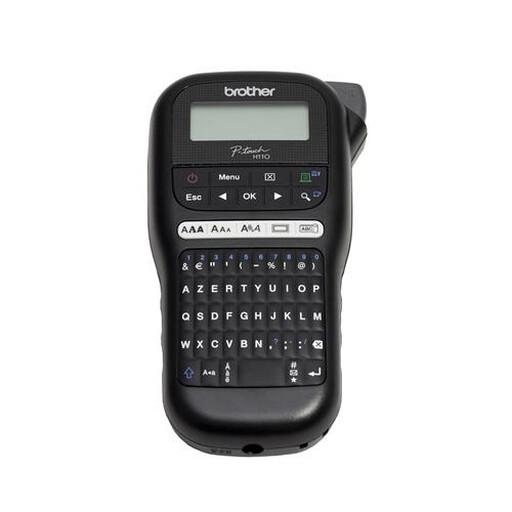 No image available
Ideal if you want to enter names directly on the machine. The product information lists a QWERTY keyboard, LCD screen and support for TZe tapes in 3.5, 6, 9 and 12 mm widths; this variant is labelled Italian Version.
First, measure the area and check that the tape is compatible with your printer. Brother positions an extra-strength adhesive TZe version for rough or uneven surfaces; test its adhesion in an inconspicuous spot before labelling more cases.
Not with a handheld model that has its own keyboard, such as the Brother PT-H110. With the DYMO LetraTag 200B, you create and print labels using the LetraTag Connect app on a compatible smartphone or tablet.
Check which cassette and batteries are included with the version you choose. DYMO says the standard version of the LetraTag 200B requires four AA batteries, which are not included; replacement cassettes must be compatible with the printer model.
For these issues, DYMO recommends switching off the machine, removing the cassette, then checking and cleaning the print head and roller according to the maintenance instructions.