
Parts bin manager
You want to find short codes on bins, drawers and shelves without complicated formatting. Brother Netherlands and DYMO describe uses for office labels and flat surfaces.


For bins, drawers and shelves with short codes, a standalone office label maker is an obvious choice. If you also label cables or sequences of part codes, dedicated cable-marking or numbering features matter more. Check that the cassette, label width and label format suit your surface and codes; model specifications are not independent durability tests.
You want to find short codes on bins, drawers and shelves without complicated formatting. Brother Netherlands and DYMO describe uses for office labels and flat surfaces.
As well as parts, you label cables or connection points, so you need to match the label material and format to the job. Brother Netherlands and Brady describe models with dedicated cable-marking features.
You regularly create sequences of part codes and want to cut down on repetitive data entry. Brother Netherlands lists sequential numbering as a feature of the PT-E110VP.
Choose this option: if you mainly add short codes to flat bins, drawers and shelves. Brother lists tape up to 12 mm wide for the PT-D210VP.
Bear in mind: check that the full code will fit legibly within the available width and that the tape is suitable for the surface.
Choose this option: if your stock includes cables, connection points or sequentially numbered parts. Brother lists these features for the PT-E110VP.
Bear in mind: Brother also lists this model as printing up to 12 mm wide; check the cassette and that it is suitable for the cable diameter.
Choose this option: if cable and electrical identification is a regular task and you need specialist label formats. Brady lists wrap-around labels and cable flags among the options for the M210.
Bear in mind: Brady lists a maximum label width of 19,05 mm; check which material is right for your application.
| What to consider | What should you check? | Who should consider this? |
|---|---|---|
| Legible codes on bins and drawers | Measure the available label space and check that the full sample code fits on the supported tape width. | If you want to find codes on bins and drawers quickly, legibility in the space available is key. Around 36% of consumers say legible codes on bins and drawers are their top priority. |
| Material and adhesion | Check the surface, conditions of use and which cassette is compatible with the device you choose. | If labels need to remain legible when handled, choose tape that suits the surface and how it will be used. Around 29% of consumers put label material first. |
| Cables and small round components | Check whether both the printer and cassette support the cable wrap or flag you need; take the cable diameter and printing space into account. | If you need to identify cables or connection points, suitable label formats matter more than a standard text function alone. Around 21% of consumers say cable marking is their top priority. |
| Sequential part codes | Test whether the numbering function can handle your code sequence and the label width you need. | For recurring sequences, you’ll want to enter fewer codes manually and check that the feature works with your coding system. Around 14% of consumers prioritise sequential codes. |
A cassette designed for a clean, flat surface won’t necessarily be suitable for cables or other materials.
First choose the surface and label format, then check which printer and cassette are compatible.
A flat text label isn’t automatically suitable as a cable wrap or flag.
For cables, check that both the model and the cassette you choose support the label format you need.
According to Ondernemersplein, the statutory cooling-off period for online purchases applies to consumers and does not automatically apply to business orders.
Before ordering, establish on whose behalf the school is buying and check the seller’s terms for business orders.
P-touch models for office labels and, on selected models, cable identification.
LabelManager models with D1 cassettes for office labels on flat surfaces.
The M210 is designed for applications including wire, cable and electrical identification.
These models are suitable for office labels, stock locations and coding school supplies. For each model, check that the cassette and workflow suit your application.
 No image available
One to consider for stock labels and barcodes; check that the roll width suits your codes. The product name specifies 1 label roll.
 No image available
An option for labels on storage boxes and office supplies; check that the stated label width suits your codes. The product name specifies 0.59 inch and 1pcs.
 No image available
A model to consider for labels on storage bins and office supplies. The product name specifies Bluetooth, TZe tape, direct thermal printing, 180 x 180 DPI and 20 mm/sec; check which tape is suitable for your surface.
 No image available
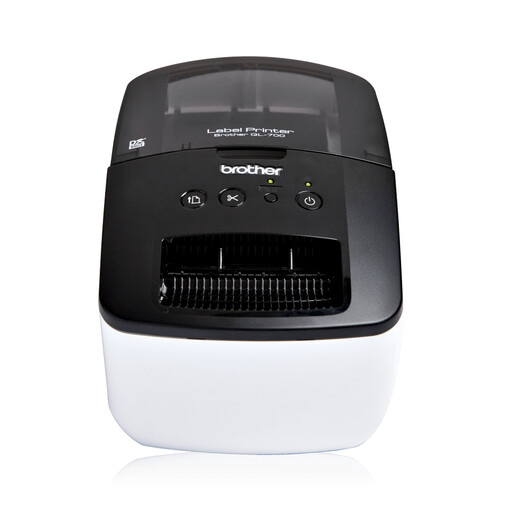
The product information lists folders as one use; check whether the available DK labels suit the size and surface of your stock bins. The product name specifies direct thermal printing, 300 x 300 DPI and 150 mm/sec.
 No image available
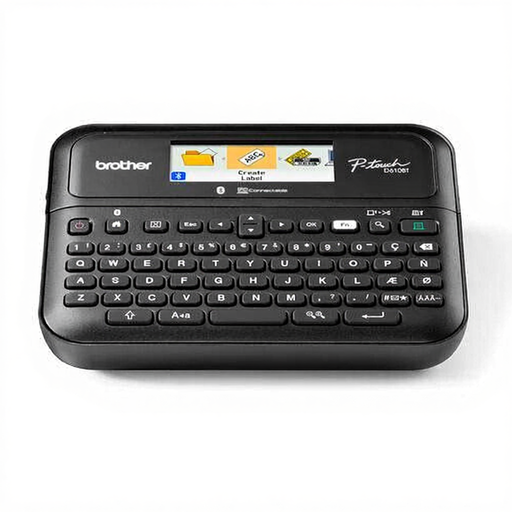
An option to consider if you want to create labels from a smartphone or PC. The product name specifies Bluetooth, TZe tape, thermal transfer, 180 x 360 DPI and 30 mm/s; check the cassette for the label width you need.
Start with the bin’s material and surface. DYMO describes D1 standard tape for clean, flat surfaces; Brother describes TZe tape as having a laminated top layer. Check that the cassette you choose is compatible with the exact device.
It depends on the model and cassette. Brother lists cable wraps and flags for the PT-E110VP; Brady lists formats for these types of labels for the M210. A standard text print alone doesn’t show that a model is suitable for cable marking.
No, the statutory cooling-off period does not automatically apply to a business order placed by a school. According to Ondernemersplein, consumers have a statutory 14-day cooling-off period for online purchases. Check on whose behalf the school is ordering and what terms the seller applies to business orders.
It depends on the product group and the rules that apply. The Dutch government states that CE marking is compulsory for certain product groups and that electrical and electronic devices must meet the applicable European safety requirements. For the specific model, ask for the relevant conformity information; a CE mark doesn’t tell you whether a cassette is suitable for your parts.