What should you look for when choosing?
Start with the surface and the space available for the label. Then decide whether you’ll make individual labels on the spot or print them repeatedly from a workstation.
| What to consider |
What to look for |
Who is this important for? |
| Adhesion and legibility |
Check that the material and adhesive suit the surface and conditions; test a label on a similar part or container. |
If parts are handled frequently or may come into contact with moisture or oil, I want the code to stay legible and firmly attached. Around 36% of consumers put adhesion and legibility first. |
| Size for small spaces |
Measure the space available and check that the text you need will fit on a supported tape width. |
For a narrow container, I want to be able to read a code without the label extending beyond the available space. Around 29% of consumers are mainly looking for a suitable compact size. |
| Printing labels in batches |
Decide whether you’ll make individual labels or print recurring batches, and check which design and connectivity options suit the way you work. |
If I need the same types of codes for several containers or shelves, I want to be able to produce them efficiently from my usual workstation. Around 21% of consumers consider batch printing their main priority. |
| Compatible supplies |
Check the right cassette or roll for each model, the available sizes and the cost per usable label. |
With regular use, I want to know which tapes or rolls fit the machine and what that means for ongoing use. Around 14% of consumers put recurring supply costs first. |
Label makers for parts and stock labels
These Joybuy products are designed for individual labels for small storage spaces and for making stock labels, using either a mobile device or a workstation.
 No image available
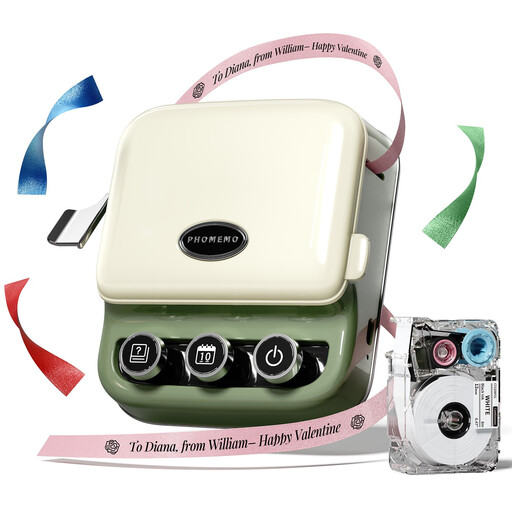
Phomemo P15 Bluetooth ribbon label printer, with one label refill
May suit you if you want to design and print labels on the spot using Bluetooth.
The Print Master app is required.
View at Joybuy
 No image available
Phomemo D30 portable label maker
May suit you if you’re looking for a portable label maker to use with a phone or tablet.
The product name lists a label width of 0.59 inch. The product description warns against exposure to moisture and extreme temperatures.
View at Joybuy
 No image available
DYMO LetraTag 200B Bluetooth label maker
May suit you if you’re looking for a portable Bluetooth label maker for small storage spaces.
The product description lists four AA batteries; these aren’t included.
View at Joybuy
 No image available
Brother PT-P300BT Bluetooth label printer
May suit you if you want to make labels for small storage spaces using a mobile device.
The product name lists TZe tape, Bluetooth, 180 × 180 DPI and a print speed of 20 mm/sec.
View at Joybuy
 No image available
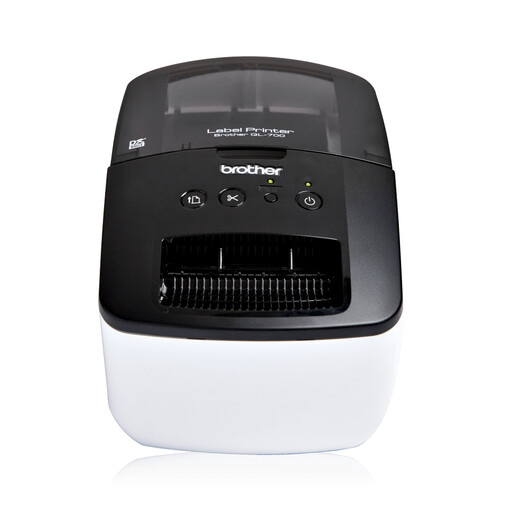
Brother QL-700 label printer for DK label rolls
May suit you if you want to print labels repeatedly from a workstation.
The product name lists direct thermal printing, 300 × 300 DPI and 150 mm/sec. The model uses DK label rolls.
View at Joybuy
Frequently asked questions
Is it better to label a part or its storage container?
Choose a spot where the code will remain visible during normal use, and measure the space available. Check that the text you need fits the supported tape width; for example, Brother lists labels up to 12 mm wide for the PT-D210VP. Test your chosen tape on a similar surface.
Can I use D1, Rhino, TZe and DK labels interchangeably?
Don’t assume you can. DYMO pairs D1 tape with models such as the LabelManager 160, while Brother lists DK rolls for the QL-700. Check that the cassette or roll is compatible with your exact machine before buying supplies.
Which ongoing costs should I compare?
Compare the right tape or roll for your model, the usable label size and how many labels you can make with it. The purchase price of a machine alone doesn’t tell you what the supplies will cost over time with repeated use.
Does the statutory cooling-off period also apply to a business order?
According to Ondernemersplein, the statutory cooling-off period doesn’t automatically apply when a business buys for business purposes. Check the terms for the specific order; the rules for a business purchase differ from those for a consumer purchase made at a distance.
Can an internal part number also be used as a price label?
An internal stock label doesn’t replace the price information that must be provided to consumers. According to Ondernemersplein, when selling to consumers in a shop in the Netherlands, the applicable price in euros, including VAT, must be clearly legible on or next to the product.


