
Retailers with a few annual binders
If you want to add years to existing files without having to use a computer each time, look for a model that works directly from the device.


If you only need to add a few years to shop files, a standalone tape label maker is a practical choice. Check in advance which tapes are compatible with the model and what’s included. If you often make the same labels, look for memory or repeat printing; choose an app-based model only if using a compatible phone suits the way you work. For labels that need to stay in place for a long time, the specific tape material and the surface it’s applied to both matter.
If you want to add years to existing files without having to use a computer each time, look for a model that works directly from the device.
If files need to remain easy to find for a long time, the choice of tape matters too. The Dutch Tax and Customs Administration stresses that the applicable retention period depends on the records; a year on a file doesn’t determine that period.
For file labels you use repeatedly, saved text or the ability to print multiple copies can save time. DYMO lists these features for the LabelManager 210D+.
First measure the space available on the binder spine, then choose how you want to operate the label maker, and finally check the tape and power supply for the exact model.
| What to consider | What should you check? | Who is this important for? |
|---|---|---|
| Easy-to-read year | Measure the space on the file and check the supported tape width. If necessary, print a test label first. | If I want to spot the year on the spine at a glance, I need to consider the available space and the label size. Around 36% of consumers put readability first. |
| Long-term use | Check the exact tape type and how well it sticks to your file; also consider whether the label needs to be replaceable later. | If I use files for a long time, I want to choose material that suits the file and how it will be used. Around 29% of consumers prioritise archive labels designed for long-term use. |
| Repeating labels | Compare keyboard operation with app control, and check whether the model can save text or print multiple copies. | If I regularly need the same text on a file, I want a quick way to recreate it. Around 21% of consumers prioritise quick text entry and repeat printing. |
| Tape and power | Check the tape family, what’s included in the box, and whether the device uses batteries or an adapter. | When I buy consumables, I want to make sure the cassette fits my printer. Around 14% of consumers focus mainly on compatible consumables and ongoing replacement costs. |
Brother P-touch uses TZe tape, the DYMO LabelManager 210D+ uses D1 tape, and the LetraTag 200B uses LetraTag tape. The wrong cassette won’t fit the device.
Make a note of the full model name, then check the tape family, width and packaging. This helps you avoid an unusable cassette and an extra order.
Brother describes laminated TZe tape and DYMO describes permanent D1 tape as separate products. The LetraTag 200B comes with paper labels; features of D1 tape don’t automatically apply to them.
Choose a material suited to how you plan to use it, and test a label on one of your own files before making lots of them.
According to the Dutch Tax and Customs Administration, the retention period depends on the records and doesn’t necessarily start on 1 January of the year shown on the file.
Use the label to organise your files, and keep track of their contents and applicable retention period separately.
Brother P-touch with TZe tape is an option for short file labels; the separate QL range uses DK rolls for larger paper labels.
The LabelManager 210D+ uses D1 tape; the LetraTag 200B is a separate, app-controlled option that uses LetraTag tape.
This selection of Joybuy products includes label makers you operate directly and models controlled via a phone app. Check which tape and label width will suit your files for each model.
 No image available
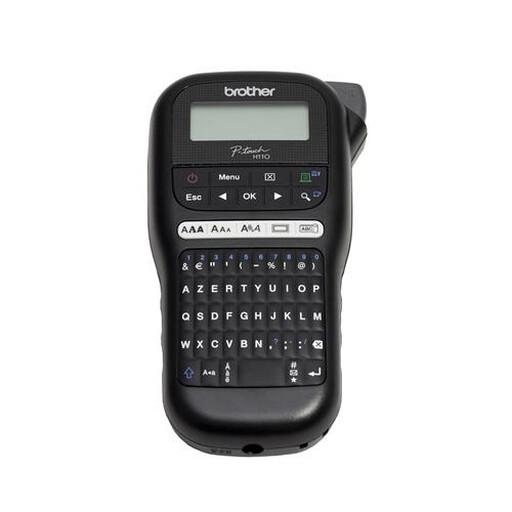
Ideal if you want to enter file labels directly on the device using a keyboard and LCD screen.
According to the product description, it supports TZe tapes in 3.5, 6, 9 and 12 mm widths.
 No image available
Ideal if you want to make recurring file labels using the Print Master app; the description mentions batch printing.
According to the description, it works via Bluetooth and supports label widths from 20 to 50 mm.
 No image available
An app-controlled model for making labels for files and folders using a phone or tablet.
The product information lists Bluetooth and a built-in rechargeable battery.
 No image available
Ideal if you want to design and print labels using the LetraTag Connect app; you’ll need a compatible phone or tablet.
DYMO lists Android 10 or later and iOS 13 or later as compatible software. According to the product information, the box includes a roll of white paper labels.
 No image available
Ideal if you want to make short file labels using a mobile device rather than entering them directly on the printer.
The product description lists Bluetooth control and TZe tapes in 3.5, 6, 9 and 12 mm widths.
First check the exact device range: the Brother P-touch models mentioned use TZe tape, the DYMO LabelManager 210D+ uses D1 tape, and the LetraTag 200B uses LetraTag tape. Then check the supported width and the material you need.
Not with a standalone model such as the Brother PT-D210VP or DYMO LabelManager 210D+. The DYMO LetraTag 200B works via an app; DYMO lists Android 10 or later and iOS 13 or later as compatible software. Check that your phone meets these requirements.
First test a label made with your chosen tape on the file itself. DYMO says its permanent D1 tape sticks to surfaces including paper and plastic, but this manufacturer’s claim doesn’t guarantee it will work with every file finish.
You’ll need tape or labels for the right system, and should check the power supply. For the LabelManager 210D+, DYMO lists 12 mm × 3 m D1 starter tape and six AA batteries or an optional adapter; Brother says an adapter is included with the PT-D210VP.
No. According to the Dutch Tax and Customs Administration, basic business records must generally be kept for seven years; a ten-year period applies to, among other things, records relating to immovable property and certain one-stop-shop transactions. The period doesn’t necessarily start on 1 January of the year shown on the file, but when the current value of the records expires. A label helps you organise your files; it doesn’t determine or ensure compliance with the retention period.