
Managing a large number of camera batteries
You want small, clear codes that staff can read quickly. Brother Netherlands explains tape and model choices for P-touch label makers, so consider readability and a suitable tape width.


For camera batteries, choose a label maker that uses suitable, easy-to-read tape and is straightforward for school staff to operate. A model with a keyboard makes it easy to enter codes on the spot; an app-based model requires access to a compatible phone or tablet. Check which tape works with the exact model, and place the label so that contacts and important markings remain uncovered.
You want small, clear codes that staff can read quickly. Brother Netherlands explains tape and model choices for P-touch label makers, so consider readability and a suitable tape width.
You want identification labels to remain readable with regular handling. Brother and DYMO link features such as lamination and durability to specific tapes, not every tape from a brand.
You want to choose between typing directly on a standalone device and designing labels with an approved phone or tablet. Brother and DYMO describe both ways of operating their label makers.
First measure the flat area on the battery, then choose tape and an operating method that work for your school office.
| Buying concern | What to look for | Who is this important to? |
|---|---|---|
| Readable code on a small battery | Measure the flat area and compare it with the supported tape width. Also decide how much text needs to fit on the label. | If I want to read inventory codes quickly, I consider the space available and the length of the code. Readability is the main priority for around 36% of consumers. |
| Adhesion and readability in use | Check the features of the exact compatible tape and test its placement on one battery casing first. | For batteries that are handled often, I want to know whether the tape I choose is suitable for the way they are used. Adhesion and lasting readability are the main priorities for around 29% of consumers. |
| Ease of use for staff | Choose between a built-in keyboard and operation via a compatible phone or tablet. Check what staff are allowed to use. | If several staff members need to make labels, I want a process they can use at school. Shared operation is the main consideration for around 21% of consumers. |
| Tape and refills | Make a note of the full printer model, cassette system and required width. Also check which tape is included. | If I need to top up labels regularly, I want to know in advance which cassette the printer takes. Refill options and consumables are the main consideration for around 14% of consumers. |
Brother TZe, DYMO D1 and DYMO LetraTag use different cassette systems. The wrong cassette may not fit the printer you have chosen.
Check the full printer model, cassette system and supported width before choosing refills.
An incompatible refill cassette may end up unused.
Features such as lamination and durability apply to specific tapes. They are not automatically found on every tape from the same brand.
Choose a compatible tape based on the features you need, and test it on one battery casing first.
If a label comes off or becomes illegible, you may need to label the battery again.
The app-based models we looked at need a compatible phone or tablet to design labels. This can be tricky if staff are not allowed or able to use one.
Check that app-based operation fits your school's policy. If it doesn't, choose a model with a built-in keyboard.
P-touch label makers are available with a built-in keyboard or Bluetooth operation.
LetraTag and LabelManager are separate label maker ranges, each with its own cassette system.
The range includes compact thermal label printers and thermal transfer models.
These label makers are suitable for creating identification and organisational labels. Check that each model's operation, tape and label width are right for camera batteries.
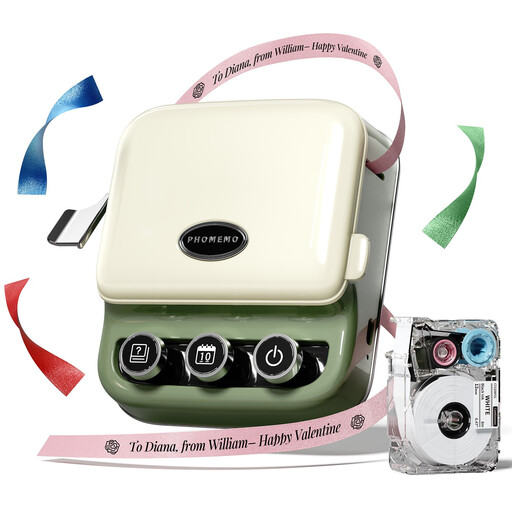 No image available
An option for staff who want to make labels using a mobile device.
The printer connects to the Print Master app via Bluetooth. One roll of blank label tape is listed; a compatible device is needed to operate it.
 No image available
An option for staff who want to design and print labels on a phone or tablet.
The description lists Bluetooth operation, a built-in rechargeable battery and a label width of 0.59 inch. The app is required for printing.
 No image available
An option for staff who want to create labels on a mobile device using the LetraTag Connect app.
The printer uses LetraTag cassettes and has a listed maximum label width of 1.2 cm. The product description says it requires four AA batteries, which are not included.
 No image available
An option for staff who want to make narrow identification labels using a smartphone or tablet.
The description lists Bluetooth operation and Brother TZe tapes in 3.5, 6, 9 and 12 mm widths. The stated process uses a smartphone or tablet.
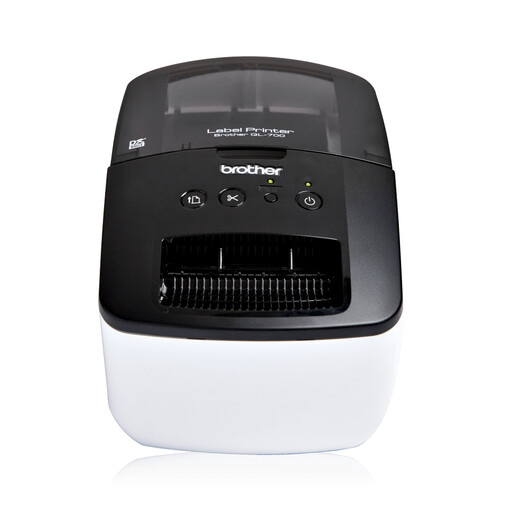 No image available
An option for designing and printing labels in the office from a computer.
The description lists a USB connection, label software, an automatic cutter and DK tape, with DK labels included. Editor Lite is for Windows; the full P-touch Editor is listed for Windows and Mac.
Choose a suitable spot on the casing and do not cover the electrical contacts. Also follow the instructions for the battery model in question; Canon points out that dirty contacts can affect charging. There is no universal position for a label on all camera batteries.
No, these are separate cassette systems. Check the full printer model and the tape width you need before buying refills.
You will need compatible tape or labels and, depending on the model, batteries or a power supply. Check which cassette system the printer uses and what is already included.
According to the Dutch government, batteries for photo and video cameras can be taken to battery collection points; do not put them in general waste. Stichting OPEN recommends covering the exposed terminals of discarded battery packs with tape to prevent short circuits. This advice for discarded batteries is not a reason to cover the contacts of a battery that is still in use with a label.
The Dutch government describes a take-back scheme for old electrical appliances when you buy a new, similar appliance. If you are buying on behalf of the school, ask how the take-back will be arranged in practice.