
Vandaag of morgen in huis

Kwaliteit gegarandeerd

Welkomstaanbiedingen ontgrendelen: GRATIS bezorging | Tot 80% korting | Gratis 30 dagen JoyPlus-proefperiode
Download de app
An L-shaped desk with drawers might seem like the perfect solution for an organised home office. You get a large work surface, room for a laptop or multiple screens, and storage within easy reach. However, some corner desks can disappoint in practice. Product listings don’t always explain dimensions, assembly and stability clearly enough.
For people working from home, students, gamers and professionals, these are the main pitfalls to watch out for:
Start by checking the overall dimensions, then look at the usable legroom. A 150 x 110 cm desk will generally fit a computer, laptop and accessories, but the shape of the desktop determines how much space you can actually use.
For a corner desk, check:
An L-shaped desk is useful when you want to create separate zones. For example, use one side for a monitor and keyboard, and the other for writing, meetings or studying.
A chipboard or MDF desktop can be suitable for everyday use, as long as it has good support. According to the product description, the LANTINE model uses E1 chipboard and a metal frame. E1 refers to a formaldehyde emissions class for wood-based materials; it isn’t a general guarantee of the desk’s overall quality or stability.
Also look for:
A desk with adjustable feet can be more practical in Dutch homes with wooden floors, carpet or older, uneven flooring.
A computer desk with drawers is only useful if the drawers suit the things you want to store. For example, measure your folders, controllers, cables or stationery beforehand. Open shelves are handy for items you use often, but they collect dust more quickly than closed drawers.
When assembling the desk, check that:
According to the LANTINE desk’s product description, numbered parts, tools and assembly instructions are included. The stated assembly time is a claim made by the seller, and may vary depending on the person and the space available.
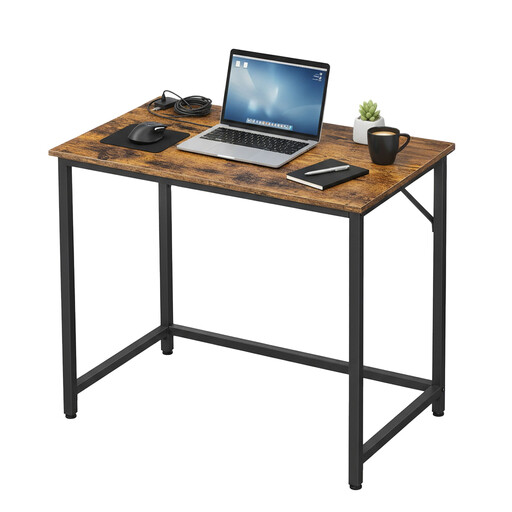
Why it suits this profile: This compact desk is designed for work, study or everyday computer use. It isn’t L-shaped, but could be a good fit if you’re short on space or want to start with a simple setup.
The stated dimensions of 80 x 50 x 76 cm make it clear that this model offers less workspace than a large corner desk. This helps you get a more realistic idea of how much room you’ll need.
Brown and black finish, adjustable feet, a metal frame and a stated static load capacity of 50 kg, according to the product information.
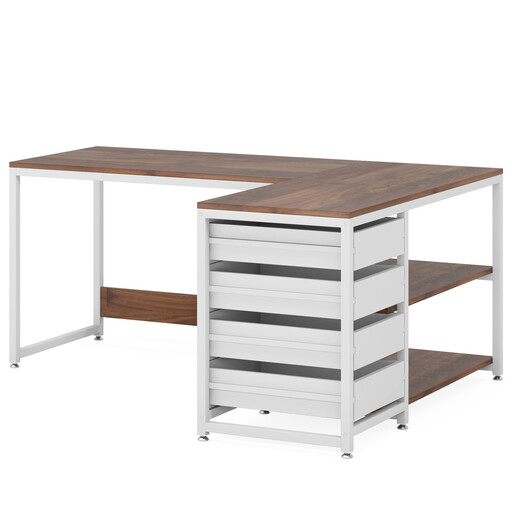
Why it suits this profile: This model is a close match for shoppers looking for an L-shaped desk with drawers for a home office, study or living room.
The product description specifies four drawers, two open shelves, a reversible layout and adjustable feet. This gives you a clearer picture of the storage layout and placement options than a vague marketing claim would.
Dimensions of 150 x 110 x 75 cm, four drawers, two shelves, a brown-and-white finish and a metal frame, according to the product details.
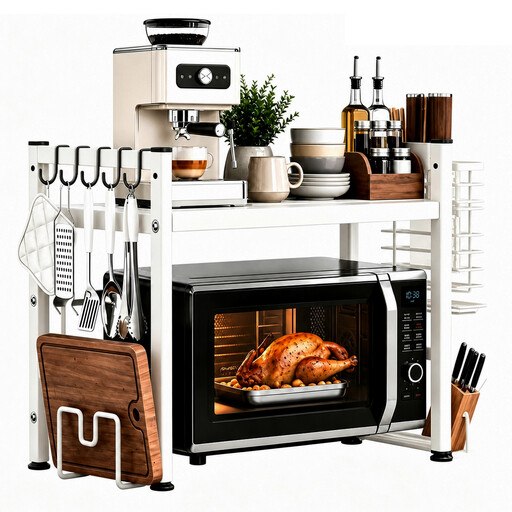
Why it suits this profile: This isn’t a desk, but it could provide extra storage beside a study desk or work table. It may suit anyone who wants to keep accessories, paper or small essentials neatly organised elsewhere.
The product name clearly lists two tiers, five hooks and a chopping board holder. So you can see which storage features are included before buying; don’t use it as a replacement for a corner desk.
Steel construction, two storage tiers and extra hooks, according to the product listing. Check the dimensions and load capacity before placing it beside a desk.
We’ve put together a complete, up-to-date list of products that meet these strict selection criteria and the applicable European safety regulations.
Yes, if you decide in advance which side you want the drawers and shelves on. A reversible design gives you more flexibility when positioning the desk, but check whether you have to choose the layout during assembly. Remember to allow for doors, windows and sockets too.
Don’t just allow for the desktop dimensions. You’ll need extra space in front for an office chair and enough room to move around. Measure the corner, mark out the dimensions on the floor with masking tape, and check that you can still walk and sit comfortably.
That depends on the frame, desktop support and stated load capacity. For everyday use, it’s best to choose a model with a metal frame, adjustable feet and closed drawers for documents or accessories. Once assembled, check all the fixings and spread heavy equipment across both sides of the desk.
