What should you look for when choosing?
Choosing a sweetener for kruidnoten starts with deciding how you want to change the recipe: replace the sugar completely or simply use less. If you choose a different sweetener, you’ll need to follow product-specific dosage guidance and try a test batch.
Granulated erythritol
When to choose it: If you’d like to try a dry alternative in kruidnoten dough; the retailer describes Sukrin Erythritol as granulated and suitable for baking.
Trade-off: According to that product listing, Sukrin Erythritol is around 30% less sweet than sugar. Don’t assume a replacement ratio without testing a batch, and read the warning about polyols.
Stevia and erythritol blend
When to choose it: If you’re looking for a more concentrated sweetness and can follow the dosage instructions for your chosen product. Steviala says Kristal Sweet is twice as sweet as sugar.
Trade-off: A one-to-one replacement isn’t suitable for the stated level of sweetness. Steviala also lists polyols and warns that excessive consumption may have a laxative effect.
Reduce the amount of regular sugar
When to choose it: If you want to use less regular sugar without replacing all the sugar in the recipe straight away. Albert Heijn Allerhande’s kruidnoten recipe mixes sugar directly into the dough.
Trade-off: Reducing the amount still leaves added sugar in the recipe. You’ll need to assess the nutritional value of the finished bake separately; don’t call it sugar-free based on this change alone.
| What to consider |
What to check when buying |
Who it matters to |
| Dosage and dough |
Check the stated level of sweetness and whether the supplier says the product is suitable for baking. Try a small amount in your recipe. |
I want to be able to shape my kruidnoten and check the sweetness before changing the whole recipe. For around 42% of consumers, the result of the bake comes first. |
| Sugars and claims |
Compare the sugars per 100 g and read the ingredients. Assess a sugar-free claim for the finished product as a whole, not just the sweetener. |
If I use less sugar, I want to know what that means for my baked kruidnoten and which claim is appropriate. Around 33% of consumers prioritise this check. |
| Ingredients and warnings |
Read the allergen information, check which type of sweetener you’re buying and look for any warning about polyols. |
I need to be able to check which ingredients are in my bake and whether a product warning is relevant to me. This is the main concern for around 25% of consumers. |
Sugar alternatives at Joybuy
These products are sugar alternatives to try in a test batch of kruidnoten: one xylitol product and one erythritol product. Check the dosage and nutritional information for both before adapting your recipe; choosing a particular product does not, by itself, make baked kruidnoten sugar-free.
 No image available
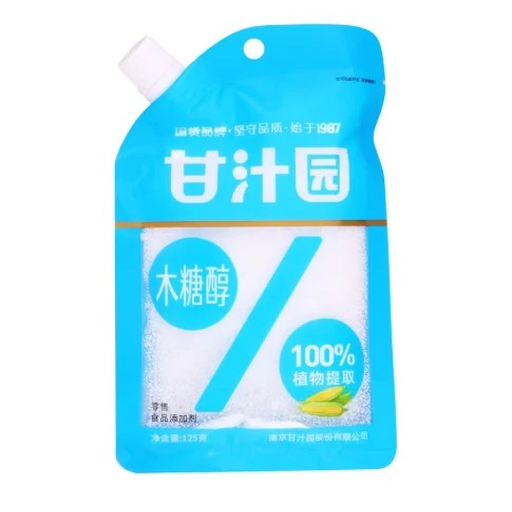
Ganzhiyuan Xylitol without sucrose 125 g
For a test batch of kruidnoten with xylitol: the product description mentions baking, but adjust the dosage to suit your recipe and try a small amount of dough first.
Pack size: 125 g. The ‘without sucrose’ claim on this product doesn’t mean the baked kruidnoten are sugar-free. Also check the nutritional information and allergen details on the packaging.
View at Joybuy
 No image available
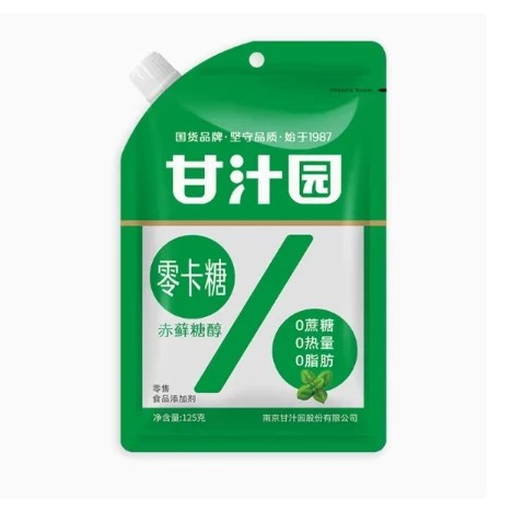
Gan Zhi Yuan Erythritol 125 g
For a test batch of kruidnoten with erythritol: the product description says it is granulated and suitable for baking. Check the dosage for your recipe and try a small amount first.
Pack size: 125 g. Read the nutritional information, allergen details and any warnings on the packaging; the sweetener you choose does not, by itself, determine the sugar content of the finished product.
View at Joybuy
Frequently asked questions
When can I call homemade kruidnoten sugar-free?
Only if the finished product contains no more than 0.5 g of sugars per 100 g. That is the threshold for the ‘sugar-free’ claim under the European rules published via EUR-Lex. Choosing a sweetener or leaving out regular sugar doesn’t, on its own, prove that your kruidnoten meet this threshold.
Does ‘no added sugars’ mean the same as ‘sugar-free’?
No, these claims don’t mean the same thing. Check all the ingredients you add and the sugars in the finished bake; even without added sugar, some ingredients may contain sugars naturally.
How do I compare a sugar alternative with ready-made kruidnoten?
Compare the nutritional information for each product separately per 100 g, as the Netherlands Nutrition Centre recommends when checking labels. Read the ingredients list too: a sugar alternative and a baked kruidnoot are different products, so their sugar values aren’t directly interchangeable.
Do I still need to check for allergens when baking with less sugar?
Yes. Using less sugar doesn’t change the need to check the allergens in your ingredients. Check the allergen information for every mix, sweetener and other ingredient you use; the Netherlands Food and Consumer Product Safety Authority says allergens must be listed on food labels.
What should I look out for when using erythritol?
Check the dosage, ingredients and any warnings for the specific product before adding erythritol to your kruidnoten dough. According to the European Food Safety Authority, erythritol is a polyol. Some products, including the Kristal Sweet described by Steviala, carry a warning that excessive consumption may have a laxative effect.


