
当日/次日达

品质保障

开启新人专享福利: 全场免邮 | 低至 2 折 | 免费试用 30 天 JoyPlus 会员
下载 Joybuy
Korean sweet potato noodles, also known as dangmyeon, are popular for japchae, hotpot, soups and stir-fries. However, not all packets are the same. The thickness, ingredients, portion size and cooking method determine whether your noodles stay firm or turn soft too quickly.
When buying Korean glass noodles online, don't just rely on an attractive product photo or the word "authentic". Instead, check the ingredients, net weight and how the noodles should be prepared.
Some products are made entirely from sweet potato starch, while others also contain water, potato starch, maize derivatives or thickeners. That's not necessarily a problem, but it can affect the texture and cooking method.
For shoppers with a food allergy or specific dietary requirement, the ingredients list matters more than the front of the packet. A product may state that it contains none of the 14 major EU allergens according to the product information, but always check the label on the actual packet you receive before use.
A 1 kg packet looks appealing if you cook Asian dishes often. For someone who only makes japchae occasionally, a 200 g or 340 g packet can be more practical. Once opened, sweet potato glass noodles must be stored sealed and dry. Starch noodles absorb moisture easily.
So compare not just the packet price, but also the price per 100 grams and how often you'll actually use the product.
Thin Korean vermicelli can cook faster than wide noodles. Some varieties need soaking first and then boiling; others can go straight into boiling water. Boiling too long can reduce the elastic texture, while undercooking leaves a chewy core.
Always follow the instructions on the packet. The cooking time on a product page is a guideline and can vary depending on the pan, water volume and desired texture.
For a neutral flavour that absorbs sauces well, sweet potato starch noodles are a practical choice. Products with 100% sweet potato starch state this clearly in the ingredients list. With blended products, check which other starches or additives have been used.
Also look at the country of origin. A Korean-style product isn't always made in Korea. For example, the Wang Korean-Style Vermicelli Noodles list China as the country of origin, while some Nongshim products state Korea as their origin. That alone doesn't tell you everything about the eating experience, but it helps you assess the product information correctly.
If you're specifically looking for japchae noodles, you'll usually choose a smooth, translucent variety with an elastic texture. For soup or hotpot, a wider option can be more enjoyable to eat.
The stated nutritional values differ from product to product. Ottogi, for example, lists 355 kcal and 88 g of carbohydrates per 100 g. Colorful Manor Thin Potato Starch Noodles lists 86.4 g of carbohydrates per 100 g. Only compare nutritional values when the reference amount is the same, and remember that dry noodles absorb water during soaking and cooking.
For a gluten-free diet, simple ingredients lists are helpful. Several products in the range are listed as containing none of the 14 major EU allergens, but "no declared allergens" is not a substitute for reading the actual label. Delief Japchae, on the other hand, is a ready-made dish containing wheat, soya and sesame, so it's not suitable for everyone looking for gluten-free noodles.
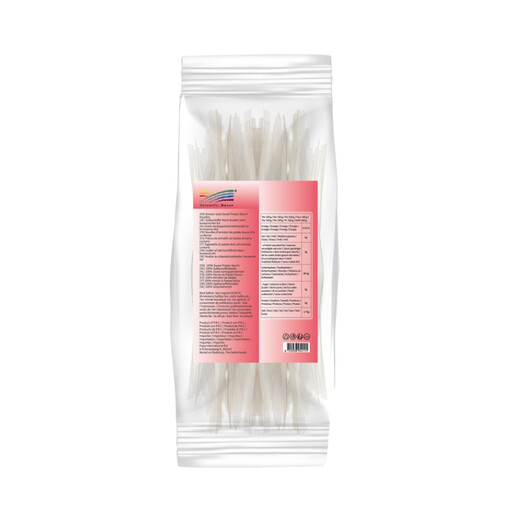
Why this fits the profile: The 200 g packet is manageable for anyone buying Korean noodles for the first time who doesn't want to open a large bulk pack.
The ingredients list states 100% sweet potato starch. The small packet reduces the chance of waste.
200 g, 100% sweet potato starch according to the product information, and none of the 14 major EU allergens declared.
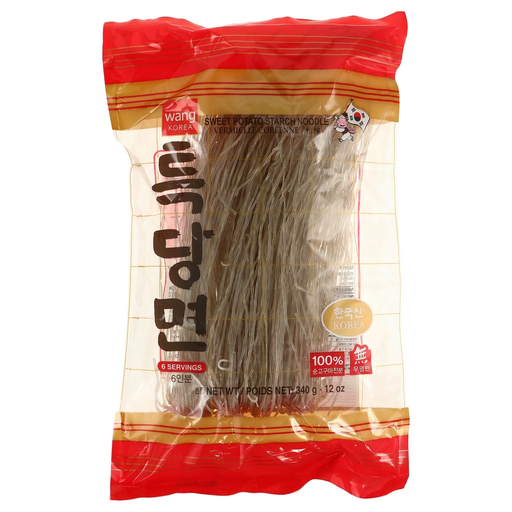
Why this fits the profile: The product information specifies 99.9% sweet potato starch, a transparent structure and a recommended cooking method.
The packet lists clear ingredients and instructions: soak for 20 minutes, then boil for 6 to 7 minutes.
340 g, 99.9% sweet potato starch according to the product description, and suitable for japchae, soups and stir-fries.
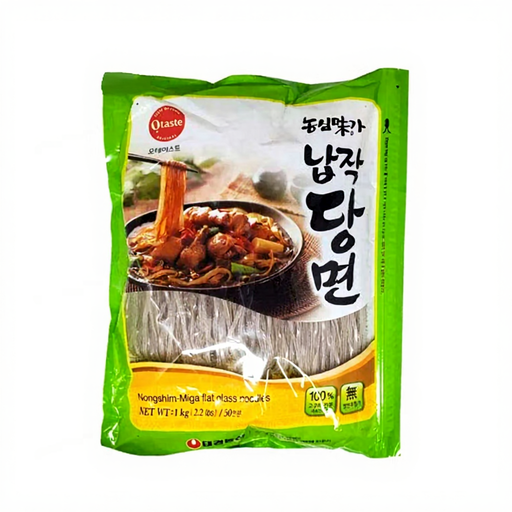
Why this fits the profile: The 1 kg packet suits households that regularly make japchae, hotpot, soups or multiple stir-fry dishes.
The flat shape is clearly described, so you don't accidentally choose thin vermicelli for a dish that needs wide noodles.
1 kg, made with sweet potato starch according to the product information, and intended for a variety of hot and cold dishes.
We've put together a full, up-to-date list of products that fully meet these strict selection criteria and comply with current European safety regulations.
For japchae, you can combine the noodles with carrot, spinach, mushrooms, onion and a sauce based on soya and sesame. If you need gluten-free noodles, also check the sauce: soy sauce and japchae sauces can contain wheat.
Many pure varieties contain only sweet potato starch and water according to their ingredients list, and declare none of the 14 major EU allergens. That makes them a possible choice for a gluten-free diet. However, always check the actual packet and pay particular attention to cross-contamination and any added sauces.
There is no fixed period that applies to every packet. Store dry noodles cool, dry and well sealed, and follow the best-before information on the label. Do not use the noodles if the packet is damaged or if moisture has clearly entered.
Choose a smooth dangmyeon or Korean vermicelli made from sweet potato starch. A standard thickness works for most japchae recipes. Wide or flat varieties are suitable when you want more bite and a more generous coating of sauce. Always follow the specific cooking and soaking instructions for the product you choose.
