
Vandaag of morgen in huis

Kwaliteit gegarandeerd

Welkomstaanbiedingen ontgrendelen: GRATIS bezorging | Tot 80% korting | Gratis 30 dagen JoyPlus-proefperiode
Download de app
Korean spicy ramen is popular with K-food fans, students and anyone looking to prepare a hot meal quickly. However, not every pack is the same. The difference is not just in the brand or the image on the front, but also in the preparation method, portion size, flavour base and allergen information.
If you order a multipack without checking, you may encounter three common pitfalls:
First, check whether you are buying a dry sauce variety or ramen with broth. Samyang Buldak ramen is usually drained after cooking and mixed with sauce. Shin Ramyun, on the other hand, is prepared as a spicy noodle soup.
With dry spicy chicken ramen, the sauce remains concentrated around the noodles. This creates a more intense flavour, but it also means you do not necessarily have to use the entire sachet. With some products, you can set aside part of the sauce for a milder portion.
A pack weighing 120 to 140 grams is a generous standard portion. A multipack of five sachets is suitable for getting to know a flavour or keeping a few meals in the cupboard. A box containing 20 or 40 packs is better suited to shared use, buying in bulk or a small catering business.
Pay attention to the difference between the number of sachets and the total weight. For example, a box containing 40 packs of 130 grams contains 5.2 kilograms of product. You will therefore need enough dry, cool and dark storage space.
Before ordering, check the ingredients list, allergens and nutritional values per 100 grams or per portion. The product information provided includes wheat, gluten, soya, celery and sesame, among other ingredients. Carbonara and cheese varieties often contain milk or milk powder.
Nutritional values vary from one product to another. For example, the Samyang Buldak Hot Chicken Carbonara packaging states 430 kcal and 1.300 mg sodium per 100 grams. For Shin Ramyun, 3.5 grams of salt per 100 grams is stated. Use these figures to compare varieties with one another rather than trying to infer the information from the front of the packaging.
The product description of some Buldak varieties describes the flavour as “extremely spicy”. This is the manufacturer’s description, not a universal measurement. If you are less accustomed to chilli, start with a smaller amount of sauce or choose a cheese, carbonara or sweet-and-spicy variety.
Always follow the instructions on the packaging, as cooking times and the amount of water required vary by product. For example, the instructions for Samyang Buldak Carbonara 130 grams state that you should use 550 ml of water and cook the noodles for approximately five minutes. Then drain most of the water, leaving around 120 ml behind. Add the powder and oil, then mix the noodles over a low heat.
For a dry variety such as Samyang Original, cook the noodles first, drain the water completely and then stir in the sauce. Shin Ramyun is prepared by adding the seasoning powder and dried vegetables to the cooking water. According to the product information, Paldo Volcano requires brief cooking, rinsing with cold water and mixing with the sauce.
Practical checks before buying and preparing:
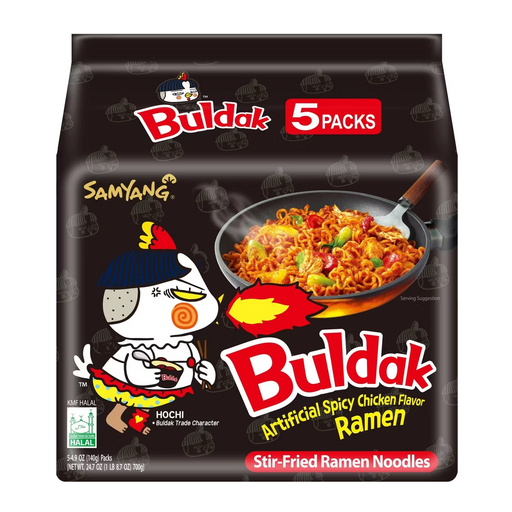
Why it suits this profile: The pack contains five 140-gram portions. This is a manageable option for anyone who wants to try Samyang Buldak ramen without immediately buying a large box.
The number of portions and the weight are clearly stated. You can also adjust the amount of sauce to taste.
Five portions, 140 grams per pack and dry sauce preparation according to the product instructions.
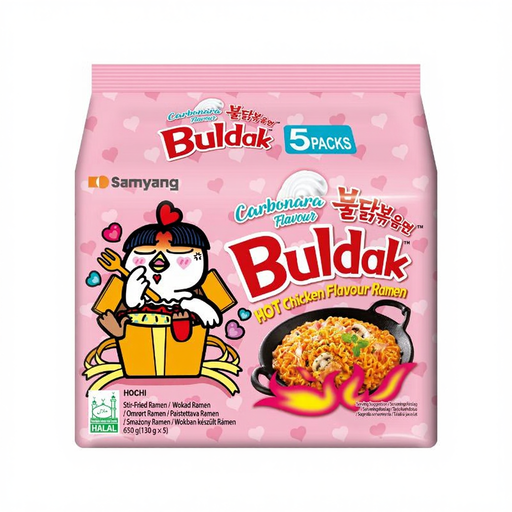
Why it suits this profile: According to the product description, this variety combines a spicy chicken base with a creamy carbonara flavour. It is a good choice for fans of a smoother, richer sauce.
The preparation instructions clearly state how much water to leave in the pan, so the sauce does not become too thin.
Five 130-gram portions, a creamy flavour profile and separate sauce and powder preparation.
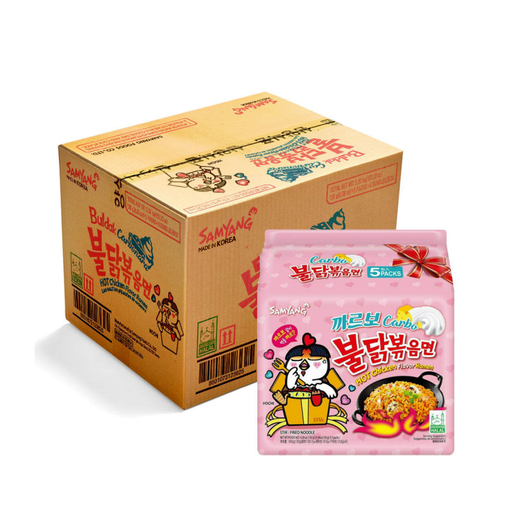
Why it suits this profile: The box contains 40 individual packs, making it suitable for stocking up, shared use or regular preparation.
The portions are individually packed. However, check the best-before date on the packaging before buying in bulk.
40 portions of 130 grams, separate seasoning components and storage in a cool, dry environment.
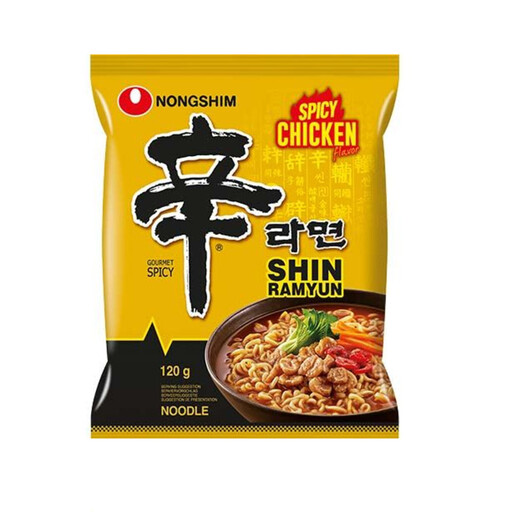
Why it suits this profile: This variety is designed as a spicy noodle soup with chicken flavouring, seasoning powder and dried vegetables.
The preparation differs from dry Buldak noodles: the ingredients are added to boiling water together. This avoids confusion about draining the noodles.
120 grams per portion, dried vegetables and a broth preparation time of approximately four to five minutes.
We have put together a complete, up-to-date list of products that fully meet these strict selection criteria and the applicable European safety regulations.
Start by using only some of the sauce, then add more later if you wish. Carbonara, cheese and creamy varieties may have a rounder flavour, but check the ingredients for milk and soya. Extra vegetables, egg or tofu will change the flavour and texture, but will not remove all the heat.
The best-before date is shown on the individual pack or outer box. Store ramen in a cool, dry place, away from direct sunlight and moisture. If you have bought a large multipack, avoid keeping the boxes in a warm or damp area for long periods. Do not use damaged packaging.
Buldak Carbonara ramen is generally dry, spicy stir-fry noodles with a sauce and creamy powder. Shin Ramyun is prepared as a noodle soup with seasoning powder and dried vegetables. Choose Buldak if you want a concentrated sauce, and Shin Ramyun if you prefer noodles in a hot broth.
