
Same-day & Next-day Delivery

Quality Guaranteed

Unlock Your Welcome Offers: FREE Delivery | Up to 80% OFF | Free 30-day JoyPlus trial
Download the APP
Korean spicy instant noodles are quick to prepare, affordable and available in a wide range of flavours. However, the difference between a small 5-pack and a box of 40 portions is significant. The cooking method, allergens and amount of sauce also determine whether a product is right for you.
Many shoppers focus mainly on the picture on the packaging. That can lead to a disappointing purchase. So, check these three common pitfalls before you order Korean ramen:
Confusing heat with flavour
Terms like “hot”, “volcano” and “double spicy” give a clear indication, but they don’t tell you everything about the taste experience. Some noodles have a dry sauce with sweet-spicy notes, while others are focused on a savoury broth.
Buying a multipack without checking the number of portions
A pack of 5 sachets is handy for trying a flavour. A box of 20 or 40 portions is more interesting for households, student houses or heavy users, but it takes up more storage space and limits your choice if you don’t like the flavour.
Skipping the allergens and cooking instructions
Many Korean instant noodles contain wheat, gluten, soya and sesame. Varieties with carbonara or cheese ramen may also contain milk. Always read the label on the packaging. The information on the website may differ from the current packaging.
Korean ramen are not all the same. Nongshim Shin Ramyun is prepared with water and seasoning powder and has a rich, spicy broth with dried vegetables. This suits anyone looking for a bowl of noodle soup.
With Samyang Buldak noodles, Paldo Volcano noodles and similar spicy chicken noodles, the cooking water is usually drained off. You then mix the noodles with a sauce. These spicy chicken ramen often have a thicker, more intense flavour and less liquid.
So, check:
The heat level is not always directly comparable between brands. A product with chilli, habanero or chilli extract can be noticeably sharper than a variety with mainly pepper and garlic. With some Samyang Buldak varieties, you can start by using only part of the sauce sachet. This makes the product more suitable for households with different preferences.
Carbonara ramen, cheese ramen and rose sauce varieties add creamy or dairy-based ingredients. These can make the sharp flavour seem milder, but they don’t automatically make the product suitable for people with a milk allergy or intolerance.
The products in this category often weigh between approximately 98 and 140 grams per portion. A larger portion can be better for a substantial meal, while a smaller bowl is practical for lunch at the office or a quick snack.
Also look at the nutritional values per 100 grams and per pack. In the product information provided, the values range, for example, from approximately 379 to 440 kcal per 100 grams. The salt content also varies depending on the recipe. So, don’t just use the brand name as a comparison point.
Store instant noodles in a cool, dry place, away from direct sunlight and moisture. Check the best-before date on the individual packaging and the outer packaging. Do not use damaged packaging.
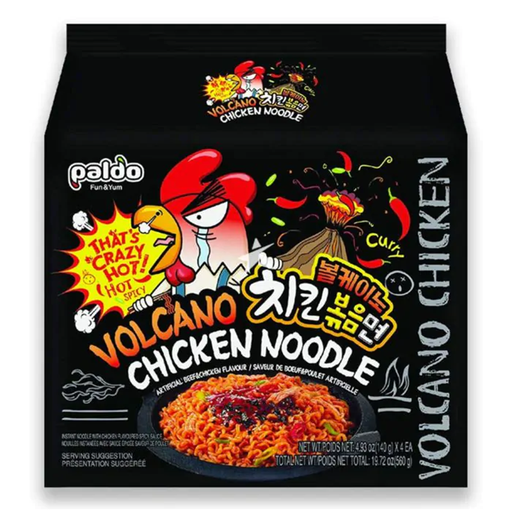
Why this fits the profile: With four portions, you can try a spicy flavour without buying a large box straight away. The cooking method with 550 ml of water, a short boil, rinsing with cold water and mixing with the sauce is clearly described.
The number of portions is manageable, and the product is described as a noodle with sweet-spicy flavourings, rather than relying solely on a heat claim.
Four sachets of 140 grams; stir-fry preparation; store at room temperature in a dry cupboard.
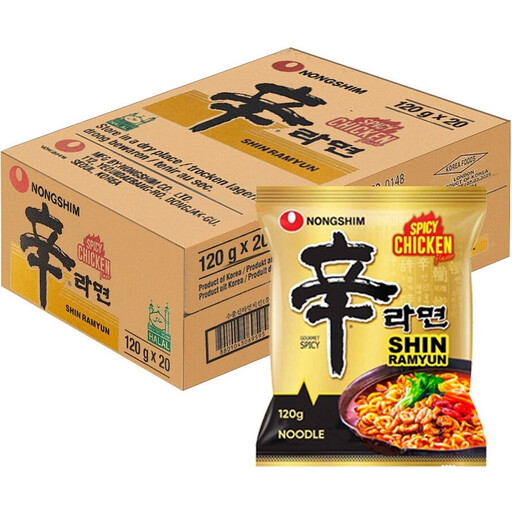
Why this fits the profile: This box is designed for those who eat Korean instant noodles regularly and want to build a steady supply. Each pack weighs 120 grams, with 20 individual portions in total.
The box format makes the number of portions easy to check. The description mentions wheat noodles, a savoury broth and dried vegetables, so you can assess the flavour type in advance.
20 portions; hearty wheat noodles; broth with spices and vegetable pieces; produced in South Korea according to the product information.
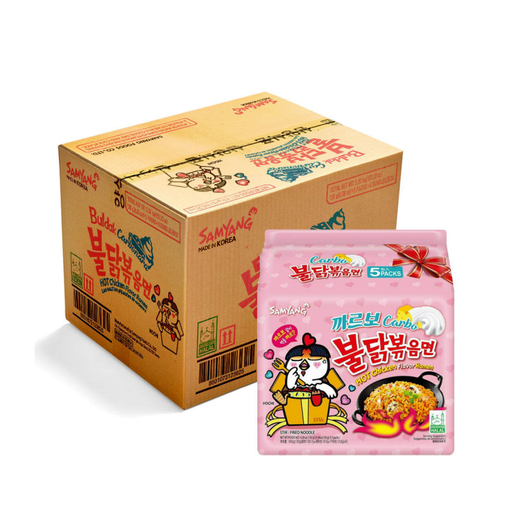
Why this fits the profile: A box of 40 portions suits heavy users, shared households and enthusiasts who deliberately choose the combination of spicy chicken and creamy carbonara.
The product information states the portion size, preparation steps and allergens such as wheat, soya, milk and celery. This helps with stock planning and dietary control.
40 portions of 130 grams; thick noodles; sauce with spicy chicken and carbonara flavour; ready in minutes.
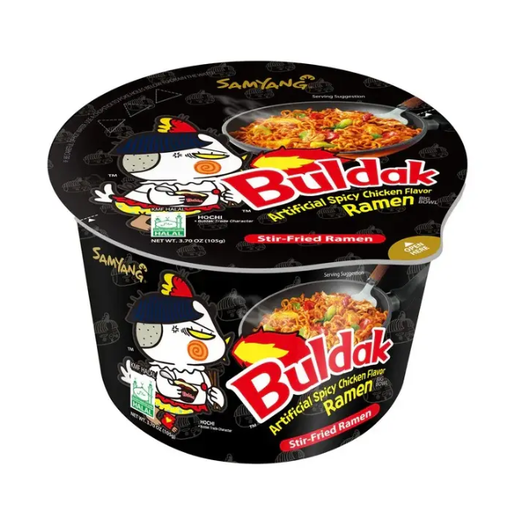
Why this fits the profile: The bowl format is practical when you have limited kitchen equipment, for example in a student room or at the office with a kettle.
The packaging is a single portion of 105 grams. So you don’t need to open a large multipack or store leftover sauce.
105 grams per bowl; quick preparation with boiling water; spicy chicken soup flavour; suitable as a lunch or snack according to the product description.
We’ve put together a full, up-to-date list of products that fully meet these strict selection criteria and comply with current European safety regulations.
That depends on the product. With broth noodles, you often add the seasoning powder during cooking. With Samyang Buldak and Paldo Volcano, you cook the noodles first, drain most or all of the water, and then mix in the sauce. Always follow the instructions on the packaging.
Unopened instant noodles are generally edible until the date on the packaging, provided you store them dry and at room temperature. The exact shelf life varies by product. So, check both the individual sachets and the outer packaging, and do not use damaged packaging.
Choose a variety where the sauce is added separately, so you can adjust the amount. Creamy flavours such as carbonara, cheese ramen or rose sauce can give a milder taste impression according to the recipe, but they may contain milk or other allergens. Always check the ingredients list.
