
Vandaag of morgen in huis

Kwaliteit gegarandeerd

Welkomstaanbiedingen ontgrendelen: GRATIS bezorging | Tot 80% korting | Gratis 30 dagen JoyPlus-proefperiode
Download de app
Korean SPF 50 sunscreen is popular thanks to its lightweight textures, hydrating ingredients and lack of a noticeable white cast. However, not every SPF 50 sunscreen is the same. A product that feels comfortable during a short bike ride may be less suitable for swimming, exercise or prolonged sun exposure.
Terms such as “serum”, “waterproof”, “reef-safe” and “suitable for sensitive skin” also deserve closer attention. Always check the full product information, ingredients list and directions for use. Below, you’ll find practical advice on what to look for in Korean facial sunscreen in the Netherlands.
SPF mainly refers to protection against UVB radiation. For daily protection against both UVA and UVB, also look for the PA rating, a UVA classification often found on Korean products. A product labelled SPF 50+ PA++++ therefore provides more information than the SPF rating alone.
Also check the European packaging. Products sold in the EU must comply with the applicable cosmetics regulations and safety requirements. Make sure the packaging includes an up-to-date ingredients list, volume, responsible party and usage warnings.
A lightweight, non-sticky sunscreen without a white cast is ideal for commuting and wearing under make-up. However, this doesn’t automatically mean that the formula is water-resistant. According to the product information, for example, the iUNIK Centella Calming Daily Sunwater is not water-resistant. For swimming or heavy sweating, you need a product that clearly states that it is water-resistant.
Even a water-resistant formula must be reapplied after swimming, drying yourself or heavy sweating.
Centella Asiatica, rice extract, aloe vera, hyaluronic acid and niacinamide are often found in Korean sunscreens. They can contribute to a pleasant skin feel, but on their own they say nothing about whether a product is suitable for every skin type.
A mineral sunscreen, for example, often contains zinc oxide. A chemical sunscreen uses organic UV filters. Both types can be suitable, depending on your preferences and how your skin reacts. If you have sensitive skin, also check for fragrance, essential oils and any other ingredients you have reacted to in the past.
For everyday use of an SPF 50 facial sunscreen, look for:
The BIRCH Juice Moisturizing Sunscreen and SKIN1004 Hyalu-Cica Water-Fit Sun Serum contain chemical UV filters according to the product information, including Diethylamino Hydroxybenzoyl Hexyl Benzoate and Ethylhexyl Triazone. Formulas like these are often transparent and lightweight on the skin.
The SKIN1004 Madagascar Centella Airfit Suncream Light and Haruharu Wonder Black Rice Pure Mineral Sunscreen contain zinc oxide as a mineral filter. Mineral sunscreens can leave a slight white cast, although the SKIN1004 formula mentioned above is described as having been developed to minimise this effect. Haruharu states that zinc oxide may initially leave a slight white cast and recommends blending it in thoroughly.
A hydrating sunscreen containing glycerine, hyaluronic acid or rice extract can feel comfortable on dry skin. A watery gel or serum texture is often better suited to oily or combination skin. If you are prone to reacting to fragrances, look specifically for fragrance-free sunscreen.
“Non-comedogenic”, “hypoallergenic” and “suitable for sensitive skin” should be treated as product claims made by the brand, not as guarantees for your skin. Based on a brand’s own research or a user test cited by the brand, such claims may offer an indication, but they do not replace an individual assessment. Stop using the product if irritation occurs and follow the warnings on the packaging.
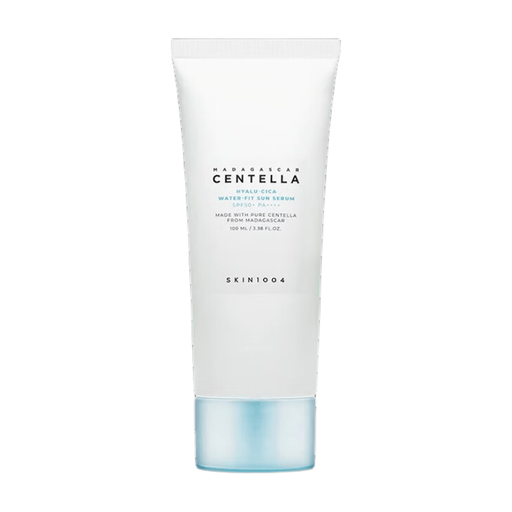
Why it suits this profile: The 100ml size is practical for everyday use on the face, neck and other exposed areas. The serum texture is ideal if you don’t want to feel a heavy layer on your skin.
The product information describes a lightweight formula without a sticky feel and does not list a mineral zinc oxide filter, making a visible white cast less likely.
100ml volume; chemical UV filters; Centella Asiatica, glycerine and several forms of hyaluronic acid according to the ingredients list.

Why it suits this profile: This Korean facial sunscreen is designed for everyday comfort and a nourishing cream finish, including when worn under make-up.
The product description states that it has a lightweight texture without a white cast, sticky feel or pilling. Always check the current packaging, however.
SPF50+ PA+++; fragrance-free according to the product information; rice extract and fermented ingredients are listed in the ingredients list.

Why it suits this profile: The compact size is handy for a bag, holiday or touch-ups on the go. According to the product description, the milk texture has a water-resistant design.
The product information mentions water resistance, making it a more logical choice for outdoor use than a formula where this feature is not stated.
SPF50+; milk texture; 12ml travel size; reapplication after swimming, sweating or drying yourself is still essential.
We’ve put together a complete, up-to-date list of products that fully meet these strict selection criteria and the applicable European safety requirements.
Apply your SPF 50 facial sunscreen as the final step in your morning routine, after serum and moisturiser. Spread the product evenly over your face, ears and neck. If recommended on the packaging, ideally wait 15 to 30 minutes before direct sun exposure.
Reapply outdoors according to the instructions, usually after around two hours and sooner after swimming, sweating or drying yourself. Use a separate SPF 50 body sunscreen when covering larger areas; a 50ml tube is particularly practical for the face.
This varies from formula to formula and from person to person. You may wish to choose a fragrance-free sunscreen, check the ingredients list and first test a small amount on a limited area of skin. Stop using it if you experience redness, itching, swelling or a burning sensation. Product claims about “sensitive skin” come from the brand and are not a personal guarantee.
Mineral sunscreen uses filters such as zinc oxide, which help reflect and scatter UV radiation at the skin’s surface. Chemical sunscreen uses organic filters that absorb UV radiation. The choice mainly depends on texture, finish, your skin preferences and any ingredients you react to. Haruharu Wonder Black Rice Pure Mineral Sunscreen and SKIN1004 Airfit Suncream Light list zinc oxide; the SKIN1004 Hyalu-Cica and BIRCH formulas list chemical UV filters.
A lightweight formula can be practical for this, but apply enough product and allow it to absorb briefly. Products with a serum or gel texture are often less likely to feel heavy. Apply make-up by patting it on afterwards to help prevent movement or pilling. When trying a new combination, always check first how the products work together.
