
Vandaag of morgen in huis

Kwaliteit gegarandeerd

Welkomstaanbiedingen ontgrendelen: GRATIS bezorging | Tot 80% korting | Gratis 30 dagen JoyPlus-proefperiode
Download de app
Korean snacks are popular with fans of K-food, street food and quick meals. However, choosing online can be tricky. Colourful packaging tells you little about portion size, preparation or allergens. Terms such as Korean hotdog, Korean corndog and tteokbokki are not always used consistently either.
With this practical buying guide, you can compare Korean snacks using verifiable criteria. That makes it easier to find a product suited to your taste, the time you have available and how you plan to store it.
Words such as “hot”, “spicy” or “Flamin” give you a general impression, but they are not part of a fixed European scale. A chilli sauce can also taste sweet, cheesy or creamy. So check the ingredients and nutritional information. For example, the Yopokki Hot and Spicy Tteokbokki Pack 120g lists 5 grams of sugar and 1.17 grams of salt per 100 grams. This helps you assess the flavour profile, although perceived spiciness remains subjective.
Many Korean instant snacks are intended as a quick snack or small portion. A 120 to 155-gram cup is suited to a different occasion than a 500 or 600-gram bag of Korean rice cakes. Always check the net quantity and see whether you are buying just a sauce mix or whether rice cakes, noodles or filling are included too.
Rice-based tteokbokki can still contain milk, wheat or soya because of the sauce. A corndog often contains gluten and soya, while a seaweed snack may contain sesame. Also check whether the product is delivered chilled, frozen or at ambient temperature. Frozen products, such as some Korean kimbap and hotdogs, must remain frozen from storage through to delivery, as stated in the product information.
Do not just look at the front of the packaging. Check the full ingredients list and allergen information. Important examples include:
If you have an allergy or intolerance, the label on the actual packaging takes precedence. Online product information may change.
Korean tteokbokki is all about the soft, chewy texture of rice cakes. Dried or ambient-stable cups are convenient when you want to eat quickly. Loose Korean rice cakes give you more flexibility: you can add your own gochujang, vegetables, fish cakes or sugar.
For example, the A+ rice cakes recommend rinsing the strips for 20 to 30 seconds, then cooking them with water and sauce. Instant varieties such as Yopokki are generally ready in a few minutes, often in the microwave. Always follow the preparation instructions on the packaging, as microwave power and the desired texture may vary.
Compare the price not only per pack, but also per 100 grams or per portion. Also consider:
The same principle applies to halal Korean snacks: look for a clear halal statement or certification on the packaging. Do not rely solely on a product name or the fact that it contains rice or chicken.
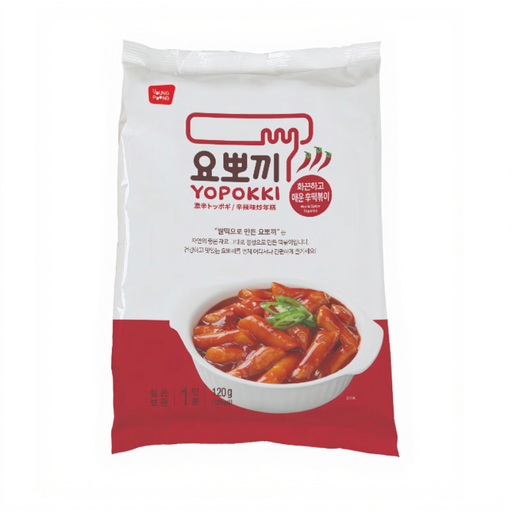
Why it suits this profile: A compact portion containing rice cakes and sauce, ideal for trying Korean tteokbokki without immediately buying a large bag of ingredients.
The quantity, nutritional values and storage instructions are provided, so you can assess the portion and preparation in advance.
120 grams, rice cake as the main ingredient and preparation requiring very little effort.
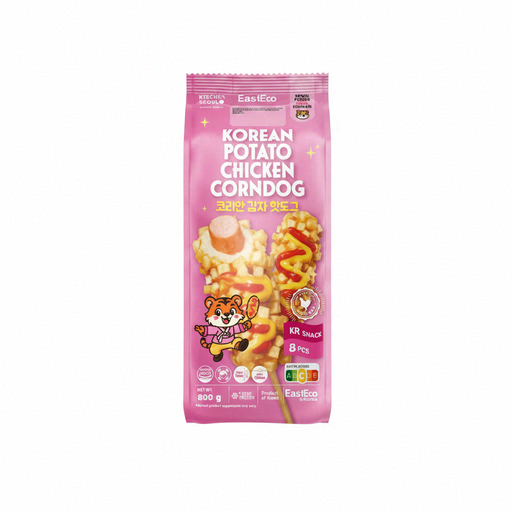
Why it suits this profile: Anyone wanting to serve Korean street food at home gets eight individual portions with a chicken sausage and potato coating.
The packaging clearly states the portion size, ingredients and allergens. The product is stored frozen at -18 °C.
8 x 100 grams, chicken filling and potato in the corndog coating; suitable for sharing or keeping in stock.
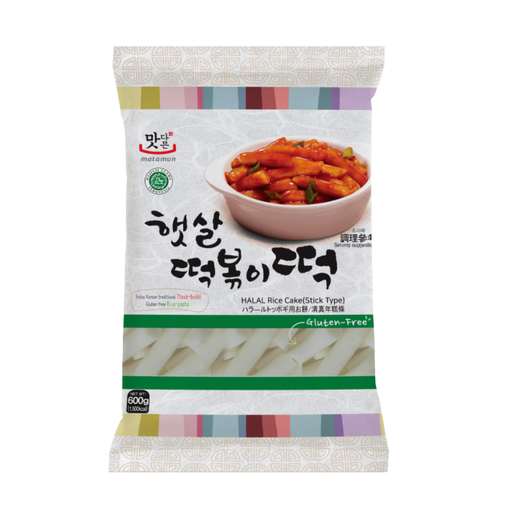
Why it suits this profile: A larger supply for anyone who regularly makes tteokbokki, soup or other rice cake dishes and is specifically looking for a halal statement.
The packaging lists rice as the main ingredient and, according to the product information, contains none of the 14 main EU allergens. Check the halal status on the current label.
600 grams, a simple composition and enough for several cooking occasions.
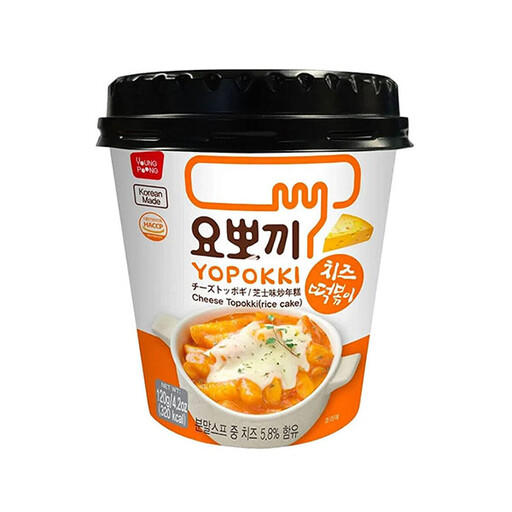
Why it suits this profile: The cup contains rice cakes and a ready-made cheese sauce and, according to the product information, can be prepared in the microwave in just a few minutes.
The cup format keeps preparation to a minimum. However, pay attention to the listed allergens: milk, wheat and soya.
310 kcal and 1.75 grams of salt per 100 grams according to the product page; it can be stored at ambient temperature in a cool, dry place.
We have put together a complete, up-to-date list of products that fully meet these strict selection criteria and the applicable European safety regulations.
Tteokbokki is the dish in which rice cakes are combined with a sauce, often based on chilli, soya or other flavourings. Korean rice cakes are the basic ingredient. With a bag of rice cakes, such as MATAMUN or A+, you can make your own sauce. A Yopokki pack or cup usually contains both rice cakes and a pre-mixed sauce.
That depends on the type of product. Ambient-stable snacks should be stored in a cool, dry place and have a date printed on the packaging. Frozen Korean corndogs, hotdogs and some kimbap should be kept in the freezer at the stated temperature. Once opened or thawed, they have a shorter shelf life. Always follow the instructions on the actual packaging.
Compare the net quantity, ingredients, allergens, preparation method and storage conditions. Also consider the product format: an instant cup is suitable for quick use, while loose rice cakes give you more flexibility when preparing a dish. For halal Korean snacks, also check that the halal statement is clearly displayed on the product or packaging.
