
Vandaag of morgen in huis

Kwaliteit gegarandeerd

Welkomstaanbiedingen ontgrendelen: GRATIS bezorging | Tot 80% korting | Gratis 30 dagen JoyPlus-proefperiode
Download de app
Fancy a quick bowl of noodles with a spicy, savoury flavour? With Korean kimchi ramen, you can put a hot meal or snack on the table in just a few minutes. However, many packs look more alike than they really are. The differences often come down to portion size, preparation method, ingredients and allergens.
As Joybuy Product Recommendation Officer, I filter the most important product information so you do not have to rely so heavily on eye-catching claims on the packaging. Below, you will discover what to look for when choosing kimchi noodles, which common pitfalls to avoid and which type of product best suits the way you plan to use it.
A 75 to 100 g cup of kimchi ramen is convenient for travelling, the office or a student room. However, the portion may be smaller than a 120 or 130 g packet of noodles. So check the net weight, rather than looking only at the size of the packaging.
A larger bowl, such as a big bowl, also takes up more space in your bag and cupboard. Choose a cup for convenience and a packet for cooking in a pan or preparing multiple portions.
The flavour may come from kimchi flakes, kimchi powder, a seasoning mix or a sauce. This affects the overall experience. Some kimchi noodles are mainly sour and spicy, while others taste more savoury, garlicky or sweet.
According to Nongshim’s product information, some varieties contain kimchi flakes and dried vegetables, for example. Ottogi lists kimchi seasoning powder and dehydrated kimchi, among other ingredients. These are verifiable differences, but they do not automatically tell you which flavour you will enjoy most.
There is no universal European scale for comparing the spiciness of instant ramen. A product name containing “extra spicy” is therefore primarily a brand’s own indication. If you are unsure, start with a standard variety and add your own chilli, spring onion or egg.
Check whether you are buying Korean instant noodles in a packet, bowl or cup. A cup generally requires boiling water and a waiting time of around three to five minutes. Packet noodles often require approximately 500 to 550 ml of water and preparation in a pan.
Not every variety is a Korean noodle soup. Paldo Bibim Men is rinsed after cooking and mixed with sauce, without any broth. This is a cold or lukewarm preparation, making it a different choice from instant kimchi ramen with soup.
Wheat and gluten are found in many ramen noodles. Also check for soya, sesame, fish, mustard and crustaceans. Allergen information may vary by brand and flavour. For example, Nongshim Kimchi Ramyun’s product information lists gluten, soya and mustard, among other allergens; Ottogi lists gluten and soya. BIBIGO Original and Extra Spicy contain gluten, soya and sesame.
Always read the label on the packaging you receive. Online product information and packaging may differ. Do not use a product if the packaging is damaged, and follow the manufacturer’s preparation instructions.
Instant noodles generally contain relatively high levels of salt. The product information provided, for example, lists approximately 3.7 g of salt per 100 g for Ottogi KIMCHI RAMEN and 4.8 g per 100 g for NongShim Kimchi Ramyun 120 g. Other varieties state higher values.
Compare the nutrition table per 100 g as well as the number of grams per portion. This prevents a smaller cup from automatically appearing better value or lighter. Using less than the full seasoning mix may affect the flavour and nutritional values, but only change the preparation method within the instructions given on the packaging.
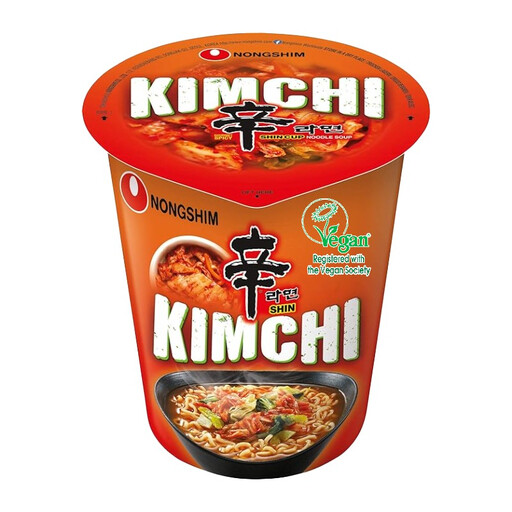
Why it suits this profile: The compact cup is practical if you want to try instant kimchi ramen without immediately buying a large multipack.
The net weight of 75 g is clearly stated, allowing you to weigh up the smaller portion against the low entry price and convenience.
Cup preparation, kimchi flakes and dried vegetables; according to the product information, it can be prepared with boiling water.
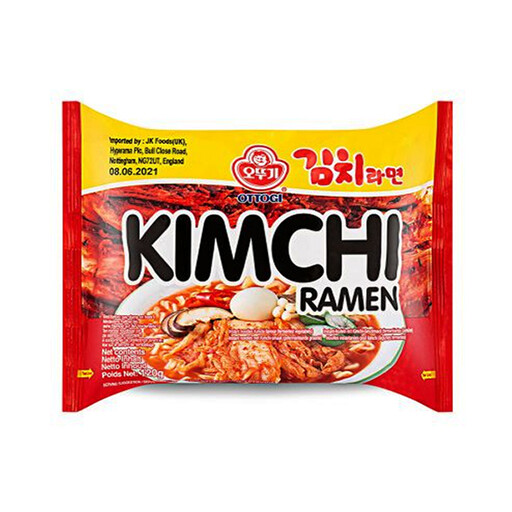
Why it suits this profile: This packet contains a 120 g portion and has a product description featuring kimchi seasoning powder and dehydrated kimchi.
The ingredients list shows where the kimchi flavour comes from; always check it alongside the allergen information.
120 g per portion, preparation in approximately 3–5 minutes and, according to the product information, 3.7 g of salt per 100 g.
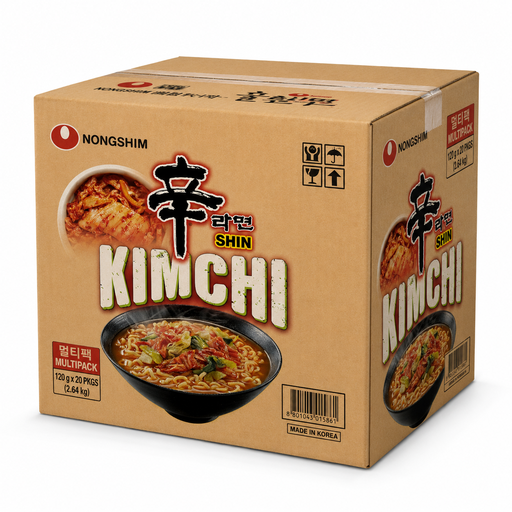
Why it suits this profile: A box containing 20 portions is ideal for households, offices and ramen fans who buy ramen noodles regularly.
The quantity per portion and total number of packs are clear in advance, allowing you to calculate the price per portion.
20 portions of 120 g, soup preparation and a stated nutritional value of 4.8 g of salt per 100 g.
We have compiled a complete, up-to-date list of products that fully meet these strict selection criteria and the applicable European safety regulations.
For a cup, you generally add boiling water up to the indicated line and leave the noodles to stand for approximately three to five minutes. Packet noodles are often cooked in a pan with around 500 to 550 ml of water. Always follow the instructions on the label, as timings and quantities vary from product to product.
The best-before date is shown on the packaging. Store unopened noodles in a cool, dry place away from direct sunlight. Do not use a pack if it is damaged. Once opened, it is best to prepare and consume the product immediately.
No. Some varieties contain fish, anchovies, fish sauce or crustaceans. Other product information lists only plant-based ingredients, but always check the current label. Also look out for warnings about possible traces of milk, egg, sesame or other allergens.
