
Vandaag of morgen in huis

Kwaliteit gegarandeerd

Welkomstaanbiedingen ontgrendelen: GRATIS bezorging | Tot 80% korting | Gratis 30 dagen JoyPlus-proefperiode
Download de app
Korean instant noodles are handy for a quick meal, a late-night snack or stocking up your student kitchen. But Korean ramen can vary widely in flavour, preparation, portion size and heat. And eye-catching packaging doesn’t always tell you what you need to know.
That’s why the Joybuy Product Recommendation Officer helps you check the key differences before you buy instant ramen.
Spicy instant noodles are often marketed mainly on how hot they are. That doesn’t tell you much about the rest of the flavour profile. A noodle dish might have a spicy broth, a dry sauce, a creamy carbonara flavour or a seafood base.
So check whether the product contains a soup base, sauce, vegetable mix or several seasoning sachets. Buldak noodles, for example, are mixed with the sauce after cooking. This gives a different result from Korean noodle soup, where the seasoning goes into the cooking water.
A box of 10, 15 or 20 portions may seem like good value, but it’s less practical if you haven’t tried the flavour before. Check both the total weight and the number of portions. A multipack of instant noodles makes most sense for a household with several fans, a well-stocked cupboard or regular use.
For your first taste, individual portions of around 100 to 140 grams are easier to manage.
Many Korean ramen products contain wheat, gluten and soya. Creamy varieties may also contain milk. Some seafood-flavoured products, for example, contain prawns. Always check the packaging, especially if you have allergies or intolerances.
Salt content also varies by product. For example, the product information for various Nongshim noodles gives values of around 2 to 5.7 grams per 100 grams. Exact values and portion sizes are shown on the packaging and may vary between varieties.
There are broadly two ways to prepare them:
Check the preparation instructions before you order. A cup version may only need hot water, while a packet version requires a pan and draining.
Many products in this category weigh between 100 and 140 grams per portion. Nongshim Korean Hot & Spicy Bowl Noodle, 100 grams, is a cup version that the product information says can be prepared with boiling water in around 4 to 5 minutes. A 130-gram packet of noodles may make a more substantial portion, but often needs to be cooked and mixed.
Also check the recommended amount of water. According to the product information, Shin Ramyun is prepared with around 500 ml of water; other varieties use less water or are drained after cooking.
Use the ingredients list to check marketing claims:
Brands may promote the flavour or effects of their products. Don’t treat these descriptions as independently verified facts; check the product details, allergens and preparation instructions on the label.
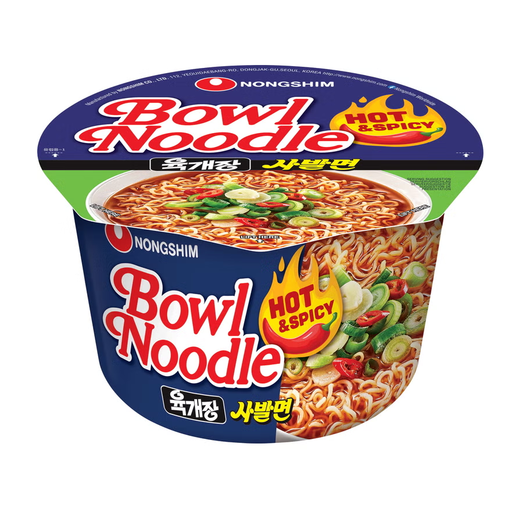
Why it suits this buyer: The cup format is practical for students, the office or a quick meal without needing a pan. The preparation instructions say to add boiling water and wait around 4–5 minutes.
You don’t have to buy a large multipack to try the flavour. The product information lists a separate soup base and dried vegetables, so you know what to expect.
100 grams per cup, prepared with boiling water, with a stated nutritional value of 432 kcal per 100 grams. Contains wheat and soya.
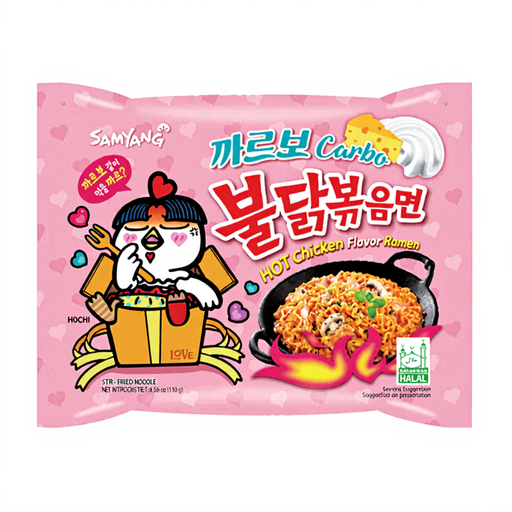
Why it suits this buyer: This variety combines a spicy sauce with a creamy carbonara flavour. It’s a good choice if you’re after more than a standard Korean noodle soup.
The product information makes clear that this is a sauce and powder mix, not a traditional broth. That helps you choose it specifically for a creamy, spicy flavour.
130 grams per pack, with preparation listed as a quick meal or snack. Contains gluten, soya and milk.
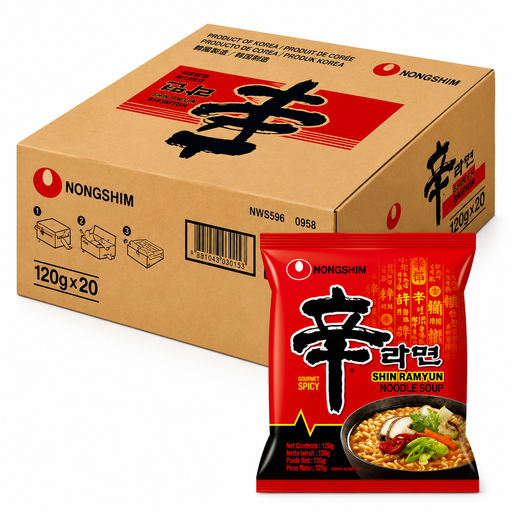
Why it suits this buyer: The box of 20 portions is designed for regular use, shared households and planning ahead.
The number of portions and individual pack weights are clear upfront. This makes it easier to work out your total stock and cost per portion.
20 individual portions of 120 grams, with a preparation time of around 4–5 minutes. Contains wheat and soya.
We’ve put together a complete, up-to-date list of products that meet these strict selection criteria and current European safety regulations.
Always follow the instructions on the packaging. For soup varieties, use the recommended amount of water and cook the noodles for long enough. With dry, spicy instant noodles, you’ll usually drain off almost all the water before adding the sauce.
Store unopened packs in a cool, dry place, away from direct sunlight. Check the best-before date on the packaging. It’s best to prepare an opened pack straight away; don’t store individual seasoning or sauce sachets with moist ingredients.
No. Many Korean ramen varieties are spicy or hot, but the intensity varies from product to product. Buldak noodles are known for their distinctly spicy sauce, while creamy varieties can balance the flavour differently. Check the product description and, if you like, start with a single portion.
The shelf life is shown on the packaging. Unopened dried noodles generally remain suitable up to the stated date if stored in a cool, dry place in a sealed pack. Check the packaging before use and don’t eat the product if the pack is damaged.
A multipack can be practical if you eat them regularly, while individual packs are more convenient for comparing different flavours. Compare the total price, number of portions and weight per portion rather than looking only at the price of the box.
