
Vandaag of morgen in huis

Kwaliteit gegarandeerd

Welkomstaanbiedingen ontgrendelen: GRATIS bezorging | Tot 80% korting | Gratis 30 dagen JoyPlus-proefperiode
Download de app
Korean instant noodles are handy for a quick lunch, a simple evening meal, or a store-cupboard staple for busy days. But the choice goes far beyond just “mild” or “spicy”. Korean ramen, Buldak noodles and noodles with a stir-fry sauce all differ in how they’re prepared, their portion size, allergens and packaging format.
What’s more, the packaging can be misleading. A big picture of chillies, for example, doesn’t always tell you how hot the sauce really is. And a multipack might look like good value, but it’s less practical if you don’t like the flavour. These checks will help you avoid a bad buy.
With spicy Korean noodles, the focus is often on the heat. But the actual flavour can also be sweet, sour, creamy, garlicky or savoury. Buldak noodles with carbonara, for instance, combine a creamy powder mix with chilli and chicken flavours. That’s quite different from a simple hot broth.
So pay attention to the composition of the sauce, not just words like “hot”, “volcano” or “spicy”. If you’re not used to spicy food, start with half the sauce and add more to taste later.
Not all instant ramen is eaten with broth. Some varieties are drained after cooking and mixed with a sauce. Paldo Bibim Men is a clear example: the noodles are boiled, rinsed in cold water and tossed with a sweet-spicy, sour sauce – no soup involved.
So check beforehand whether you’re looking for Korean noodle soup, stir-fried noodles or cold mixed noodles. The preparation method largely determines what kind of meal you’ll end up with.
A box of 20 or 40 portions is practical for students, families and instant noodle fans. But with a multipack, allergens and nutritional values still matter. Wheat, soya, milk, sesame, shellfish and celery are common in the seasonings.
Read the product page before you buy, and check the label when it arrives. Product packaging can change. The information on the packaging is what counts, especially if you have allergies or food intolerances.
Look at the instructions:
Cooking time for many products is around three to five minutes. For Paldo Bibim Men, the instructions are to boil for four minutes, rinse in cold water and drain well. Samyang Buldak Carbonara is also prepared as a dry, saucy meal.
A single sachet of 85 to 140 grams is usually intended as one meal or a generous snack. A five-pack is good for trying a flavour first while still having a bit of stock. A box of 20 or 40 portions is better suited to regular use.
Don’t just compare the price of the box – also compare the price per portion. A multipack of instant noodles is only good value if you actually eat the flavour. With bulk packs, also check the best-before date and store the boxes in a cool, dry place away from direct sunlight.
Wheat noodles generally contain gluten. Other common ingredients include soya, milk, sesame and shellfish. According to the product information, Samyang Buldak Carbonara contains gluten, soya and milk, among other things. Nongshim products may also contain multiple allergens or traces of them.
Also check the salt content. The product information provided shows, for example, 2.6 grams of salt per 130 grams for Samyang Buldak Carbonara and 3.4 grams per 100 grams for Nongshim Champong Ramyun. These values are product- and portion-specific; always compare the same unit.
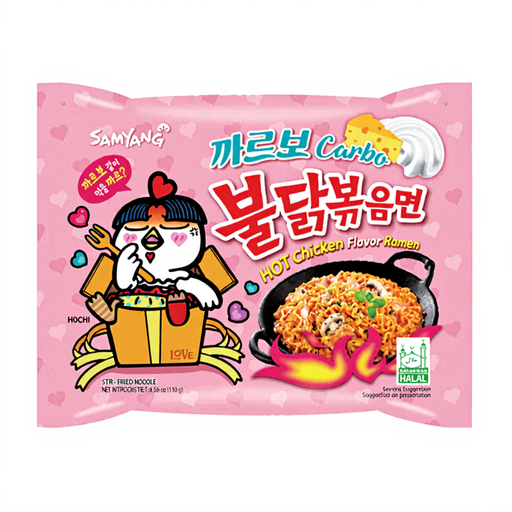
Why this fits the profile: A single 130-gram portion is ideal for trying the combination of creamy carbonara and spicy sauce without committing to a large box.
The product information lists both the creamy powder mix and the spicy seasonings. Gluten, soya and milk are also listed as allergens.
Single portion; dry preparation; 423 kcal and 2.6 grams of salt per 130 grams according to the stated nutritional information.
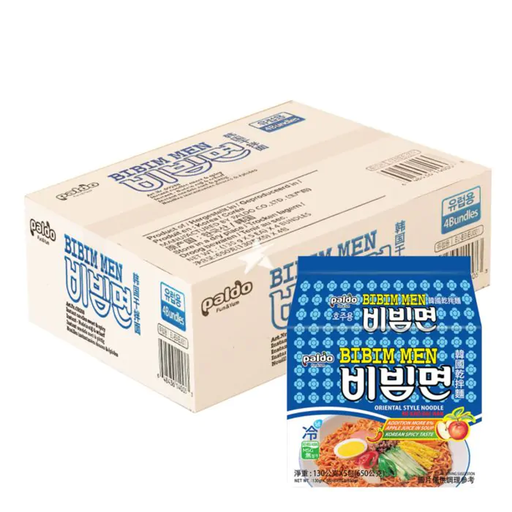
Why this fits the profile: The product description gives a clear preparation method, and the box contains 20 portions. That suits households that eat Korean noodles regularly.
This is not a soup variety: the instructions say to boil, rinse in cold water and mix with the sauce. So the type of dish is clear from the start.
20 portions of 130 grams; sweet-spicy and sour sauce; according to the product information, free from the 14 main EU allergens.
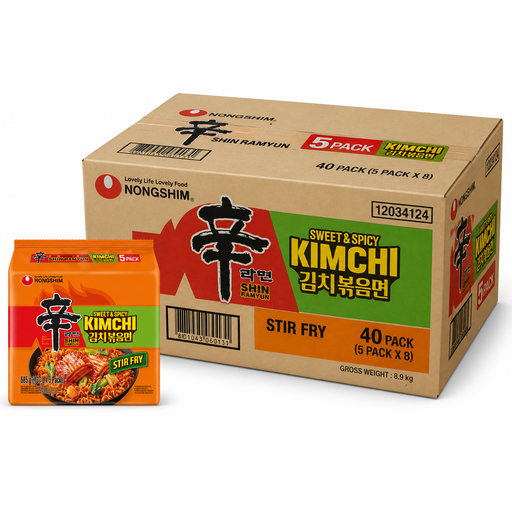
Why this fits the profile: A box of 40 portions is aimed at frequent use, for example in a student house, large household or store cupboard.
The preparation instructions state that the water is drained after cooking and the sauce is then added. This avoids confusion with ramen in broth.
40 portions of 137 grams; kimchi seasoning and dried vegetables; cooks in about three minutes according to the product instructions.
We’ve put together a full, up-to-date list of products that fully meet these strict selection criteria and comply with current European safety regulations.
Always follow the instructions on the packet. For dry noodles, you usually boil the noodle block in plenty of water first. Then drain the water before adding the sauce. For soup noodles, the cooking water stays as part of the dish.
You can add to the meal with pak choi, spring onion, cucumber, kimchi, a boiled egg or tofu. With very spicy varieties, add only part of the sauce first. That way you keep control of the flavour without wasting the product unnecessarily.
Store unopened packets in a cool, dry cupboard, away from moisture and direct sunlight. Don’t use a packet if it’s damaged, and always check the best-before information on the actual label.
No. The range goes from mild soy flavours to very hot chicken and chilli varieties. Words like “Carbonara”, “Kimchi”, “Bibim” and “Shoyu” mainly indicate a flavour direction. Check the sauce and seasonings on the label to get a better idea of the heat level.
Buldak noodles are often drained after cooking and mixed with a concentrated sauce. Regular instant ramen is more often eaten as a soup with broth. The exact preparation method varies by product, so follow the instructions on the packet.
It can be, especially if you eat that flavour regularly. Compare the price per portion and check the total quantity, allergens and best-before date. For a first try, a single portion or five-pack is often more practical than going straight for a box of 20 or 40 packets.
