
Vandaag of morgen in huis

Kwaliteit gegarandeerd

Welkomstaanbiedingen ontgrendelen: GRATIS bezorging | Tot 80% korting | Gratis 30 dagen JoyPlus-proefperiode
Download de app
Korean instant noodles are a handy option for a quick lunch, a late-night snack, or a store-cupboard staple for busy days. But the differences between the varieties are significant. One pack contains a punchy broth, while another comes with a sauce that you need to drain off. The heat level, portion size, allergens, and price per portion also vary widely.
If you only go by a flashy packet or a well-known name, you could end up buying a multipack that doesn't really suit how you'll use it. So, keep an eye on these three common pitfalls.
Terms like hot, spicy and fire chicken don't tell you exactly how much heat to expect. The strength depends on the chilli extract, pepper powder, and the amount of sauce or seasoning mix. With Samyang Buldak, the focus is often on a concentrated sauce. Nongshim Shin Ramyun, on the other hand, uses a broth that includes chilli, garlic, and dried vegetables.
So, you don't always need to add the whole sachet of seasoning. With very spicy ramen, you might want to start with just part of the sauce or powder. Always check the cooking instructions on the packet, though.
Not all instant ramen is made the same way. With Shin Ramyun, you usually cook the noodles together with the soup mix for about 4 to 5 minutes. Chapagetti and Buldak are more like sauce noodles: you cook the noodles, drain off most of the water, and then stir in the sauce.
For a student room or an office, the format also matters. A bag pack needs a pan, whereas cup noodles only need boiling water and a few minutes of resting time.
A box of 20 portions might seem like a bargain, but check the price per portion, the gram weight, and the best-before date. A 120g portion is not the same as a 140g portion. Also, look at the nutritional values per 100g. On the product pages, different varieties show values from around 417 to 550 kcal per 100g, depending on the product and how it's prepared.
Korean noodle soup contains a soup base that you cook with water. That's ideal if you're after a warm bowl of broth. Kimchi noodles add a sour, spicy kick to that. Chapagetti has a black bean sauce and is described as not having an extra spicy broth. Buldak Carbonara combines a sauce with a creamy flavour and chilli.
So, choose based on the preparation style:
Many products in the range weigh between 112 and 140g per portion. That might not seem like a big difference, but it adds up in a box of 20. So, check the net weight and the number of packs.
A multipack of instant noodles is especially practical if you eat one flavour often. If you want to compare first, choose a smaller pack of five or six portions.
Read the allergen information before you buy. Many Korean noodles contain wheat and gluten. Depending on the flavour, they may also contain soya, milk, sesame, fish, crustaceans and molluscs, mustard, or celery.
For the products in this selection, allergens are listed per product. For example, Samyang Buldak Carbonara contains gluten, soya, and milk. Nongshim Kimchi is listed on the product page as containing gluten and soya; some packs may mention additional allergens or traces.
The information on the packet is what counts. Product details can change and packaging can vary. So, always check the label before eating, especially if you have an allergy or intolerance.
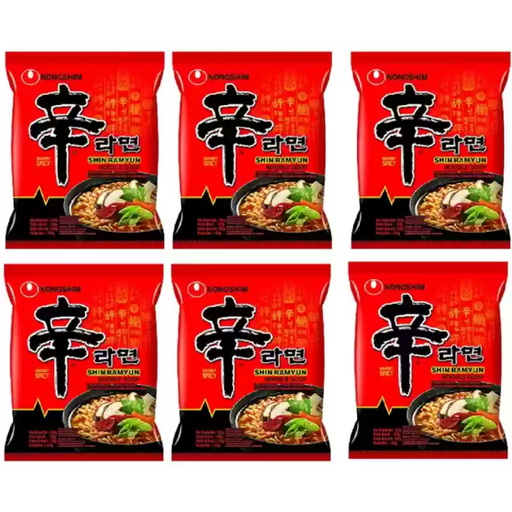
Why this fits the profile: A pack of six portions is manageable if you're trying Korean ramen for the first time or don't want to buy a huge stock straight away. According to the product information, it takes about 4.5 minutes to prepare.
The six-pack reduces the risk of buying too much of one flavour. The pack states a clear cooking time and a portion size of 120g.
Six individual portions; soup base with dried vegetables and a preparation time of around 4.5 minutes.
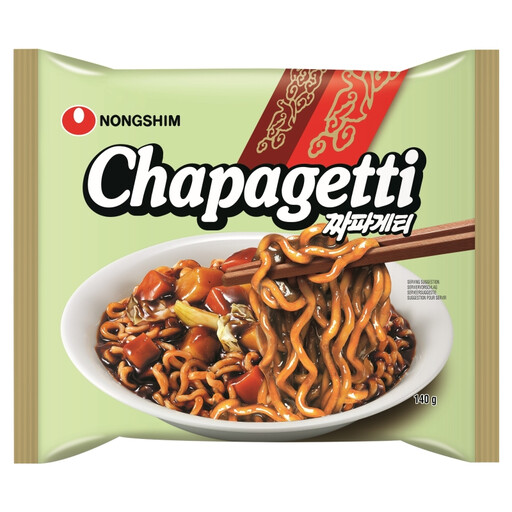
Why this fits the profile: If you don't want the same soup every time, Chapagetti offers a different preparation style with soft, firm noodles and a savoury black bean sauce.
The product description makes it clear that these are sauce noodles, not a classic broth. That means you can match the cooking method to your kitchen set-up in advance.
140g portion; black bean sauce; can be combined with vegetables or kimchi.
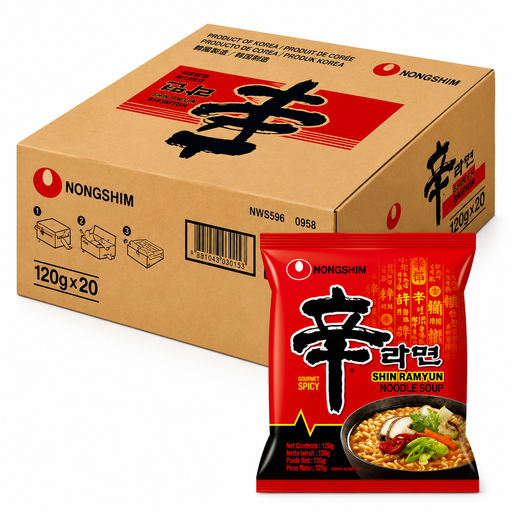
Why this fits the profile: A box of 20 individual portions is ideal for households, shared student houses, and ramen fans who want a bowl on a regular basis.
The number of portions and the weight are clear upfront. That makes it easier to estimate your stock and price per portion than with individual purchases.
20 portions of 120g; preparation in around 4 to 5 minutes; suitable for adding egg, vegetables, or meat.
Samyang Buldak is an option for fans of spicy ramen and creamy flavours. The Carbonara, Creamy Carbonara and Cheese varieties contain milk derivatives and soya according to the product information. Check the label if you need to avoid allergens. For a less concentrated broth, you could also look at kimchi noodles or the vegetable variant from Nongshim.
We've put together a full, up-to-date list of products that fully meet these strict selection criteria and comply with current European safety regulations.
Follow the instructions on the packet. For many Korean noodle soups, you boil around 500 to 550ml of water, add the noodles and seasoning mix, and let it cook for 4 to 5 minutes. With Buldak and Chapagetti, you usually cook the noodles first and then mix them with the sauce.
The best-before date is on the packet. Store unopened noodles in a cool, dry place away from direct sunlight. Don't use any product with damaged packaging. Once prepared, it's best to eat instant noodles straight away.
Compare the gram weight, the number of portions, the cooking method, the heat level, and the allergens. Also, check the nutritional values per 100g and choose a multipack that matches how much you'll use. That way, you can avoid a big box sitting unused in your store cupboard.
