
Vandaag of morgen in huis

Kwaliteit gegarandeerd

Welkomstaanbiedingen ontgrendelen: GRATIS bezorging | Tot 80% korting | Gratis 30 dagen JoyPlus-proefperiode
Download de app
Korean instant noodles are handy for a quick lunch, a late-night snack, or keeping a stash at home. However, Korean ramen varies widely in flavour, spiciness, preparation method and packaging. A single packet of noodles may seem cheap, but a large multipack can be impractical if you don't like the taste. What's more, eye-catching terms like "extra hot", "carbonara" or "vegetable" can set expectations that don't quite match the ingredients list.
The main pitfalls when buying instant ramen are:
First, check the type of product. Korean noodle soup usually contains a broth powder and vegetable mix. Shin Ramyun and many Nongshim noodles are cooked in around 500 to 550 ml of water and served after about 4 to 5 minutes.
With stir-fry noodles, you cook the noodles first and then drain off some of the water. After that, you add the sauce. Samyang Buldak Carbonara falls into this category. The result is more concentrated and often spicier than a soup variety.
Cold noodles have a different preparation method. After cooking, they are rinsed and combined with a sweet and sour sauce, sesame oil or chilli sauce. So don't choose based on the flavour name alone – also consider how you want to eat them.
A single packet of around 112 to 140 grams is practical for a quick meal. For students, offices and families, a multipack of instant noodles can be more appealing. When comparing, don't just look at the total price, but also:
A box of 5 or 6 servings is a good way to try a flavour first. A pack of 20 is better suited to those who already know which ramen they eat regularly.
Always read the label before buying. The nutritional values listed are often per 100 grams of dry product, not always for the full prepared bowl. Pay particular attention to salt, fats, saturated fats and allergens.
Many Korean instant noodles contain:
If you're looking for a vegetarian option, extra care is needed. According to the product description, Nongshim Soon Veggie Ramyun contains no meat ingredients and a vegetable mix with pak choi and carrot. Still, check the actual packaging, as recipes, allergen information and packaging details can change. The product packaging is the final authority.
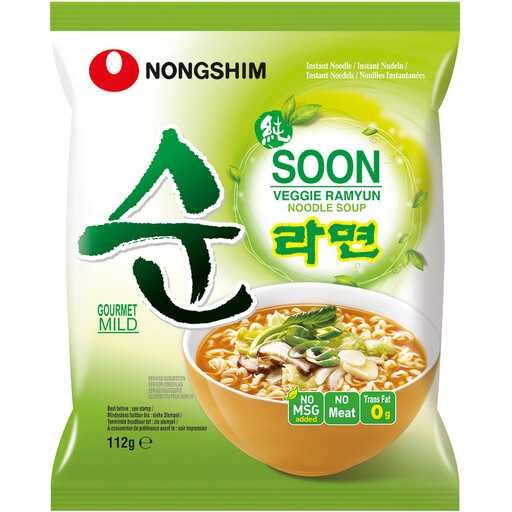
Why this fits the profile: A single serving is a low-risk way to try Korean noodles for the first time. The flavour description mentions a savoury broth with dried vegetables.
You don't have to buy a large multipack straight away. Do check the current allergen and ingredient information on the packaging.
112 grams per pack, vegetable mix with pak choi and carrot, quick to prepare.
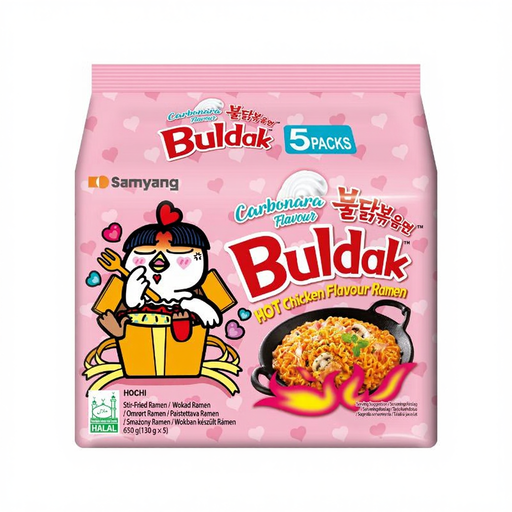
Why this fits the profile: This multipack combines a creamy carbonara style with the signature spicy Buldak sauce. Ideal for fans of bold flavour and thicker noodles.
The preparation method makes it clear these are stir-fry noodles, not a regular broth soup. So you know exactly what you're buying.
5 servings of 130 grams, carbonara powder and sauce, 423 kcal and 2.6 grams of salt per 100 grams according to the product information.

Why this fits the profile: A box of 20 individual servings is ideal for households, offices or regular ramen eaters who want a steady supply.
The packaging clearly states the number of servings and a cooking time of around 4 to 5 minutes. Check the best-before date before stocking up.
20 servings of 120 grams, soup base with dried vegetables, suitable for adding egg or vegetables.
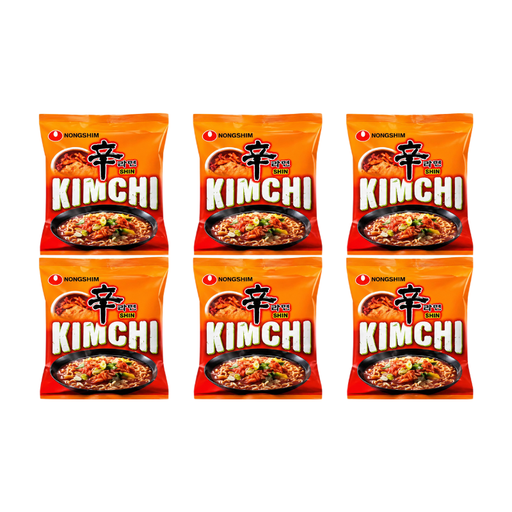
Why this fits the profile: This pack is aimed at those who want to try the sour, spicy note of kimchi in a soup form without buying a box of 20 straight away.
The pack of 6 servings limits the risk of having too large a stock. Note: the ingredient information lists wheat and soya; check the label for any changes.
6 servings of 120 grams, kimchi flakes and vegetable mix, designed as a quick Korean noodle soup.
We've put together a full, up-to-date list of products that fully meet these strict selection criteria and comply with current European safety regulations.
Follow the instructions on the packaging. For soup noodles, use the stated amount of water and cooking time. For stir-fry noodles, it's important not to keep all the cooking water if the instructions say to drain the noodles. Feel free to add egg, spring onion, pak choi or mushrooms, but bear in mind the extra allergens and nutritional values.
Store unopened packs in a cool, dry place away from direct sunlight. Do not use a damaged pack. The best-before date and current preparation instructions are on the product itself.
No. Shin Ramyun, Samyang Buldak and Ottogi Yeul Ramen are examples of spicy noodles, but the intensity varies from recipe to recipe. Soon Veggie has a savoury vegetable flavour according to the product description. Look for terms like "hot", "spicy" and "mild", and add only part of the seasoning powder first if you want to adjust the heat.
It varies by type. Many soup noodles use around 500 to 550 ml of water and are cooked for 4 to 5 minutes. Cup noodles often use less water. Always check the packaging; too little water makes the broth saltier, and too much water dilutes the flavour.
No. A product with "veggie" or "vegetable" in the name can still contain allergens or ingredients that don't suit every diet. Check the full ingredients list and any vegan certification on the current packaging. When in doubt, the product packaging is the final authority.
