
Vandaag of morgen in huis

Kwaliteit gegarandeerd

Welkomstaanbiedingen ontgrendelen: GRATIS bezorging | Tot 80% korting | Gratis 30 dagen JoyPlus-proefperiode
Download de app
Korean instant noodles are a handy option for a quick meal, a late-night snack, or to keep in the cupboard. But not every pack is right for every eater. A large multipack might seem good value, but it’s a pain if you don’t like the flavour. And terms like “creamy”, “spicy” and “chicken flavour” don’t always tell you how much heat, salt or dairy content to expect.
With this buying guide, you can compare Korean ramen based on flavour profile, preparation, portion size, allergens and packaging. That way, you can choose more wisely between Samyang Buldak ramen, spicy instant noodles, soup noodles and an instant ramen multipack.
The intensity varies a lot between different varieties. Samyang Buldak Original and Double Spicy are aimed at those who love serious heat. A carbonara, cheese or rose variety combines chilli with a creamier taste, but it’s still often spicy. According to the product description, the Original variety is described as “extremely spicy”. That’s useful information if you’re sharing these noodles with children or people who aren’t used to spicy food.
A box of 20 or 40 portions might lower the price per portion, but it does need enough storage space and a flavour you’ll want to eat more than once. So check the net weight per pack, the number of portions and the best-before information on the pack you receive. For a first try, five portions are often more practical than a big bulk pack.
Buldak Carbonara, Cheese, Quattro Cheese and Rose contain milk powder, cheese powder or other dairy ingredients, according to the product information. Many varieties also list wheat, gluten and soya. Always check the label, especially if you have an allergy or intolerance. Product packaging can change; the information on the pack is what counts.
Not all Korean noodles are eaten as a soup. With Buldak noodles, you usually boil the noodles, drain off almost all the water and stir the sauce through. Nongshim Shin Ramyun, on the other hand, is prepared with seasoning powder and vegetable flakes in the cooking water. If you want a saucy meal, look for Korean chicken noodles, Buldak or “stir-fry”. For a bowl of broth, Korean ramen with a soup base is a better fit.
Check whether you need a pan, kettle or just a bowl. A cup ramen is practical for the office or on the go, while a packet variety often needs a pan and draining. The cooking instructions differ from product to product. For example, the Carbonara variety (130g) says to boil for about five minutes, then leave around 120ml of water in the pan and briefly stir in the sauce.
A portion in the range is often between 80g and 145g. Don’t just look at calories; also check salt, fats and allergens per 100g. The product information for Samyang Buldak Carbonara, for instance, lists 423 kcal and 2.6g of salt per 100g. Nongshim Shin Ramyun lists 3.5g of salt per 100g. These values are meant for comparing products; always check the current label before eating.
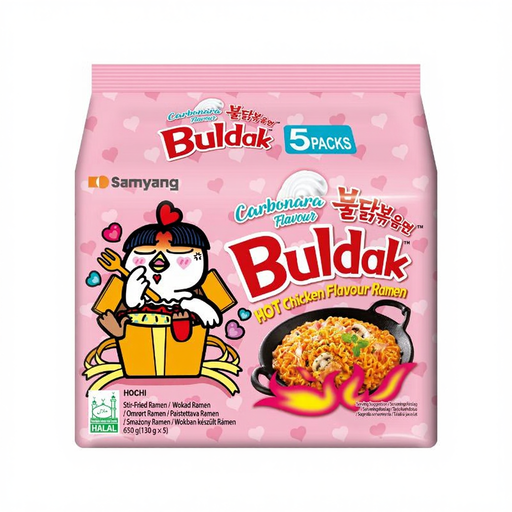
Why this fits the profile: Five portions give you room to try the combination of spicy chicken and carbonara without buying a big box straight away.
The smaller multipack limits the risk of waste, and the product information clearly lists milk, soya and gluten as points to watch.
130g per packet, five portions and a combination of carbonara powder with spicy sauce.
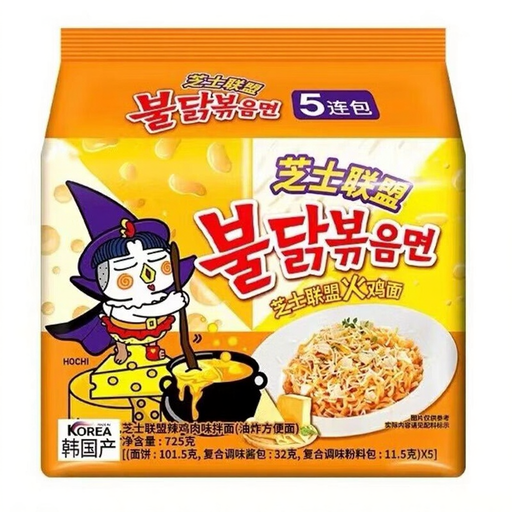
Why this fits the profile: This variety is aimed at those who want a fuller cheese element alongside the spicy Buldak sauce.
The product page specifies 145g per portion and lists gluten, soya, milk and celery as allergens.
Five packets of 145g and a cheese blend with mozzarella according to the ingredients list.
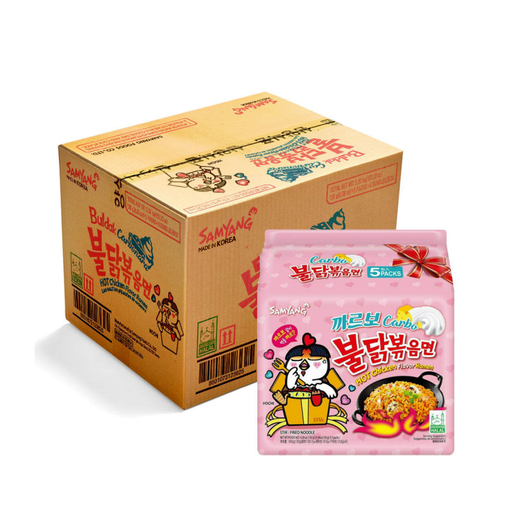
Why this fits the profile: The box of 40 packets is suitable for a household, a shared eating occasion or a regular stock of spicy instant noodles.
The number of portions and the weight are clear upfront, so you can estimate the price per portion and the storage space needed.
40 individual portions of 130g and a preparation with sauce rather than a classic broth.
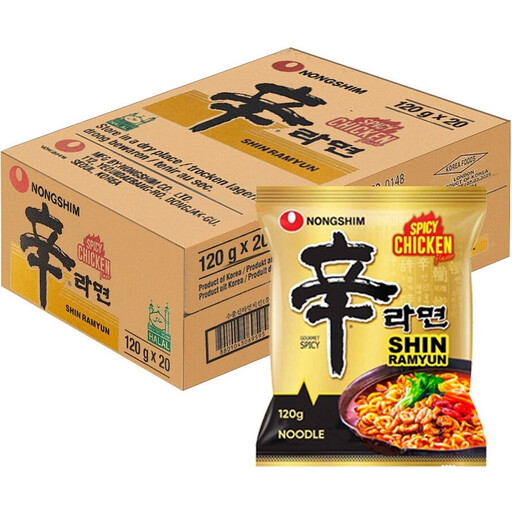
Why this fits the profile: This box suits anyone looking for Korean ramen with broth, dried vegetables and a firm noodle texture.
The preparation method states that noodles, soup seasoning and vegetable mix all go into the pan together; so you don’t need to measure out sauce or drain water.
20 portions of 120g, dried vegetables and a broth preparation of around four to five minutes.
We’ve put together a full, up-to-date list of products that fully meet these strict selection criteria and comply with current European safety regulations.
Always follow the instructions on the pack. For sauce noodles, you usually boil the noodles in water, drain off most of it and then stir the sauce through. For soup noodles, you add the seasoning and any vegetable flakes during cooking. Use a pan that’s big enough and be careful with hot water.
Check the best-before date on the individual packet and the outer packaging. Store the noodles in a dry, cool place away from direct sunlight. Seal an opened pack tightly. Don’t use a pack if it’s damaged, and don’t rely solely on a product photo or online description.
That depends on personal taste and tolerance for chilli. Also check the allergen list. Many Buldak and other spicy ramen contain wheat, soya and sesame; carbonara and cheese flavours often contain milk too. If you want less heat, you can start with a creamy variety and use only part of the sauce sachet.
