
Vandaag of morgen in huis

Kwaliteit gegarandeerd

Welkomstaanbiedingen ontgrendelen: GRATIS bezorging | Tot 80% korting | Gratis 30 dagen JoyPlus-proefperiode
Download de app
Korean instant noodles are hugely popular with spice lovers, students and families who want a quick, hot meal on the table. Yet a packet can sometimes be less straightforward than it looks. A multipack, for example, might contain different portion sizes, weights or flavours. And terms like “extra spicy” don’t always tell you how the noodles are prepared.
With this practical checklist, you can make a more informed choice from Korean ramen, Samyang Buldak ramen and other Asian instant noodles.
Spicy instant noodles are often sold on their heat factor alone. However, the experience varies depending on the recipe. Buldak Original uses a concentrated sauce that you stir through the noodles after cooking. Shin Ramyun, on the other hand, has a spiced broth with dried vegetables among its ingredients.
So pay attention to the preparation method:
If you’re after a creamier flavour, look at Buldak Carbonara, Cheese or Quattro Cheese. According to the product description, the addition of milk or cheese powder softens the taste, but the spicy sauce remains present.
A box of five, ten, twenty or forty packets may seem good value, but the portion sizes differ. Samyang Buldak typically contains around 130 to 140 grams per bag. A cup ramen of 80 grams is more compact and intended for a smaller meal or snack. So always check:
For occasional use, a five-pack is convenient. If you eat instant ramen often or want to stock up for students, a family or a shared kitchen, a larger box is worth considering.
Korean noodles often contain wheat or gluten and soya. Depending on the flavour, milk, sesame, celery or other allergens may also be present. According to the product information, Samyang Buldak Carbonara contains gluten, soya and milk, among other things. NongShim Shin Ramyun also lists several possible allergens.
Always read the current label before buying and preparing. Product packaging can change, and the information on a sales page may differ. Also watch out for salt: the stated values vary from product to product. Samyang Buldak Carbonara, for example, lists 2.6 grams of salt per 100 grams, while some soup variants show a higher value.
This difference determines the entire preparation. Buldak noodles are usually boiled, partially drained and then mixed with sauce. NongShim Shin Ramyun is prepared as a soup with seasoning powder and vegetable flakes. Choose dry sauce if you want firm noodles with a concentrated flavour. Choose broth if you prefer a warm bowl of ramen with soup.
A 130-gram bag is suitable as a full quick meal, while an 80-gram cup is handy in the office, a student room or on the go where you only have access to hot water. An instant noodles multipack is practical for stocking up, but check whether all the bags are the same flavour.
Check whether you need a pan. With many bag varieties, you cook the noodles for four to five minutes. With cup ramen, hot water is usually enough. The packaging should give clear instructions on the amount of water, cooking time and when to add the sauce or powder.
If in doubt, follow the preparation instructions on the packaging. According to the product information for Samyang Buldak Carbonara, the dish is prepared by cooking the noodles, draining most of the water and briefly mixing in the sauce. Don’t automatically adjust the amount of sauce without considering the heat and salt content.
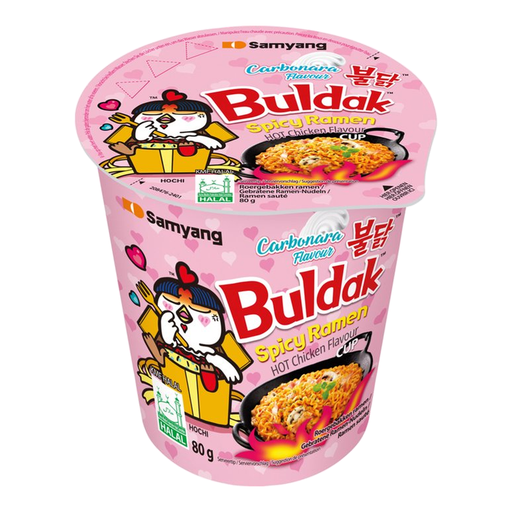
Why this fits the profile: The cup format requires little preparation and is handy for a quick lunch, snack or student room.
The 80-gram content makes it easier to choose a smaller portion than with bags of around 130 grams.
Cup format; carbonara flavour; prepared with hot water. According to the product information, contains wheat, milk and soya.
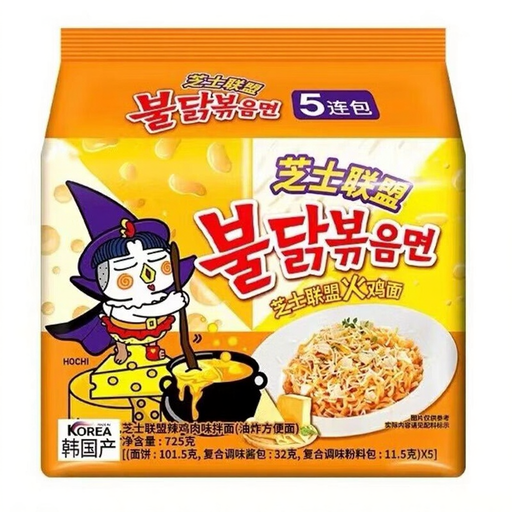
Why this fits the profile: This variant combines a larger portion with a cheese component for those looking for more layers of flavour in spicy chicken noodles.
The packaging lists the noodles, sauce and cheese powder separately. This allows you to check ingredients and allergens specifically.
Five portions of 145 grams; cheese and chicken-style flavour description; stated origin Korea. Contains gluten, soya, milk and celery.
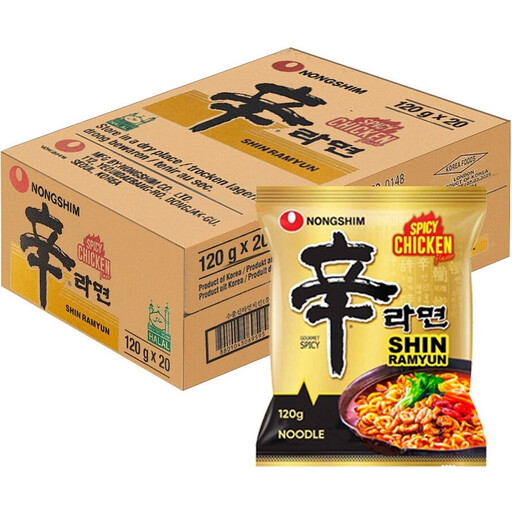
Why this fits the profile: The box of twenty packets is aimed at households, shared kitchens and enthusiasts who eat Korean noodle soup regularly.
The box states the number of twenty portions and the weight per packet, so you can estimate your stock in advance.
120 grams per pack; soup preparation with seasoning and dried vegetables; cooking time according to the product information four to five minutes.
Add toppings only after tasting. Egg, spring onion, sweetcorn or mushrooms can complement the meal, but they also change the flavour and nutritional value. With dry Korean noodles, you can keep some of the sauce aside if you want to first determine how spicy the dish is for you.
Store unopened instant ramen in a cool, dry place, away from sunlight, heat and moisture. Check the packaging for damage and follow the date and instructions on the label.
We’ve put together a full, up-to-date list of products that fully meet these strict selection criteria and comply with current European safety regulations.
It varies by product. Bag varieties are usually cooked in a pan. With Buldak ramen, you often drain some of the water after cooking and mix the sauce through the noodles. With soup varieties, you add the seasoning powder during cooking. Cup ramen is typically prepared with hot water. Always follow the instructions on the current label.
The heat level varies by flavour. The Original variant is described in the product information as very spicy. Carbonara and Cheese combine the spicy sauce with a creamy or cheesy flavour, but they are not automatically mild. Start with less sauce if needed and check the ingredients and warnings on the packaging.
The best-before date is on the individual packet or outer box. Store the noodles unopened in a dry place away from direct sunlight. Once opened, it’s best to prepare a bag straight away. Do not use a product with damaged packaging, and if the smell or appearance seems off, don’t rely solely on the date.
