
Vandaag of morgen in huis

Kwaliteit gegarandeerd

Welkomstaanbiedingen ontgrendelen: GRATIS bezorging | Tot 80% korting | Gratis 30 dagen JoyPlus-proefperiode
Download de app
Korean instant noodles are handy for a quick meal, but the range varies enormously. One packet contains a broth for noodle soup, while another is designed to be drained and mixed with sauce. The heat level, portion size, allergens and price per portion also differ.
If you only go by a flashy packet or a popular flavour, you could end up buying a product that doesn't suit your eating habits. With these practical selection points, you can compare Korean ramen, instant ramen and other Asian instant noodles based on verifiable product information.
Terms like "hot", "spicy" or "authentic" don't always indicate exactly how the noodles taste. Some products have a spiced broth, while others are mainly about chilli and garlic flavour. Samyang Buldak Carbonara, for example, combines a spicy sauce with a creamy powder mix. That's quite different from a classic Korean noodle soup.
A box of 20 portions might look appealing for students, families or ramen enthusiasts. But do check the price per portion, the weight per packet and the best-before date. A large box is only really practical if you eat that flavour regularly and have enough dry storage space.
Many Korean noodles contain wheat and soya. Depending on the product, fish, shellfish, milk, mustard, sesame, peanuts or egg may also be listed. So always read the label on the packet. Product information online can change, and the packaging may contain more details than a product page.
Also pay attention to the difference between:
An individual packet of 120 to 140 grams is typical for a generous portion. A multipack of noodles can contain 4, 5, 6 or 20 packets. Don't just look at the total weight; also check the number of individual portions. That way, you can fairly compare a box of Nongshim Shin Ramyun 20 × 120 grams with a pack of 6 × 120 grams.
Check whether the product contains a liquid sauce, a sachet of powder, or both. With some products, you can adjust the amount of chilli oil or sauce. That's handy if several household members have different preferences.
The term "spicy" isn't a standard European measurement. So use the ingredients list as an extra clue. Red pepper, chilli extract, habanero and chilli oil can indicate a more intense flavour, but the final experience varies from person to person.
Compare the nutritional values per 100 grams and per portion. Pay particular attention to salt, saturated fat and energy. The stated values can differ between variants: for example, the product information shows around 417 to 445 kcal per 100 grams for various Nongshim and Samyang products.
Also check for:
The stated effect or flavour experience is based on the product description from the brand or seller. According to a brand's own research, a product may be described as authentic, creamy or extra spicy; treat that as a product claim and always check the ingredients and preparation instructions.
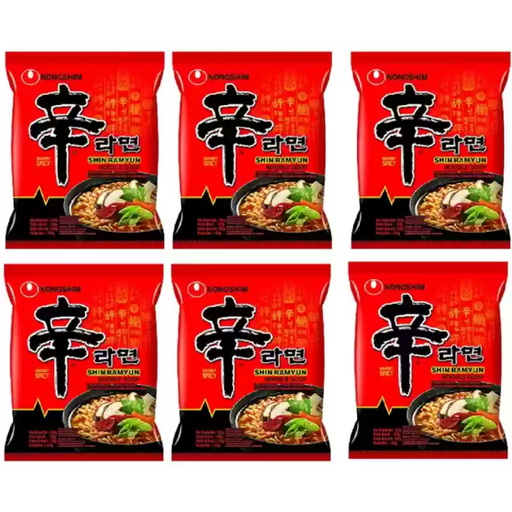
Why this fits the profile: A pack of six individual portions is manageable for anyone wanting to try Korean ramen first without buying a large stock straight away.
The number of portions and the weight are clearly stated. So you don't have to buy a large multipack before you know whether the spicy broth suits you.
6 × 120 grams; preparation time of around 4.5 minutes; suitable as a soup variety.
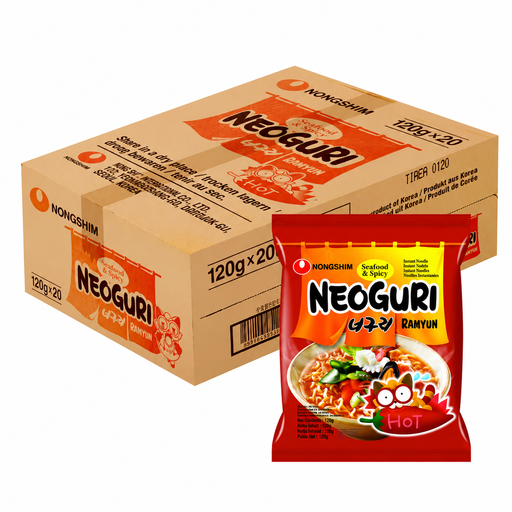
Why this fits the profile: For enthusiasts who often enjoy a savoury, warming Korean noodle soup and want a stock of 20 individual portions.
The packaging states 20 individual portions of 120 grams. That makes stock planning and price comparison per portion much easier.
20 × 120 grams; preparation time of 4 to 5 minutes; made in South Korea according to the product information.
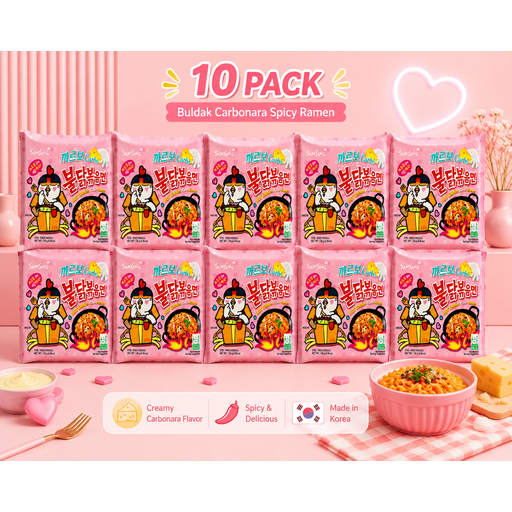
Why this fits the profile: For anyone deliberately seeking spicy noodles with a creamy sauce and who likes to keep several portions in the cupboard.
The product information clearly states that these are dry noodles with sauce and powder, not a standard noodle soup. That means you choose the right preparation method.
10 × 130 grams; carbonara-style powder mix; 423 kcal and 2.6 grams of salt per 100 grams according to the stated nutritional information.
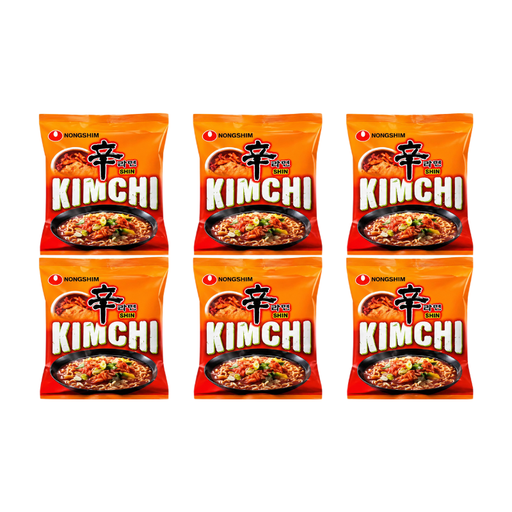
Why this fits the profile: A practical choice for anyone wanting to try the tangy, spicy direction of kimchi in soup form.
The product name and description explicitly mention kimchi and soup. So you're not buying dry sauce noodles expecting a broth.
6 × 120 grams; dried kimchi flakes and vegetables; intended as a quick meal or snack.
We've put together a full, up-to-date list of products that fully meet these strict selection criteria and comply with current European safety regulations.
Follow the instructions on the packet. For soup noodles, use the stated amount of water; too little water will make the broth saltier. For dry noodles, drain the cooking water completely before adding the sauce. For cup noodles, don't use a microwave unless it's explicitly stated on the packet.
Store unopened packets in a cool, dry place away from direct sunlight. Check the best-before date and don't use any packet that is damaged. Once opened, it's best to prepare the noodles straight away according to the instructions.
No. Some varieties are spiced or savoury without being extremely hot. Check the flavour description, ingredients and any chilli or sauce sachets. With dry noodles, you can sometimes use less sauce or chilli oil.
The exact date is on the packet. Store the noodles in a dry, cool place. The shelf life can vary by brand, product type and packaging. When ordering a large multipack, also check the date at the time of purchase.
That depends on the brand, weight, packaging and any offers. Divide the total price by the number of individual portions. A box of 20 isn't automatically cheaper per portion than a pack of 6. Also compare the net weight, so you're not comparing different portion sizes.
