
Vandaag of morgen in huis

Kwaliteit gegarandeerd

Welkomstaanbiedingen ontgrendelen: GRATIS bezorging | Tot 80% korting | Gratis 30 dagen JoyPlus-proefperiode
Download de app
Korean instant noodles are ideal for a quick lunch, late-night snack or easy evening meal. However, Korean ramen varies considerably in flavour, preparation method, portion size and ingredients. If you choose based only on eye-catching packaging or a familiar name, you could end up with a variety that is too spicy, an inconveniently large multipack or a product containing allergens that do not suit your diet.
This practical buying guide helps you compare Korean noodle soup, dry noodles and spicy instant noodles using reliable product information.
Packaging often focuses on terms such as “hot” or “spicy”. That does not always tell you what the overall flavour will be like. Shin Ramyun, for example, has a seasoned broth containing ingredients such as chilli, garlic, mushroom, carrot and onion. Samyang Buldak ramen, on the other hand, is generally prepared as dry, intensely flavoured noodles with sauce. The preparation method therefore also affects the intensity.
Would you like to ease yourself into Korean ramen? Choose a milder variety or do not use the entire seasoning sachet straight away. If you are specifically looking for spicy instant noodles, look for products containing chilli, pepper extract or a separate chilli sauce.
A box containing 6, 10 or 20 packs may seem practical, but first check the net quantity per portion and the best-before date. A multipack makes most sense if you eat the same flavour regularly or want to build up a stock. For a first taste, a single pack or small bundle is often more convenient.
Also consider the difference between a cup and a sachet. Cup noodles are easy to enjoy at work or on the go, while sachets are usually prepared in a saucepan and sometimes leave more room for adding vegetables or an egg.
Many Korean noodles contain wheat and gluten. Depending on the flavour, they may also contain soya, milk, egg, fish, shellfish, sesame, mustard or celery. Always check the current label. Online product information may differ from the packaging; the packaging should be treated as the definitive source.
Nutritional values vary across the range. Some products list approximately 400 to 430 kcal per 100 grams of dry product. Salt content can also differ. Compare the table per 100 grams, while also checking the weight of one complete portion.
Korean noodle soup, such as Shin Ramyun, is generally prepared in a saucepan with water and soup seasoning. The stated cooking time for various varieties is usually around 4 to 5 minutes. Always follow the instructions for the specific product.
Dry varieties, such as Chapagetti and Samyang Buldak ramen, are boiled first and then mixed with sauce or seasoning. A small amount of cooking water is often left in the pan to help distribute the sauce more evenly. This type is ideal if you prefer a thicker, more concentrated flavour rather than a broth.
Use the ingredients list to turn marketing terms into a practical choice:
A product name does not always tell the whole story. If in doubt, check the allergen information and preparation instructions.
For students and busy professionals, a pack weighing 112 to 140 grams is often suitable for one quick meal. A pack of 5 or 6 is a practical middle ground. Large boxes, such as 20 × 120 grams, are mainly worthwhile for frequent users.
Store dry instant noodles in a cool, dry place, away from sunlight, heat and moisture. Do not use a pack if it is damaged. When ordering online, also check whether the old or new packaging may be supplied if this is stated in the product description.
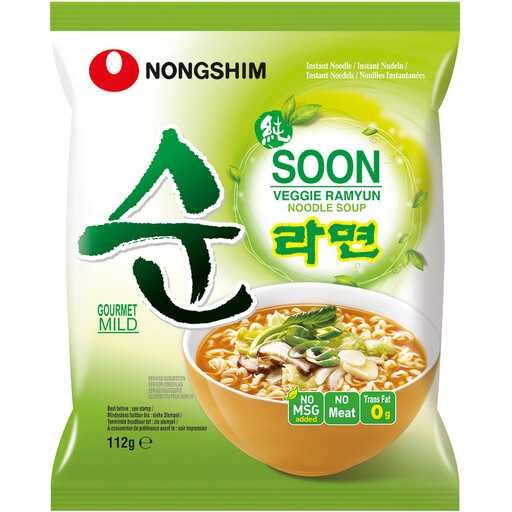
Why it suits this profile: A single 112-gram portion is a straightforward choice for anyone ordering Korean noodles online for the first time.
There is no need to commit to a large multipack, and the product information clearly lists a vegetable and seasoning mix. Always check the current allergen information.
112 grams per pack, with dried pak choi and carrot. Preparation instructions and nutritional values are listed on the product page and packaging.

Why it suits this profile: The large quantity is ideal for fans who regularly enjoy preparing a classic Korean noodle soup.
The number of packs and weight per portion are clearly stated. This allows you to match your supply to your actual consumption.
20 sachets of 120 grams; according to the product information, ready in approximately 4 to 5 minutes. It is easy to add an egg or vegetables.

Why it suits this profile: This multipack is designed for fans of dry, spicy ramen with a creamy flavour profile.
The product information makes it clear that this is a sauce-based variety rather than a traditional broth. This helps avoid the wrong expectations about preparation.
10 portions of 130 grams, with carbonara seasoning and milk ingredients according to the label. Check the heat level and allergens before ordering.
If you are looking for a savoury, milder flavour, take a look at Chapagetti. This variety combines noodles with black bean sauce and is available as both a single pack and a multipack. Fans of kimchi noodles can also choose Nongshim packs containing dried kimchi and vegetable flakes.
Nongshim also offers varieties such as Tom Yum, Toomba, Soon Veggie and Neoguri. If you would like to try Samyang Buldak ramen, options include Carbonara and Sweet & Spicy Fried Chicken. For every product, check the number of portions, preparation method, nutritional values and allergens.
We have put together a complete, up-to-date list of products that fully meet these strict selection criteria and the applicable European safety regulations.
Follow the instructions on the packaging. For many soup varieties, you boil the noodles for approximately 4 to 5 minutes in water with the seasoning. Dry varieties are boiled first and then mixed with sauce. You can also add an egg, spring onion, pak choi or kimchi.
The best-before date is shown on the packaging. Store unopened noodles in a cool, dry place away from direct sunlight. Do not use a product if the packaging is damaged. Once opened, it is best to seal the contents properly and use them quickly.
The price depends on the brand, flavour, portion size and packaging. Compare the price per portion or per 100 grams. A large multipack can offer better value if you use it regularly, while a single pack is more suitable for trying a new flavour first.
