
Vandaag of morgen in huis

Kwaliteit gegarandeerd

Welkomstaanbiedingen ontgrendelen: GRATIS bezorging | Tot 80% korting | Gratis 30 dagen JoyPlus-proefperiode
Download de app
Korean instant noodles are ideal for a quick lunch, late-night snack or low-effort store-cupboard staple. However, Korean ramen can vary considerably in flavour, portion size, preparation method and allergens. If you focus only on eye-catching packaging or a low price per pack, you could end up with noodles that are too spicy, a multipack nobody finishes or a product that does not suit your diet.
This buying guide from the Joybuy Product Recommendation Officer helps you compare your options with confidence. You will find practical points to consider, along with a selection of Korean noodles for different occasions.
The packaging of spicy instant noodles does not always make it clear how intense the flavour will be compared with your preferences. Samyang Buldak ramen, for example, is known for its powerful chilli flavour, while an option such as Nongshim Soon Veggie Ramyun offers a savoury vegetable broth. If you have little experience with hot ramen, it may be better to start with a milder or more balanced variety.
A large box may seem like good value, but always check the number of packs and the weight per portion. A box containing 20 sachets is suitable for a household that eats ramen regularly. If you want to try several flavours, a pack of five or six portions is often more practical.
Also check the difference between a sachet and a cup. A sachet is generally prepared in a pan, while a cup often requires only boiling water and a few minutes of waiting.
Korean instant noodles often contain wheat and soya. Depending on the flavour, they may also contain milk, egg, fish, crustaceans, sesame, mustard or celery. According to the product information provided, Chapagetti contains wheat, soya, egg, prawns and sesame, among other ingredients. Samyang Buldak Carbonara contains wheat, soya and milk.
Product information on a website may change. Before eating, always check the physical label, allergen declaration, preparation instructions and best-before date.
Many Korean noodles weigh approximately 112 to 140 grams per sachet. This is relevant when comparing the price per portion. An instant noodle multipack of 20 × 120 grams is particularly useful for regular consumption, while 5 × 130 grams is better suited to trying a flavour for the first time.
Do not compare only the total price. Also consider:
Not every Korean ramen variety is a noodle soup. Shin Ramyun, Neoguri ramen and kimchi noodle soup are prepared with broth. Chapagetti, on the other hand, has a black bean sauce and is generally eaten as a dry, stir-fried noodle dish. Samyang Buldak ramen uses a sauce and is often drained after cooking.
Always check the preparation instructions. With a soup variety, the amount of water is part of the final result. With Chapagetti and Buldak, the amount of cooking water you retain determines how thick the sauce will be.
Instant noodles are primarily intended as a convenient meal or snack. Check the nutritional information per 100 grams and per prepared portion. For several Nongshim products supplied, the stated energy value is around 417 to 430 kcal per 100 grams of dry product. Salt content varies by flavour and pack size.
Adding egg, tofu, pak choi, spring onion or other vegetables lets you make the meal more substantial to suit your preferences. This does not change the nutritional value of the original product; for a complete calculation, include all added ingredients.
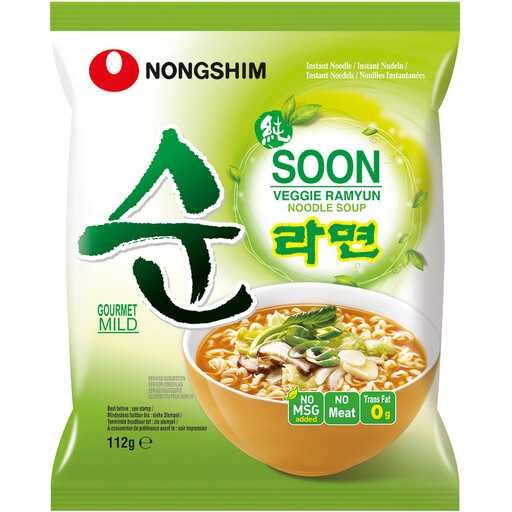
Why it suits this profile: A single portion with a savoury flavour, dried pak choi and carrot. Ideal for getting to know Korean noodles without buying a large box straight away.
The 112-gram portion makes it easier to compare with larger multipacks. However, check the label for wheat and soya.
112 grams per pack; contains noodles, soup base and dried vegetables.

Why it suits this profile: For fans of a creamy sauce combined with a distinctly spicy flavour. The box contains ten 130-gram portions.
The flavour is clearly described as carbonara and spicy chicken. This means you know in advance that it is not a neutral noodle soup.
10 × 130 grams; contains a separate powder mix with milk ingredients; suitable for storing.
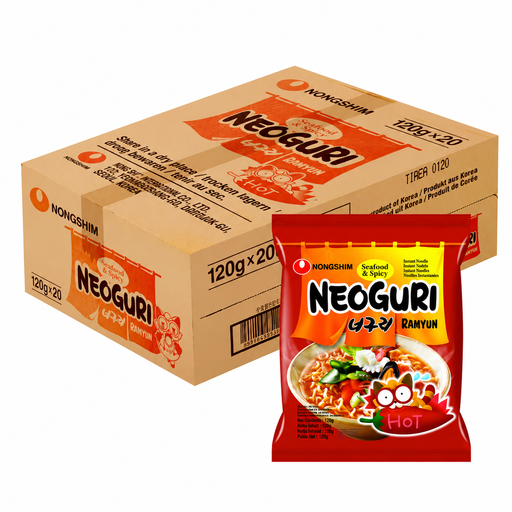
Why it suits this profile: A box with 20 individual portions for households, shared student accommodation or fans who prepare Korean ramen regularly.
The fixed quantity of 20 × 120 grams makes stock levels and the price per pack easy to track. Only buy this quantity if you use the flavour regularly.
20 individual portions; preparation guidance of approximately 4 to 5 minutes; noodle soup with a spicy flavour.
We have put together a complete, up-to-date list of products that fully meet these strict selection criteria and the applicable European safety regulations.
Use the amount of water and cooking time stated on the packaging. According to the product information, Shin Ramyun is prepared with approximately 500 ml of water and a cooking time of 4 to 5 minutes. With cups, such as Nissin Cup Noodles, you generally need only boiling water and a short waiting time. Do not put a cup in the microwave unless the packaging explicitly says that it is microwave-safe.
Store unopened Korean instant noodles in a cool, dry place away from direct sunlight. Do not use a pack if it is damaged. The best-before date and current instructions can be found on the label.
No. Shin Ramyun, Neoguri ramen and Samyang Buldak vary in flavour and heat. Chapagetti mainly has a savoury black bean sauce. Check the flavour description and, if in doubt, choose a smaller pack.
Follow the best-before date on the packaging and the manufacturer's storage instructions. Keep the sachets dry and unopened. Once prepared, it is best to eat the noodles straight away.
Shin Ramyun is a spicy noodle soup with broth. Chapagetti is prepared with black bean sauce and is less focused on a soup-like consistency. Buldak ramen is generally stir-fried noodles with a distinctly spicy sauce; the Carbonara variety also contains milk and cheese ingredients.
