
Vandaag of morgen in huis

Kwaliteit gegarandeerd

Welkomstaanbiedingen ontgrendelen: GRATIS bezorging | Tot 80% korting | Gratis 30 dagen JoyPlus-proefperiode
Download de app
Korean glass noodles are a favourite among fans of japchae, stir-fries, soups and cold salads. Yet the online selection can be more complex than it first appears. The term “glass noodles” may refer to different starches, thicknesses and pack sizes. If you focus only on attractive packaging or the word “authentic”, you may end up with a product that does not suit your planned dish.
This buying guide from the Joybuy Product Recommendation Officer helps you compare Korean glass noodles based on verifiable information: ingredients, weight, shape, preparation and allergen information.
Dangmyeon, Korean vermicelli, sweet potato noodles and japchae noodles are often used interchangeably. However, products can differ in their main ingredients. Some Korean glass noodles are made from sweet potato starch, while others use potato starch or mung bean starch.
Classic japchae is usually made with firm, transparent Korean sweet potato noodles. A thin potato noodle may have a different bite and require a different cooking time. Always check the ingredients list rather than relying solely on the product title.
Pure sweet potato starch is naturally gluten-free. Product descriptions for various glass noodles therefore often state that they are naturally gluten-free. This does not automatically mean that every product is suitable for someone with coeliac disease or a severe allergy. Cross-contamination, manufacturing information and the current packaging remain important.
For a strictly gluten-free diet, choose only a product whose packaging and allergen information provide sufficient confirmation. With ready-made japchae meals, you should also check the soy sauce, sauce mixes and other ingredients. For example, according to the product information, Delief Ready-Made Japchae contains wheat, soy and sesame, among other ingredients.
A 1 kg pack may seem cost-effective per gram, but it is most practical when you regularly use Asian noodles. For one or two portions, 200 g or 340 g is often more convenient. Starch noodles attract moisture once the package has been opened. Store them in a cool, dry place, tightly sealed and away from direct sunlight.
Do not use the product if the packaging is damaged or has absorbed moisture. Always check the label for the best-before date and preparation instructions.
Pay attention to the first ingredients listed:
A package that does not list any of the 14 major EU allergens is not the same as a general health claim. It only reflects the allergens declared for that product. Check the latest product packaging every time you buy.
Medium-width, springy dangmyeon are generally a practical choice for japchae because they hold sauce well. Thin glass noodles are useful in soups, salads and lighter stir-fries. Flat or wide noodles offer more surface area and pair well with rich sauces or hotpot.
Also look for terms such as “thin”, “wide” or “flat”. These are useful indications, but the product photo and description do not always provide an exact measurement in millimetres. If you are looking for a specific texture, compare the product details and preparation instructions carefully.
Many packs contain 200 g, 340 g, 400 g, 500 g or 1 kg. As a general guide:
Preparation varies by brand. Wang Korean-Style Vermicelli Noodles, for example, require soaking in warm water for 20 minutes, followed by 6–7 minutes of boiling, rinsing in cold water and then adding to the dish. Other products may require a shorter or longer soaking or cooking time. Always follow the instructions on the package rather than applying one general method to every noodle.
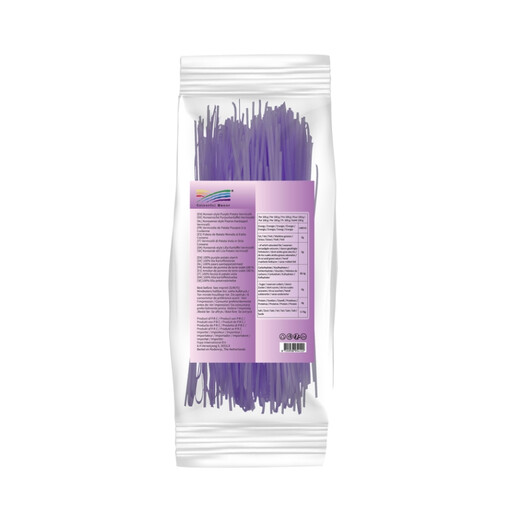
Why This Fits Their Persona: A compact pack for anyone making japchae or a stir-fry with Korean glass noodles for the first time.
The product information specifies sweet potato starch and a 200 g pack size, so you do not have to commit to a large bulk pack straight away.
According to the product description, it is suitable for soups, stir-fries and salads; none of the 14 major EU allergens are listed.
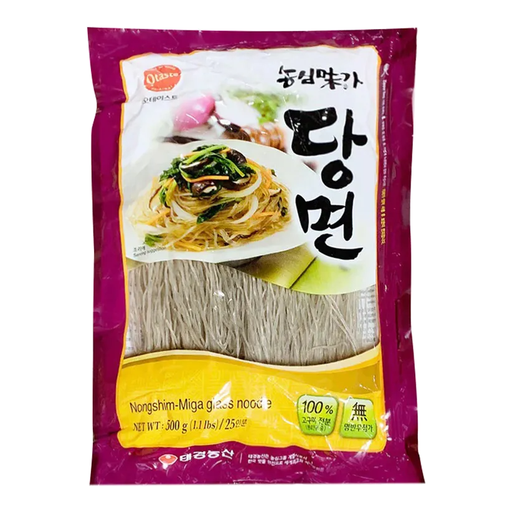
Why This Fits Their Persona: A medium-sized pack for anyone preparing Korean noodles, hotpot or stir-fries several times a month.
The product details explicitly state that it contains sweet potato starch and is suitable for stir-fries, hotpot, soups and salads.
The description specifies a firm, transparent texture, no added sugar, salt or artificial additives, and a 500 g pack size.
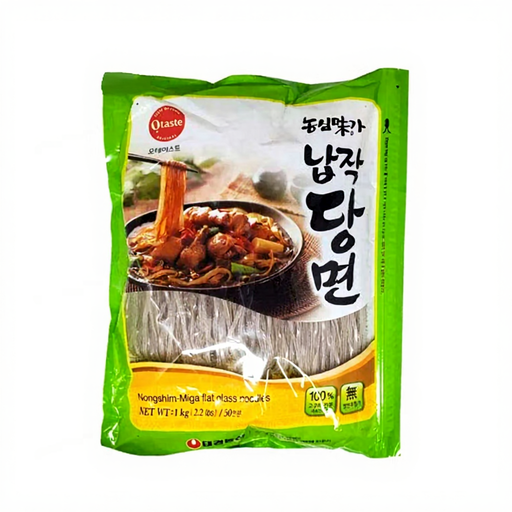
Why This Fits Their Persona: The large pack is ideal for households that meal-prep often, entertain guests or regularly cook Asian noodle dishes.
The weight is clearly stated as 1 kg, so you know in advance that this is a bulk pack rather than a small option for occasional use.
According to the product information, it consists of 100% sweet potato starch and originates from Korea. The noodles have a flat shape.
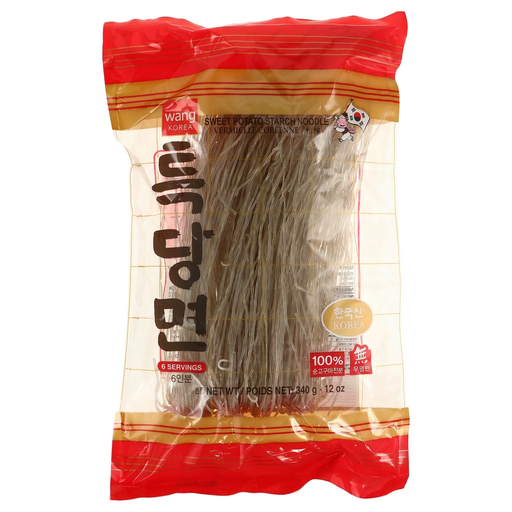
Why This Fits Their Persona: Convenient for home cooks who want to follow a consistent preparation method for japchae, soups, salads and stir-fries.
The product page provides precise instructions: soak for 20 minutes, boil for 6–7 minutes and then rinse with cold water.
The ingredients list specifies 99.9% sweet potato starch and water; the package contains 340 g.
Explore a current selection of products and compare weight, starch type, shape and intended uses before ordering.
Soak or cook the noodles according to the label. Rinse them with cold water after cooking when the instructions recommend it. This can help remove excess starch and prevent the noodles from sticking together during mixing.
For japchae, prepare the noodles first, then briefly toss them with vegetables, mushrooms, sesame oil and sauce. Do not add them too early to a stir-fry; prolonged heating can alter their texture. Glass noodles can absorb liquid in soup, so it is best to add them towards the end of cooking.
Many Korean glass noodles made with sweet potato starch are described in the product information as gluten-free or as containing none of the 14 major EU allergens. Always check the current label, especially in cases of coeliac disease, allergies or prepared products such as japchae with sauce.
Choose dangmyeon or Korean sweet potato noodles with a firm, elastic texture. A 200–500 g pack is practical for home use. Pay attention to the soaking and cooking instructions, as these vary by brand and thickness.
Store dry Korean glass noodles in a cool, dry place in a tightly sealed container. Keep them away from moisture and heat. Check the packaging and best-before date before use. The preparation and storage instructions on the label always take precedence.
