
Vandaag of morgen in huis

Kwaliteit gegarandeerd

Welkomstaanbiedingen ontgrendelen: GRATIS bezorging | Tot 80% korting | Gratis 30 dagen JoyPlus-proefperiode
Download de app
A Korean face mask can be a useful addition to your skincare routine. However, not every sheet mask, hydrogel face mask or overnight face mask is suitable for every skin type. Shiny packaging and terms such as “collagen”, “glow” or “barrier repair” say little on their own about the formula, how to use it or how well it fits.
Pay particular attention to the ingredients list, wearing time and packaging. This will help you avoid buying a mask that works for too short a time, feels uncomfortable or contains substances your skin may react to.
Collagen, niacinamide, vitamin C, ceramides and snail filtrate are frequently found in Korean skincare. These ingredients may make a formula interesting, but they do not guarantee a specific cosmetic result for everyone. According to some brands’ own research, for example, users may report greater hydration or a more radiant appearance. This is not a proven effect for every skin type.
Therefore, check where the ingredient appears in the INCI list and which other substances have been added. A collagen face mask may also contain glycerine, hyaluronic acid and panthenol, for example. This combination partly determines how the mask feels on the skin.
A classic sheet mask is generally intended to be worn for around 10 to 20 minutes. If you leave the sheet on until it has dried completely, it may actually become uncomfortable. A hydrogel face mask that turns transparent often has different usage instructions. According to the product description, some varieties can be worn for 2 to 3 hours or overnight.
So, do not rely solely on the name “deep mask”; check the instructions on the packaging. An overnight face mask is not the same as a traditional sheet mask.
You should always assess a face mask for sensitive skin by checking the full ingredients list. Look out for perfume, essential oils and known fragrance allergens such as limonene and linalool. Even a product described as mild or soothing may be less suitable for some users.
Carry out a patch test when trying a new product, following the instructions on the packaging. Do not use a mask on damaged or irritated skin, and stop using it if you experience a burning sensation, itching, redness or swelling.
Choose the type according to your routine:
For a hydrating face mask, glycerine, betaine, panthenol, hyaluronic acid and sodium hyaluronate are common ingredients. Ceramides, cholesterol and phytosphingosine are often used in formulas designed to provide a nourishing feel on the skin.
A soothing face mask may contain centella asiatica, allantoin, dipotassium glycyrrhizate or panthenol, for example. At the same time, check whether the formula contains perfume or essential oils.
For a glow face mask, you will often see niacinamide, galactomyces, glutathione or vitamin C derivatives. Adenosine, peptides and collagen extract are also frequently mentioned for mature skin. According to brands’ own research, such formulas may make the skin look smoother, firmer or more radiant; regard this as product information rather than a guaranteed outcome.
Do not compare only the price of one pack; also compare the price per mask. A set of four hydrogel masks has a different usage profile from a pack of ten sheet masks or a 90-gram jar.
Also check:
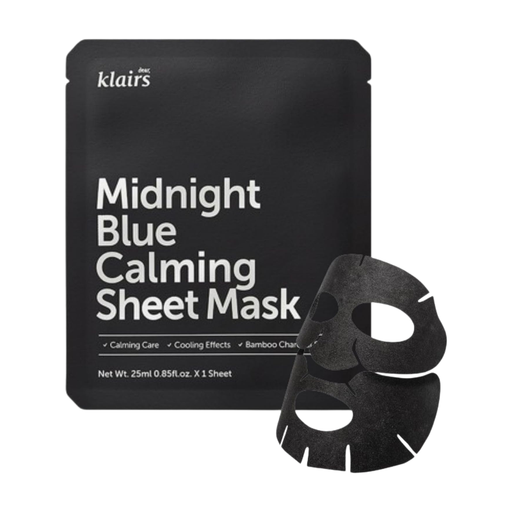
Why it suits this profile: A pack of 10 masks is practical if you want to use Korean skincare regularly without immediately choosing an intensive overnight mask. The recommended wearing time is 15–20 minutes.
The product information does not state a long overnight wearing time. However, check for tea tree oil and limonene if your skin reacts quickly to fragrance ingredients.
10 individually packaged masks, 25 ml per mask, containing glycerine, erythritol, centella asiatica and allantoin, among other ingredients.

Why it suits this profile: This hydrogel mask is intended for anyone looking for a longer skincare session and wanting to explore a formula containing several moisture-binding ingredients.
The usage time is clearly stated: 3–4 hours during the day or as an overnight mask. This prevents you from applying the wearing time of a standard sheet mask.
4 pieces weighing 34 grams each, containing glycerine, panthenol, hydrolysed hyaluronic acid and several ceramides, among other ingredients.
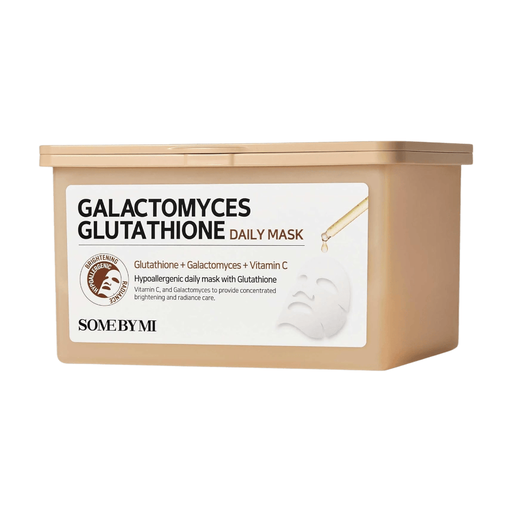
Why it suits this profile: A pack of 30 sheets is designed for regular use after cleansing and toning, with a recommended wearing time of 10–20 minutes.
The instructions specify a precise usage time. However, take note of the stated citric acid, vitamin C and fragrance ingredients, and use sun protection during the day.
30 individual sheet masks containing niacinamide, galactomyces, panthenol, glutathione and several forms of hyaluronic acid.
We have put together a complete, up-to-date list of products that fully meet these strict selection criteria and the applicable European safety requirements.
If you have sensitive skin, it is sensible not to introduce several new products at the same time. This makes it easier to see which product your skin is reacting to.
That depends on the product. A standard sheet mask is often used once to a few times a week. According to the product description, some daily masks are intended for everyday use. Always follow the label and stop if irritation occurs.
A sheet mask is usually made from rayon, cellulose or another fibre soaked in essence. A hydrogel face mask has a gel-like structure and often fits more closely to the skin. Wearing time varies by product, so check the instructions.
For dry skin, look for hydrating ingredients such as glycerine, panthenol, betaine and hyaluronic acid. For sensitive skin, a short ingredients list without perfume or essential oils is often a practical starting point. Always check the full INCI list and carry out a patch test beforehand.
