
Same-day & Next-day Delivery

Quality Guaranteed

Unlock Your Welcome Offers: FREE Delivery | Up to 80% OFF | Free 30-day JoyPlus trial
Download the APP
A sheet mask or hydrogel face mask might seem simple to pick: look at the packaging, choose a popular Korean skincare name, and apply the mask. Yet marketing claims and unclear ingredients can lead you to buy a product that doesn’t suit your skin or routine.
The main pitfalls to watch out for:
A sheet mask is usually made from a fibre or microfibre cloth soaked in essence. It’s practical for a 10–20 minute pampering session and works well when you want to add extra hydration to your routine quickly.
A hydrogel face mask generally adheres closely to the skin. Some versions come in two parts for a better fit. With certain products, the gel becomes transparent after a few hours. That’s a characteristic of use, not automatic proof that all ingredients have been fully absorbed.
A collagen mask can be hydrogel or biocellulose. So check whether “collagen” appears as an ingredient, for example as hydrolyzed collagen or collagen extract. The term on the front alone isn’t enough to judge the formulation.
For a hydrating face mask, relevant ingredients include glycerine, panthenol, hyaluronic acid, ceramides and betaine. Pyunkang Yul, for instance, lists five types of hyaluronic acid, ceramide NP and panthenol in the Highly Moisturizing Essence Mask.
If you’re after a brightening face mask, look for niacinamide, alpha-arbutin, vitamin C or certain fermented ingredients. These substances are often used in products for a more even complexion. That doesn’t mean pigment spots will disappear for certain. Results vary depending on your skin and routine.
For an anti-ageing face mask, retinol, retinal, bakuchiol, adenosine, peptides and collagen extract are frequently mentioned. The product description of SOME BY MI Retinol Intensive Mask states 0.1% retinol, retinal and bakuchiol. Retinol can increase sensitivity to sunlight; use a sunscreen during the day and follow the warnings on the packaging.
A mask with Centella asiatica can be appealing for sensitive or reactive skin, but always look at the full ingredients list. Even natural extracts or essential oils aren’t suitable for everyone.
The SOME BY MI Galactomyces Glutathione Daily Mask lists bergamot oil, lavender oil, citric acid and vitamin C among its ingredients. The product information advises a patch test and sun protection. This makes the product less obvious for anyone who prefers to limit fragrance or exfoliating ingredients.
Also pay attention to the practical difference between daily use and a weekly treatment. A pack of 30 sheets is handy for a regular routine, while a hydrogel mask with three or four pieces suits a planned pampering session better.
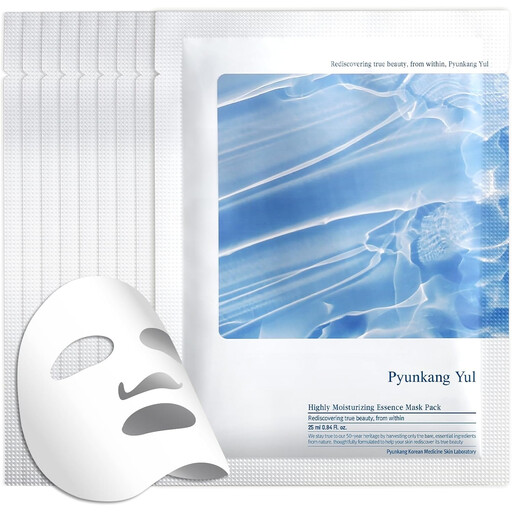
Why it suits this profile: A straightforward sheet mask for anyone who mainly wants extra hydration without a long treatment time or complicated steps.
The product description specifically mentions hyaluronic acid, ceramide NP and panthenol, rather than just a vague glow claim.
Sheet mask; multiple forms of hyaluronic acid; ceramide NP and panthenol listed in the product information.
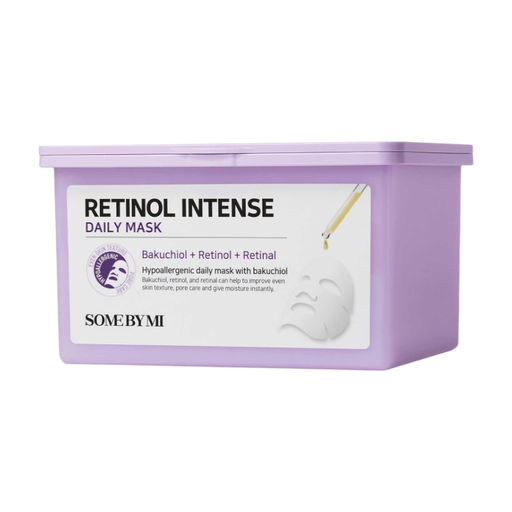
Why it suits this profile: Suitable for anyone who consciously wants to incorporate retinol into a face mask and is prepared to follow the sun warnings and skin acclimatisation seriously.
The product information states 0.1% retinol, retinal and bakuchiol, plus clear warnings about sunlight, pregnancy and breastfeeding.
30 sheets; retinol, retinal and bakuchiol; wear time of 10–20 minutes according to the product instructions.
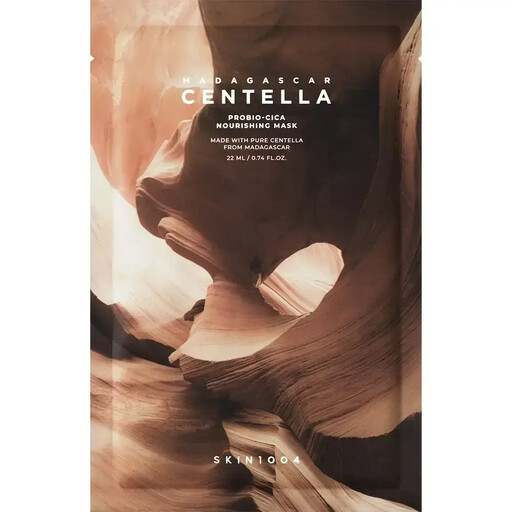
Why it suits this profile: A logical choice for anyone seeking a rich sheet mask with fermented Centella, ceramides and a gentle, milky essence.
The product description explicitly names the relevant components: fermented Centella, ceramides and a 9-peptide complex.
Sheet mask; ceramides; fermented Centella; suitable for dry, normal, combination and sensitive skin according to the product information.
We’ve put together a full, up-to-date list of products that fully meet these strict selection criteria and comply with current European safety regulations.
That depends on the formula and the instructions. A hydrating sheet mask without strong active ingredients can be used several times a week. A retinol face mask or product with acids requires more caution. Start according to the label and stop if you experience stinging, itching, redness or swelling.
A standard sheet mask is usually removed after 10–20 minutes. Some hydrogel masks are designed for two to four hours or overnight, often until the gel turns transparent. Don’t automatically leave a mask on longer than stated. Remove it immediately if your skin reacts uncomfortably.
Some formulas are aimed at sensitive skin, for example with Centella, panthenol or ceramides. However, suitability is personal. Check for fragrance, essential oils, retinol, vitamin C and acids. If in doubt, first do a patch test on a small area of skin and don’t use a mask on damaged or irritated skin.
