
Same-day & Next-day Delivery

Quality Guaranteed

Unlock Your Welcome Offers: FREE Delivery | Up to 80% OFF | Free 30-day JoyPlus trial
Download the APP
A sheet face mask seems simple: open it, apply it and remove it after a few minutes. Yet many people buy a mask that doesn’t suit their skin type, lacks product information or proves awkward to use. Korean face masks also vary widely in formula, from a hydrogel face mask designed to stay on for several hours to a classic sheet mask that should be removed after ten minutes.
So don’t focus solely on words such as “glow”, “lifting” or “collagen”. Pay particular attention to the ingredients, how long to leave the mask on, the packaging and any warnings. This can help you avoid buying a product that ends up unused in your bathroom.
Terms such as “anti-ageing”, “brightening” and “firming” usually describe a product’s purpose, not a guaranteed effect on everyone’s skin. According to the brand’s own research, 100% of a test group of 20 women reported brighter-looking or firmer skin when using specific products. This is information about the brand’s own test, not a guarantee for every user.
Treat these claims as a guide, then compare them with the ingredients. Glycerine, panthenol, betaine and hyaluronic acid, for example, are often found in hydrating face masks. Niacinamide is commonly used in formulas designed to help promote a more even-looking complexion. However, seeing an ingredient on the packaging doesn’t automatically tell you how your skin will react to it.
Not every mask is designed to be worn overnight. You’ll usually leave a traditional sheet mask on for 10 to 20 minutes. A rubber mask may stay on for 20 to 40 minutes, according to the product instructions. A or Biodance hydrogel mask, on the other hand, is designed to be worn for several hours or, in some cases, overnight.
Leaving a mask on for too long can cause dryness or irritation if it dries out. Always follow the instructions on the packaging and check whether the mask is for single use. Most Korean face masks are designed for one use only.
Even a product described as a soothing face mask may contain ingredients that your skin reacts to. These could include fragrance allergens, tea tree oil or plant extracts. For example, The Dear, Klairs Midnight Blue contains tea tree oil and limonene; check for these ingredients if you’re sensitive to fragrances.
If you have sensitive skin, carry out a patch test first, following the instructions. Don’t use a mask on skin that is damaged, irritated or infected. Stop using it immediately if you experience a burning sensation, rash, swelling or persistent redness.
A sheet face mask is usually made from rayon, cotton, bamboo microfibre or a similar material. It’s lightweight, quick to apply and practical for a short skincare routine. A hydrogel face mask often fits closely to the skin and can be left on for longer. This makes it a good option if you enjoy a more involved evening routine, but less convenient if you’re in a hurry to get out of the door.
A rubber mask, such as the Dr.Jart+ CRYO RUBBER, has two steps: first an ampoule, then a flexible mask. It takes a little more preparation, but according to the product description, the mask stays in place well.
A pack of 10 is practical if you want to use a mask several times a week. A pack containing one or two masks is a better choice if you want to try one first and see how your skin reacts. Check the expiry date, batch code and storage advice on the packaging. Store masks in a cool, dry place away from direct sunlight. Reseal an opened pack containing several individual sheets properly to help prevent them from drying out.
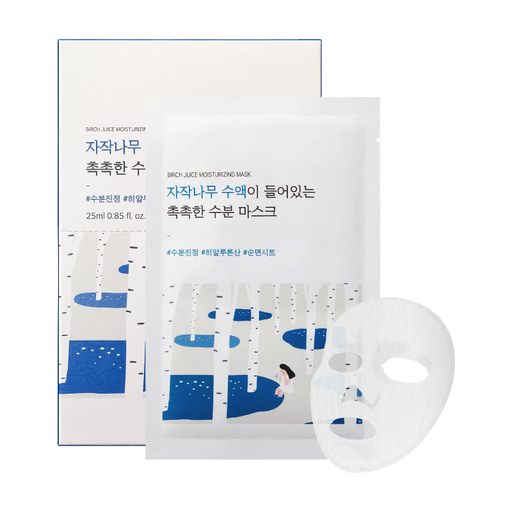
Why it suits this profile: A pack of 10 individual sheets is a good choice if you want to use a hydrating face mask regularly without committing to a complex two-step system.
The instructions specify a clear leave-on time of 10 minutes. The packaging states that each sheet contains 25 ml and that the pack contains 10 sheets.
Contains glycerine, sodium hyaluronate and allantoin; ideal for a quick, simple routine.
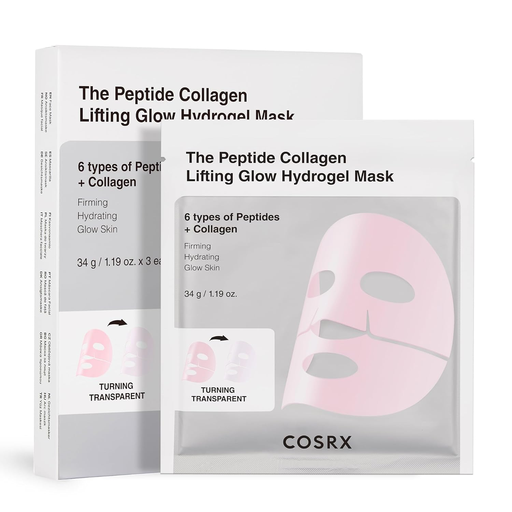
Why it suits this profile: This hydrogel face mask is a good match for anyone looking for a longer treatment with several skincare ingredients they can check on the label.
The instructions recommend leaving it on for 2 to 3 hours or using it overnight. This makes clear that it isn’t a quick sheet mask.
Contains six peptides, collagen, hyaluronic acid and several ceramides; the pack includes 3 masks weighing 34 grams each.
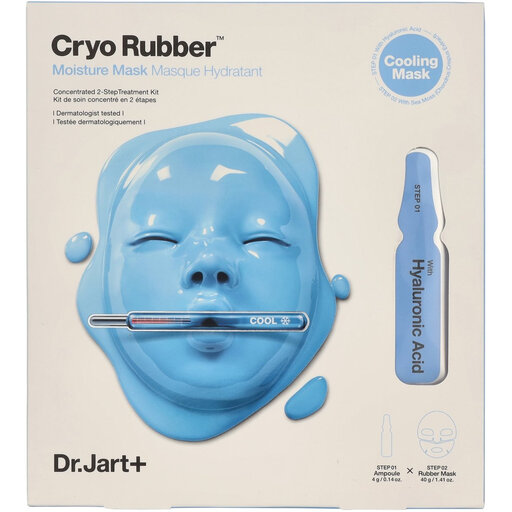
Why it suits this profile: A good choice if you’re happy to set aside time for a two-step treatment and want a mask that fits closely to your face.
The product information lists the ampoule and rubber mask separately, and specifies a leave-on time of 30 to 40 minutes.
Contains hyaluronic acid, glycerine, niacinamide and panthenol; the flexible rubber layer helps keep the essence on your skin.
We’ve put together a full, up-to-date list of products that meet these strict selection criteria and the applicable European safety requirements.
A mask doesn’t replace a complete skincare routine. It’s simply an extra step for when you want a little more hydration or comfort.
It depends on the formula and your skin. A simple hydrating sheet mask may be suitable for use several times a week. Use an intensive collagen or overnight face mask as directed on the packaging, for example once or twice a week. If irritation occurs, use it less often or stop using it.
Only if the product information specifically says you can. The and Biodance masks in this selection state that they can be used for several hours or overnight. A classic sheet mask usually isn’t designed for overnight use. Remove the mask as soon as the recommended time is up.
The cost mainly depends on the number of masks, treatment time and formula. A pack of 10 simple sheets can be an affordable option for regular use. A two-step mask or a hydrogel mask with lots of active ingredients will usually cost more per treatment. So compare the cost per mask, not just the price of the pack.
