
Same-day & Next-day Delivery

Quality Guaranteed

Unlock Your Welcome Offers: FREE Delivery | Up to 80% OFF | Free 30-day JoyPlus trial
Download the APP
A Korean face mask for radiant-looking skin may seem like a straightforward purchase, but the range of products varies considerably. Sheet masks, hydrogel face masks and daily masks are not all designed to address the same needs. A mask for dull-looking skin may primarily add moisture, while a brightening face mask contains ingredients that, according to the product description, may help create a more even-looking complexion.
Pay particular attention to three common pitfalls:
First, identify what your skin needs. For dehydrated or tight-feeling skin, ingredients such as glycerine, panthenol, hyaluronic acid and ceramides are worth looking out for. If you are searching for a face mask for a more even-looking complexion, you will often see niacinamide, vitamin C derivatives, glutathione or alpha-arbutin in the formula.
These ingredients do not automatically make a product suitable for everyone. A brand’s own research may report certain effects, but such results do not necessarily apply to every user. Product descriptions are therefore mainly a useful tool for comparing formulas and intended uses.
A sheet mask for pigmentation is usually made from cellulose or another thin material that holds an essence against the skin. It is practical for a short routine of around 5 to 20 minutes. Check that the mask fits properly around the nose, eyes and mouth; a poor fit can make it awkward to use.
A hydrogel face mask often has a gel-like texture and can be left on for longer. Some and ANUA masks are designed to be worn for several hours or potentially overnight, according to the product instructions. This requires more planning and careful application. A gel mask that becomes transparent has not necessarily been fully absorbed, so stick to the stated application time.
A pack containing 30 masks is convenient for daily use, but pay attention to the product’s shelf life and make sure the packaging is properly sealed. Individually wrapped masks are often easier to manage when used occasionally. Also check:
With formulas containing vitamin C, retinal, retinol or exfoliating acids, sun protection during the day may be particularly important. Stop using the product if you experience a burning sensation, itching, swelling or persistent redness. If you have sensitive skin, testing the product on a small area first is a sensible step.
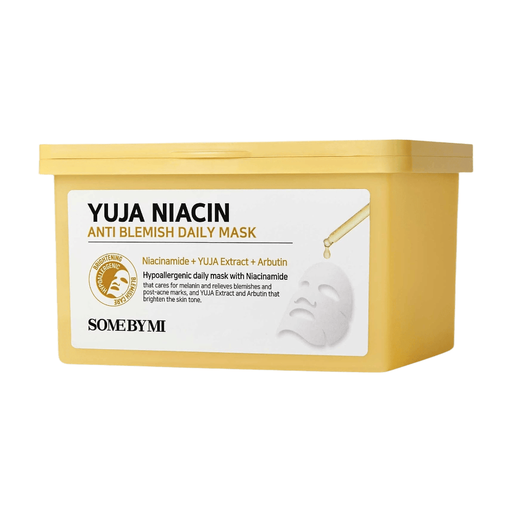
Why it suits this profile: The pack contains 30 sheets and is designed for a short daily routine of 10–20 minutes. This makes it a practical choice for anyone wanting to try Korean skincare without immediately buying several different types of mask.
The complete ingredients list is provided. The formula contains niacinamide, arbutin and vitamin C derivatives, among other ingredients, as well as retinal, citrus oil and limonene. This allows you to assess in advance whether it is suitable for your skin.
30 masks, a vegan formula according to the product information and a recommended application time of 10–20 minutes.
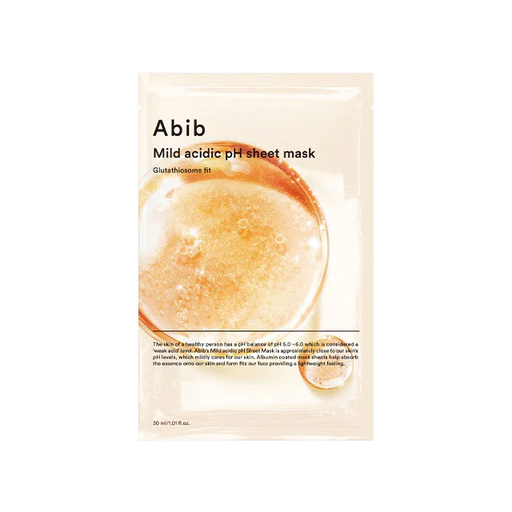
Why it suits this profile: This individual sheet mask is ideal for anyone looking for one targeted treatment. The product information lists glutathione, niacinamide, vitamin C, caffeine, panthenol and tocopherol.
The product description states the type, formula, application and contents of one mask. This avoids confusion over a multipack when you want to try a brightening face mask first.
Lightweight sheet material, one mask per pack and, according to the product information, suitable for all skin types, including sensitive skin.
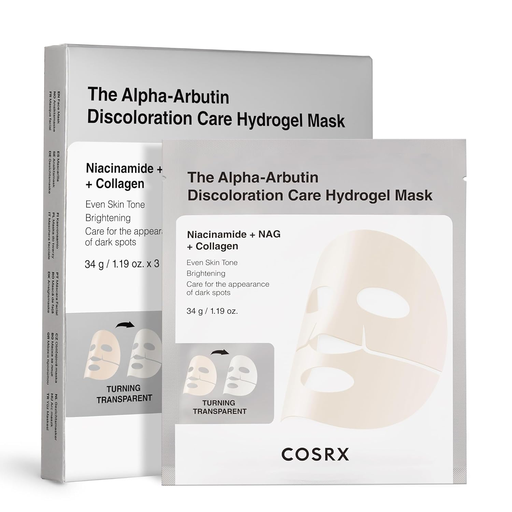
Why it suits this profile: This is a hydrogel mask in a set of three, designed to be worn for 2–3 hours or potentially overnight, according to the product information. It is suited to a planned, more intensive routine.
The long application time is clearly stated in the usage instructions. A patch test is also recommended. This helps you avoid choosing a long-wear mask without considering its fit and how your skin may react.
Contains alpha-arbutin, niacinamide, collagen, hyaluronic acid and ceramides according to the ingredients list; three individually packaged masks per set.
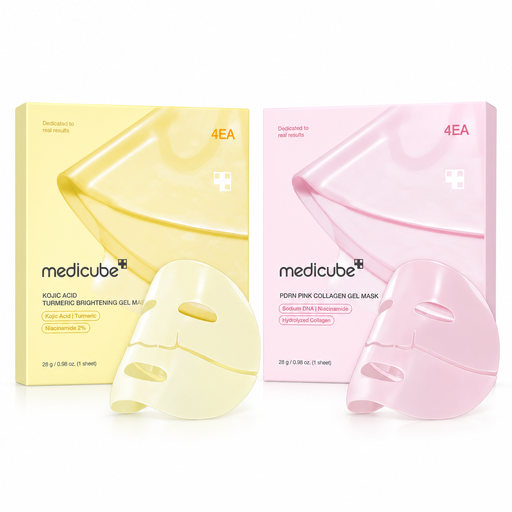
Why it suits this profile: The set combines four Kojic Acid Turmeric gel masks with four PDRN Pink Collagen gel masks. This allows you to alternate between a brighter-looking complexion and added hydration.
The two variants are listed separately, along with their ingredients and intended uses. However, check the complete packaging, as the Kojic Acid variant also contains retinol and fragrance according to the ingredients list.
Eight gel masks in total and two different formulas for a flexible weekly routine.
Cleanse your face first, then follow the product instructions. For a sheet mask, 10–20 minutes is usual, while hydrogel products may sometimes need to be left on for several hours. Gently pat any remaining essence into the skin; do not rub it vigorously.
Do not introduce several new active products at the same time. This makes it difficult to establish which product has caused a reaction. A mask also does not replace daily skincare or sun protection. If you have persistent pigmentation or skin concerns, it is best to consult a GP or dermatologist.
We have put together a complete, up-to-date list of products that fully meet these strict selection criteria and the applicable European safety regulations.
Look for a hydrating face mask containing ingredients such as glycerine, panthenol or hyaluronic acid. Niacinamide, vitamin C derivatives and glutathione are also used to create a brighter-looking complexion. Always compare the complete ingredients list and choose a formula that your skin has tolerated well in the past.
This varies by product. According to the packaging, some daily masks are intended for everyday use, while more intensive formulas may be better suited to occasional use. Follow the recommended application time and use each mask only once.
According to the brand or product description, a product may help make discolouration appear less visible or create a more even-looking complexion. This is not guaranteed for every user and is not a medical treatment. Sun protection remains important, particularly when using ingredients that may increase sensitivity to sunlight.
