
Vandaag of morgen in huis

Kwaliteit gegarandeerd

Welkomstaanbiedingen ontgrendelen: GRATIS bezorging | Tot 80% korting | Gratis 30 dagen JoyPlus-proefperiode
Download de app
A Korean face mask can be a useful addition to your routine, but the sheer range of options can make choosing difficult. Sheet masks, hydrogel masks, clay masks and overnight masks differ not only in texture, but also in how long they are used, their ingredients and how they feel on the skin.
Marketing can sometimes make things more complicated than they need to be. Terms such as “glass skin”, “lifting” and “anti-ageing” often describe a desired appearance rather than a guaranteed result. So first look at the product format, ingredients list, directions for use and warnings. This will help you avoid buying an expensive mask that does not suit your skin or habits.
A collagen mask, Centella asiatica mask or product containing niacinamide may sound purpose-specific, but one ingredient does not tell you everything about the formula. The concentration, complete formulation and contact time also play a role. A brand’s own research may support certain claims, but do not automatically treat these claims as guaranteed results.
Collagen, hyaluronic acid and glycerine are used in many formulas to create a more hydrated skin feel. Centella asiatica, panthenol and allantoin are often found in products developed to provide a comfortable, soothing skin feel. That does not automatically make a mask suitable for everyone.
A sheet mask is usually intended to be used for a limited period, such as 10 to 20 minutes. Wearing it for longer does not automatically mean greater benefits. A hydrogel mask may have a different recommended duration: according to the product instructions, some Biodance masks are designed to be worn for several hours or overnight.
Always follow the label. Remove the mask sooner if you experience a burning sensation, itching, redness or any other discomfort.
“Suitable for all skin types” is a broad product description, but your skin may still react differently. A clay mask containing kaolin may appeal to those with oilier skin or a pore mask routine, while dry skin may benefit more from a hydrating face mask containing glycerine, hyaluronic acid or ceramides.
If your skin is sensitive or irritated, it is sensible to pay extra attention to fragrance, essential oils, limonene and exfoliating acids.
Also check whether the product contains one mask or is a multipack. Ten 25 ml sheet masks are not the same as one intensive 34 g hydrogel mask.
For a hydrating face mask, relevant ingredients to look out for include glycerine, betaine, panthenol, sodium hyaluronate and various forms of hyaluronic acid. For a soothing face mask, you will often see Centella asiatica, allantoin, dipotassium glycyrrhizate or panthenol.
If you want a brightening face mask, niacinamide and certain plant extracts are commonly included. An anti-ageing face mask may contain ingredients such as adenosine, retinol, peptides or collagen. These are formulation characteristics, not a guarantee of visible results.
A mask designed for 5 to 10 minutes is better suited to a quick evening routine than one that needs to be left on for 3 to 4 hours. Also check:
Use a face mask for external use only, avoid contact with the eyes and stop using it if irritation occurs. With a retinol mask, the product information advises paying extra attention to daytime sun protection.
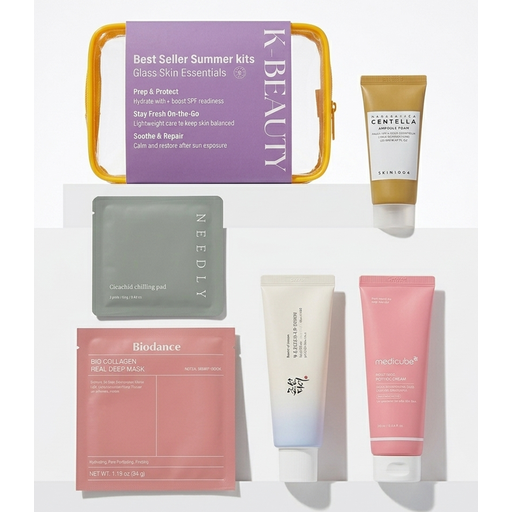
Why it suits this profile: This five-piece set offers an introduction to Korean skincare without having to choose several separate full-size products straight away. It includes a sheet-style collagen mask, cream, pads, cleanser and SPF.
The contents and recommended order are clearly described. This means you are not buying solely on the basis of terms such as “glass skin”; you can see which steps and quantities are included.
Five products, including SPF50+ PA++++, a 34 g mask and a 50 ml cream; supplied with a travel pouch and a toner bonus while stocks last.

Why it suits this profile: Ideal for anyone looking for an intensive hydrogel mask and willing to set aside several hours or a whole night for the treatment.
The instructions explicitly state 3 to 4 hours during the day or overnight use. This prevents you from applying the usage time of a standard sheet mask incorrectly.
Four 34 g masks; the ingredients list includes panthenol, several forms of hyaluronic acid and ceramides.
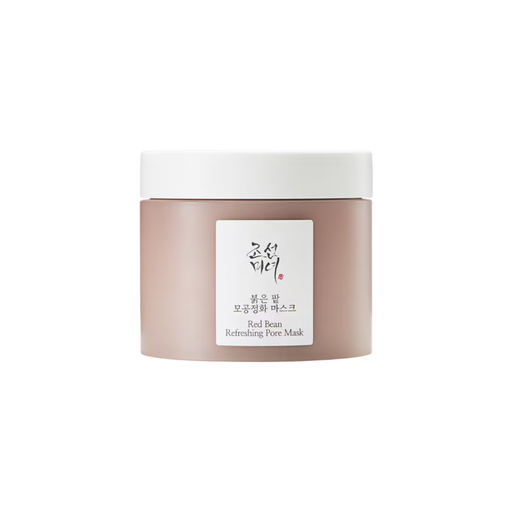
Why it suits this profile: A practical choice for anyone who prefers a washable clay mask to a sheet mask and wants to focus on pore and sebum care.
The usage time is specific: 5 to 10 minutes, followed by rinsing with lukewarm water. This prevents you from leaving a clay mask to dry for an unnecessarily long time.
140 ml tube containing kaolin, red bean powder and red bean extract; suitable for anyone who wants to measure out a mask for each treatment.
We have put together a complete, up-to-date list of products that fully meet these strict selection criteria and the applicable European safety regulations.
That depends on the formula. A hydrating sheet mask is often used once when your skin needs to feel extra comfortable or cared for. A clay mask or mask containing PHA is generally used less frequently and according to the label. An intensive hydrogel mask may, for example, be recommended once or twice a week. Always check the product instructions and monitor how your own skin reacts.
It can be, but check the ingredients first. If you are sensitive to fragrance, preferably choose a formula without added fragrance and look out for essential oils, limonene, retinol and acids. The Dear Klairs Midnight Blue Calming Sheet Mask lists Centella asiatica and allantoin among its ingredients, but also contains tea tree oil and limonene. A patch test is still advisable.
Gently pat the remaining essence into your skin and finish with a cream if your skin needs one. Normally, do not rinse off a leave-on sheet mask unless the packaging advises you to. A clay mask, on the other hand, should be removed with lukewarm water. Do not reuse a disposable mask and store unopened products according to the instructions on the packaging.
