
Vandaag of morgen in huis

Kwaliteit gegarandeerd

Welkomstaanbiedingen ontgrendelen: GRATIS bezorging | Tot 80% korting | Gratis 30 dagen JoyPlus-proefperiode
Download de app
Konjac jelly is a soft, drinkable jelly made with konjac powder. This snack is often sold in a squeeze pouch and is popular with fans of Korean konjac jelly, fruity flavours and low-calorie snacks for when you’re out and about. However, not all varieties are the same.
When buying, pay particular attention to three common pitfalls:
Compare nutritional values on the same basis. For example, a 150 ml pouch may contain 3 kcal, 7 kcal or 10 kcal, depending on the recipe. Also check:
Some Jelly B varieties list 3 kcal and 0 grams of sugar per 100 ml. The Jelly B watermelon variety lists 1.6 kcal per 100 grams and 0 grams of carbohydrates. Delief Mango lists 4 kcal and 0 grams of sugar per 100 grams. These values come from the product information provided and may vary by flavour.
A low-calorie snack is not automatically a complete meal or a food with high nutritional value. Think of konjac jelly primarily as a sweet snack or fruit jelly snack for a particular occasion.
If you follow a vegan, vegetarian or halal diet, it’s a good idea to check both the product page and the packaging. Delief lists certain varieties as vegan and, according to the product information, uses a plant-based, collagen-like ingredient made from root vegetables. The Delief Lychee packaging also states “Halal: Yes” and “Vegan: Yes”.
This does not automatically apply to every product containing konjac. Some varieties may contain different binding agents, flavourings or other ingredients. For example, the Konjac Shreds from Yan Jin Pu Zi list sesame, soya, wheat/gluten and sulphites as allergens. This savoury konjac snack is therefore less suitable for people who avoid these ingredients.
Also look out for terms such as “natural flavouring”, “fruit concentrate” and “collagen”. According to a brand’s own product information, a product may contain additional vitamins or collagen-like ingredients; assess the exact composition and quantity using the label.
A 120 to 155 gram squeeze pouch is suitable as a jelly for when you’re out and about, at work or during a school break. Some products are designed to be eaten directly from the pouch. Other varieties are best served chilled for a fresher taste and texture.
Before buying, check:
Eat konjac jelly slowly and according to the instructions on the packaging. A soft jelly snack can pose a choking risk, particularly for young children. Always follow the usage instructions and supervise children when necessary.
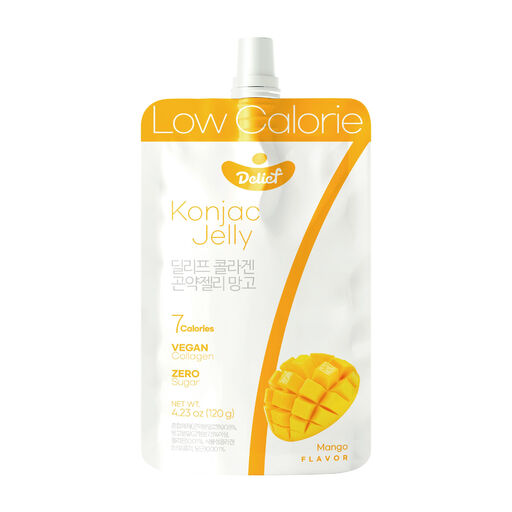
Why it suits this profile: A straightforward pouch for anyone trying konjac jelly for the first time and looking for a fruity mango flavour. The product information lists 4 kcal and 0 grams of sugar per 100 grams.
The relevant nutritional values and ingredients are provided, so you don’t have to rely solely on the front of the packaging.
Vegan according to the product information, 120 g per pouch and a mango flavour.
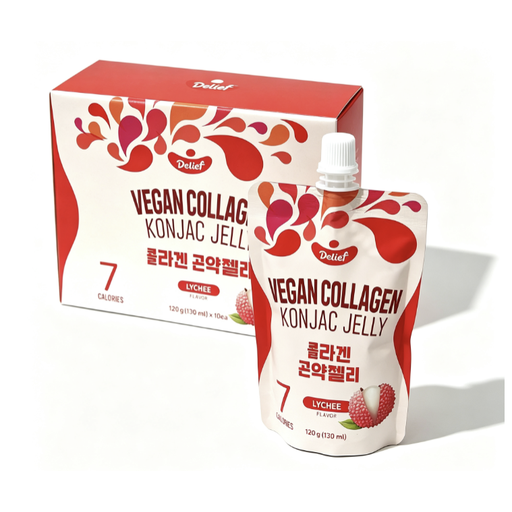
Why it suits this profile: A multipack with lychee flavour for anyone who likes to keep drinkable jelly ready at home, in the office or in the fridge.
The pack contains ten individual portions, so you don’t have to store a large opened pack for several days.
10 × 120 g, 4 kcal per 100 g, 0 grams of sugar and, according to the product information, vegan and halal.
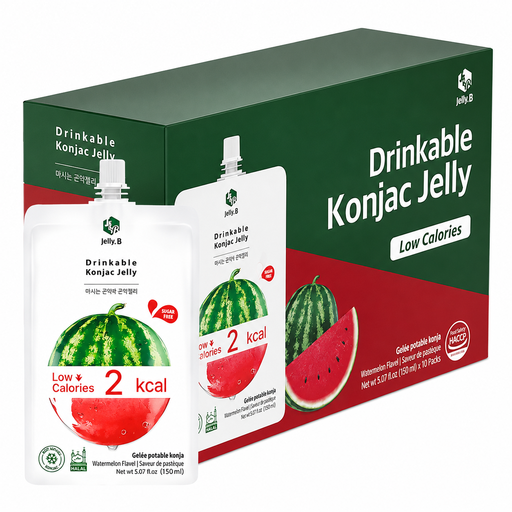
Why it suits this profile: Ideal for watermelon lovers and anyone who wants to take or share several individual portions.
The nutritional information lists erythritol and sweeteners separately. This makes it clear that “0 grams of sugar” does not mean “sweetener-free”.
10 × 150 ml, South Korea as the country of origin and 1.6 kcal per 100 g according to the product information.
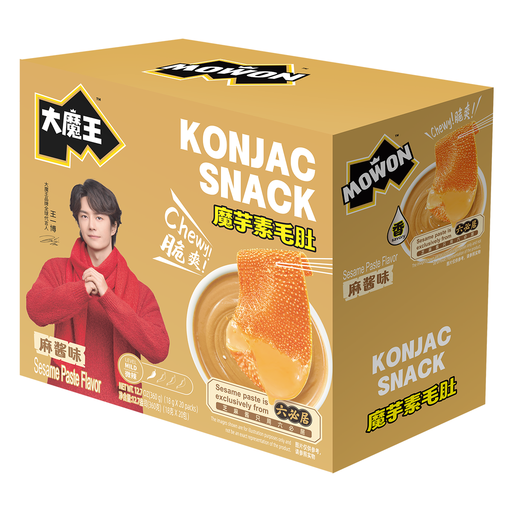
Why it suits this profile: For anyone who doesn’t want a sweet fruit jelly but is looking for a savoury konjac snack with sesame paste flavour in small portions.
The portions are individually packaged and the allergens are clearly listed. This makes comparison easier than with an unclear loose pack.
20 × 18 g, 92 kcal per 100 g and a savoury flavour profile. According to the product information, it contains soya, sesame and wheat/gluten.
We’ve put together a complete, up-to-date list of products that fully meet these strict selection criteria and the applicable European safety regulations.
Some varieties list 0 grams of sugar per 100 grams or millilitres, but that doesn’t mean every konjac jelly is sugar-free. Check the nutrition table. For example, Jelly B Lychee lists 0 grams of sugar, while other products may contain carbohydrates and sugar. Sweeteners such as erythritol, sucralose or acesulfame-K may also have been added.
It varies by product. Delief states that the selected Mango and Lychee varieties are vegan. Vegan status is not always stated for other Korean jelly snacks. Check the ingredients, dietary labels and allergen information on the product page and packaging.
Unopened pouches are generally stored in a cool, dry place away from direct sunlight. Exact instructions vary by product. After opening, a pouch often needs to be refrigerated and consumed quickly. Hethstia, for example, states that opened jelly must be stored in the fridge and used within two days. Always follow the label for the variety you choose.
