
Vandaag of morgen in huis

Kwaliteit gegarandeerd

Welkomstaanbiedingen ontgrendelen: GRATIS bezorging | Tot 80% korting | Gratis 30 dagen JoyPlus-proefperiode
Download de app
Fancy a spicy konjac snack, but not sure which pack or flavour is right for you? The range includes everything from small sachets with Sichuan pepper to a konjac snack multipack containing dozens of portions. The differences are not limited to the packaging. Salt, allergens, texture and the amount of seasoning all affect whether a snack suits your eating occasion.
As a Joybuy Product Recommendation Officer, I therefore focus mainly on verifiable information on the label and in the product description. This helps you avoid letting a striking claim make the decision when, in practice, the snack turns out to be too salty, over-packaged or unsuitable for your diet.
Konjac snacks often contain relatively little energy per 100 grams. That does not automatically mean every variety is light. Seasoning oil, sesame paste, peanuts and starch can increase the nutritional value. Across the range, the stated energy content varies from 68 kcal to 196 kcal per 100 grams.
So always check:
An 18-gram sachet naturally contains fewer calories than 100 grams, but with a multipack it is easy to eat several portions one after another.
A vegetarian tripe snack refers to the ridged, chewy texture reminiscent of tripe. The product is made from konjac, starch and seasoning. Even so, check the ingredients list, particularly if you follow a strict vegetarian or vegan diet. Some varieties may contain soya sauce, wheat, sesame, peanuts or other allergens.
You should only treat the term vegan snack as confirmed when the product information or packaging clearly states this. If in doubt, check the current label before consumption.
A box containing 20 or approximately 28 small sachets is convenient for the office, travel, parties and enjoying with drinks. However, a large format is less practical if you want to try several flavours first. Also check the storage instructions: unopened snacks should generally be stored in a cool, dry place; once opened, they should be consumed quickly and may sometimes need to be refrigerated.
A Sichuan snack often combines chilli with Sichuan pepper. This gives you not only heat, but also the slightly numbing mala effect. Other varieties are sour and spicy, hotpot-style, barbecue-flavoured or mild and nutty.
Bear in mind that flavour names do not always indicate exactly how hot a snack is. The order of ingredients and nutritional information provide a more reliable guide than eye-catching packaging.
Individually wrapped snacks are practical when you are out and about. Many packs contain sachets of 15, 18 or approximately 20 grams. This makes portion control easier than with one large bag.
Examples from the range:
Always check the allergens before buying. Many konjac snacks contain soya. Sesame, peanuts and wheat are also common. The nutritional values below are per 100 grams unless otherwise stated:
Some products are described as “high-fibre snacks”, but check whether the packaging actually states a fibre value. For example, Huiji Sour Mustard lists 6.1 grams of dietary fibre in the product information.

Why it suits this profile: A small pack for trying a Sichuan flavour and chewy texture without immediately buying a large box.
The product information states a net weight of 50 grams, an ingredients list and nutritional values. This makes it easier to assess the flavour and portion size at a glance.
68 kcal per 100 grams, Sichuan pepper, ready to eat and individually packed in the retail pack.
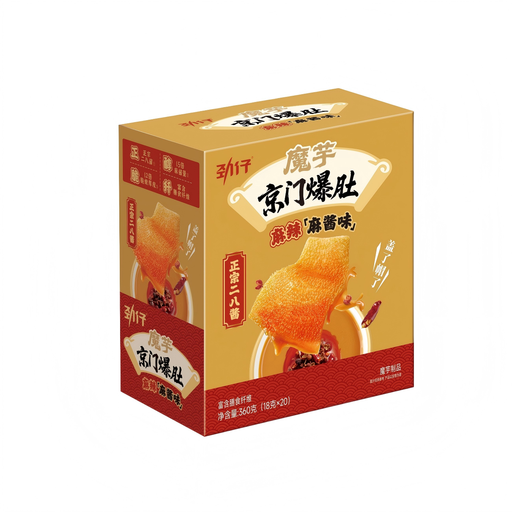
Why it suits this profile: Ideal if you are looking for a distinctive mala flavour with sesame and peanuts in a box containing 20 portions of 18 grams.
The portions are individually wrapped, and the product information states the quantities of konjac, sesame and peanuts. This makes the ingredients easier to check.
20 sachets of 18 grams, 71.37% konjac embryo according to the product information, and 196 kcal per 100 grams.

Why it suits this profile: A practical choice for work, parties or sharing, thanks to 20 individual sachets and a distinctive Sichuan-style flavour.
The box means you do not have to store one large open bag. However, check the listed allergens: soya and wheat are present.
18 grams per sachet, approximately 114 kcal per 100 grams and ready to eat without preparation.
We have put together a complete, up-to-date list of products that fully meet these strict selection criteria and the applicable European safety regulations.
It varies by product. Some ingredients lists contain no animal-derived ingredients, while others may contain fish, shellfish or squid ingredients, for example. Always check the current packaging. Soya, sesame, peanuts and wheat are common allergens.
Store unopened packs according to the label, usually in a cool, dry place away from direct sunlight. Once opened, the snack should generally be consumed immediately or soon afterwards. Some products specify refrigeration after opening. Always follow the instructions on the packaging.
Many varieties contain less energy per 100 grams than traditional savoury snacks, but the figures vary considerably. Seasoning oil, sesame paste, peanuts and starch all play a part. So compare the nutritional value per 100 grams as well as the actual portion size. This allows you to choose a konjac noodle snack or chewy snack based on information that suits your eating occasion.
