
Vandaag of morgen in huis

Kwaliteit gegarandeerd

Welkomstaanbiedingen ontgrendelen: GRATIS bezorging | Tot 80% korting | Gratis 30 dagen JoyPlus-proefperiode
Download de app
Konjac snacks are popular among fans of Asian snacks, especially for their chewy texture and bold flavours like Sichuan mala, chilli oil and sesame. Yet not every packet is the same. One vegan konjac snack might contain wheat or soya, while another could be high in salt or oil.
When you buy konjac snacks online, it pays to look beyond terms like “healthy”, “light” or “authentic”. Always check the label, the nutritional values and the size. That way, you can make a more informed choice when picking a spicy konjac snack, vegetarian tripe snack or handy snack bundle.
Konjac itself is plant-based, but the flavouring may contain soya, sesame, wheat or gluten. Some products use soya sauce or wheat starch. So a snack can be suitable for a plant-based diet but not for someone with an allergy.
Always check the bold allergens on the packaging. If a product has an unclear or incomplete ingredients list, it’s wise to be cautious.
A low-calorie snack can still be relatively high in salt. For example, the HAO BA SHI Konjac Snack lists 68 kcal and 3.1 g of salt per 100 g. The packet contains 50 g, but the nutritional information is given per 100 g. So remember to calculate back to the actual portion when comparing products.
The term “low-calorie” sometimes comes from a brand’s product description. According to the brands’ own information, certain konjac snacks are described as low in calories. Judge this for yourself based on the nutrition table.
A 50 g bag is handy for on the go or at work. A pack with 20 individual portions works better for a film night, office stash or sharing. What’s more, storage advice varies after opening. Some snacks need to be chilled and eaten quickly; others stay fine at room temperature when sealed.
Look at the first ingredients on the list. In many konjac snacks, these are water and konjac powder, but the additions determine the flavour and nutritional value. Common ingredients include:
If you’re looking for a vegetarian tripe snack, also check what the chewy texture is made from. “Tripe” here refers to the shape and bite, not animal tripe. Products based on konjac or soya are plant-based according to the product description, but check the actual packaging before you order.
Compare at least these values:
An 18 g snack may show higher values per 100 g than the portion you actually eat. For a light snack on the go, a small individual bag is often clearer than a large bag you might finish in one go.
Konjac snacks are known as a chewy snack, but the bite can vary from soft and springy to crispy and firm. If you’re after a firm texture, look for descriptions like “crispy”, “crunchy” or “springy”. For fans of Sichuan flavour, chilli and green Sichuan pepper are key indicators.
Also consider the intensity. A spicy konjac snack with chilli oil and Sichuan pepper is not the same as a mild sesame product. If in doubt, a small bag is a practical first choice.

Why this fits the profile: The compact bag is ideal for trying a Sichuan konjac snack for the first time, taking to the office or eating on a walk. The product information states 68 kcal per 100 g and a portion of 50 g.
The small size reduces the risk of buying a large snack bundle without knowing the flavour or texture. Allergens such as soya and sulphites are listed in the product information.
50 g, ready-to-eat, Sichuan pepper and chilli, individually packed according to the product description.
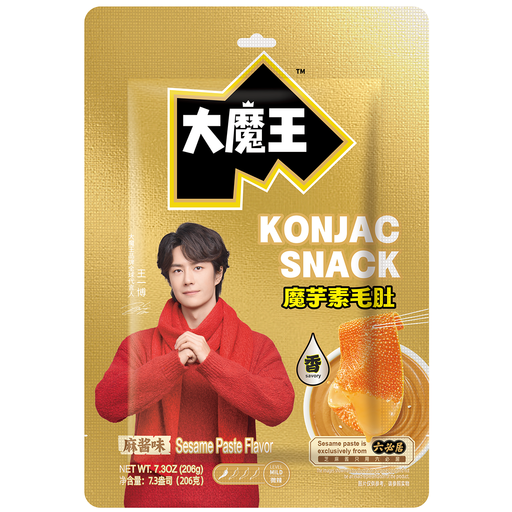
Why this fits the profile: This product combines a larger total weight with individual portions. The sesame paste flavour is an alternative for those who want less emphasis on chilli and prefer a consistent, savoury taste.
The 23 individual packs make the portion clearer than one large opened bag. The ingredients list mentions sesame, soya and wheat as allergens.
206 g total, 23 portions, 131 kcal per 100 g according to the product information, ready-to-eat.
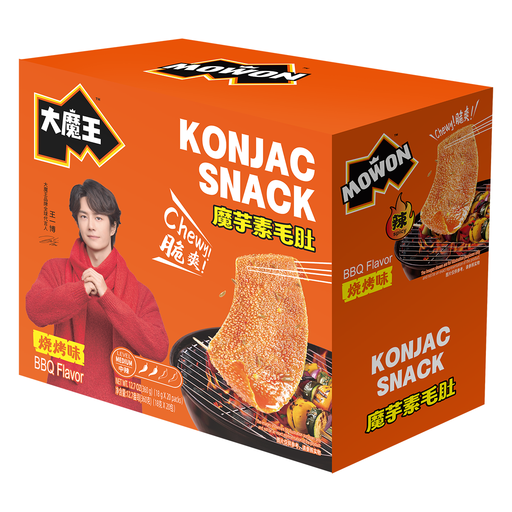
Why this fits the profile: The 20 small bags are practical for an office, film night, long car journey or group. The BBQ flavour suits anyone looking for a savoury snack with spices and roasted notes.
The 18 g portions prevent a large pack from being opened repeatedly. The product information lists soya as an allergen and 111 kcal per 100 g.
360 g total, 20 individually packed bags, 18 g per portion and ready-to-eat.
We’ve put together a full, up-to-date list of products that fully meet these strict selection criteria and comply with current European safety regulations.
That depends on the product. Konjac powder is plant-based, but flavourings can contain soya, sesame, wheat or other ingredients. So always check the full ingredients list and the allergen declaration. A brand’s product description is no substitute for the label on the packaging.
Some products are relatively low in energy per 100 g, but that doesn’t automatically apply to every konjac snack. Values vary across the range. Also look at oil, sugar and salt, and calculate the values for the portion you actually eat.
Always follow the instructions on the packaging. Unopened snacks are generally stored in a cool, dry place away from direct sunlight. Some products need to be chilled after opening and consumed quickly. Seal individual bags properly and don’t use an opened product if the packaging is damaged.
