
Vandaag of morgen in huis

Kwaliteit gegarandeerd

Welkomstaanbiedingen ontgrendelen: GRATIS bezorging | Tot 80% korting | Gratis 30 dagen JoyPlus-proefperiode
Download de app
Fancy a spicy konjac snack, Sichuan mala flavours or a convenient snack for the journey? You’ll soon find yourself choosing between pouches containing konjac, seaweed, soya products or vegetarian meat snacks. The packaging often promises intense flavour, a light texture and few calories. Even so, there are a few points it’s worth checking before you buy Chinese snacks.
According to the product information, konjac snacks often contain less energy per 100 grams than crisps or fried snacks. That doesn’t automatically make them suitable for every diet. The amount of oil, sugar and, especially, salt can vary considerably between products.
For comparison:
So don’t look only at the energy content. Also check the serving size and salt content.
Individual snack packs are convenient for work, school, travelling or sharing. Boxes weighing 252 or 360 grams sometimes contain 20 to 28 small pouches. This makes portioning easier, but it can also lead to eating several servings in a row without realising it.
Pay attention to the difference between:
A box with 20 pouches of 18 grams, such as some Wei Long products, is practical for everyday use. A 50-gram pouch is more suitable for eating straight away or taking with you.
Many konjac snacks are plant-based, but they may still contain soya, wheat, sesame or other allergens. Some products also contain flavour enhancers, acidity regulators or preservatives. Always check the ingredients list on the packaging.
A vegetarian meat snack made from wheat gluten often has a firm, fibrous texture, but it isn’t suitable for people avoiding gluten. If you follow a vegan diet, it’s best to check the full ingredients list and product details rather than relying solely on the word “vegetarian”.
Sichuan snacks often combine chilli with Sichuan pepper. Chilli provides the heat, while Sichuan pepper creates the characteristic tingling or numbing sensation. This is often described as mala.
Bear in mind that flavour descriptions vary between brands. “Spicy” can mean anything from gently seasoned to an intensely hot chilli experience.
Konjac is processed into strips, jelly strips or shapes resembling tripe strips. The texture is generally elastic, firm and chewy. If you’re expecting a crunchy snack, seaweed, potato sticks or crisps may be a better choice.
For konjac noodle-style snack products, check:
For example, the Wei Long products listed contain 6% konjac flour. The exact composition varies by flavour and packaging.
The product information should clearly state the amount of energy, fat, carbohydrate, protein and salt. Use these values to compare products, but take the actual serving size into account.
Also check:
According to a brand’s own research, certain textures or taste experiences may be highlighted in product claims. Treat such brand claims as product information, not as a guaranteed result. Taste and mouthfeel are personal.

Why it suits this profile: A compact 50-gram pouch for trying Sichuan pepper and the chewy texture of konjac for the first time.
The portion is easy to keep track of, and the nutritional value is listed per 100 grams. This lets you assess the flavour and salt content without immediately buying a large box.
68 kcal per 100 grams, ready to eat, with ingredients including konjac, chilli and green Sichuan pepper.
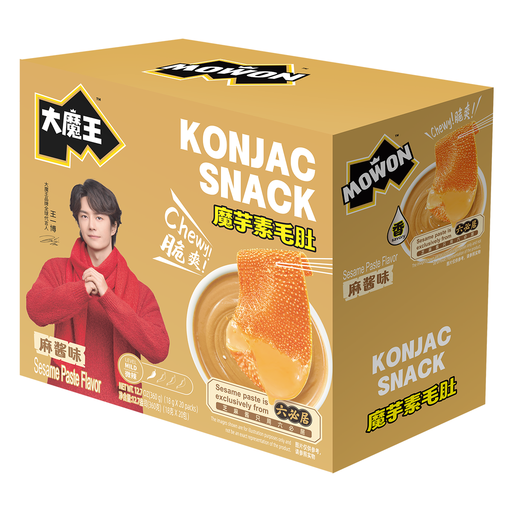
Why it suits this profile: The sesame paste flavour offers a less sharp taste, while twenty individual pouches make portioning and storage easy.
The individual packs make the actual serving size clearer than a large opened pouch.
18 grams per pouch, 360 grams in total, with clear allergen information for soya, sesame and wheat.

Why it suits this profile: The box of 18g×20 is aimed at fans of a bold Sichuan flavour who want to keep a supply for sharing or several snacking occasions.
The twenty individual pouches prevent the entire box from becoming one large serving once opened. However, check the relatively high salt content of 3.2 grams per 100 grams.
18 grams per individual pouch, ready to eat, and seasoned with chilli, ginger, garlic and Sichuan pepper.
We’ve put together a complete, up-to-date list of products that fully meet these strict selection criteria and the applicable European safety regulations.
Would you like to buy Chinese and Korean snacks but prefer to mix things up? These options offer a different mouthfeel:
Based on the stated nutritional values, various konjac snacks contain approximately 68 to 117 kcal per 100 grams. This is a product specification, not a general nutritional claim. Always check the current packaging, as the recipe and nutritional values may vary between variants.
Usually store unopened pouches in a cool, dry place away from direct sunlight. After opening, eat the snack immediately as instructed on the packaging, or seal it tightly and consume it promptly. Do not use a product if the packaging is damaged.
Many konjac snacks are sold as vegetarian and, according to the product information, contain no meat. However, they may contain soya, wheat, sesame or other allergens. Before buying, always read the full ingredients list and allergen information.
