
Vandaag of morgen in huis

Kwaliteit gegarandeerd

Welkomstaanbiedingen ontgrendelen: GRATIS bezorging | Tot 80% korting | Gratis 30 dagen JoyPlus-proefperiode
Download de app
A konjac snack is handy for on the go, at the office, or as an addition to a meal. The texture ranges from springy and crunchy to soft and noodle-like. Spicy Sichuan snacks, mala flavours and sesame varieties are particularly popular among fans of Asian snacks.
However, not every pack is equally suited to your eating occasion. A flashy front with terms like “low calorie”, “healthy” or “plant-based” doesn’t tell the whole story. Always check the nutritional information table, allergens and portion size.
Konjac naturally contains a lot of water, which can make the energy value per 100g low. But the seasoned oil, sesame paste, peanuts or other flavourings can add extra fat, salt and calories.
So don’t just compare the claim on the front. Look at:
A packet of 18g naturally contains fewer calories than 100g, but several portions in a row soon add up.
Many konjac snacks contain no meat, but they can contain soya, wheat, sesame or peanuts. Some Sichuan flavours also use bean sauce with wheat. Always read the allergen declaration, especially if you have a food allergy or intolerance.
A product may look plant-based based on the ingredients list, but always check the actual packaging. Recipes and labels can change.
A spicy konjac snack often contains chilli, but a true Sichuan or mala snack combines chilli with Sichuan pepper. That pepper gives not only heat but also a tingling or slightly numbing sensation in the mouth. Sesame, oil, garlic and vinegar further alter the flavour balance.
If you’re not used to strong heat, it’s better to start with a small portion pack. A snack with “hot & spicy” and sesame can also taste fuller and heavier due to peanut or sesame paste than a simple chilli variety.
Use the table per 100g to compare products fairly. In the current range, the values vary. HAO BA SHI Sichuan Pepper states 68 kcal per 100g, for example, while WEILONG Spicy Flavor states 84 kcal per 100g. The Jinzai Jingmen Hot & Spicy Sesame variety states 196 kcal per 100g, partly due to sesame and peanut preparations.
That doesn’t automatically mean one flavour is unsuitable. It does help you decide whether you’re looking for a light snack, a savoury snack, or more of a small topping for rice and noodles.
Konjac snacks are not the same as konjac noodles. Noodles are usually rinsed and added to soup, stir-fries or hotpot. Ready-to-eat snacks are generally eaten straight from the pack and are more strongly seasoned.
Pay attention to the description:
Spicy snacks often contain relatively high levels of salt. In the product data here, the salt content ranges from 1.71 to 3.9g per 100g. Also check for additives such as flavour enhancers, sulphites and acidity regulators if you prefer to limit those.
A clear ingredients list is more important than a general health claim. The term low-calorie snack, for example, says nothing about the salt content or the presence of allergens.

Why this fits the profile: A small pack to get acquainted with Sichuan pepper, chilli and the characteristic chewy konjac texture.
The contents are 50g and the nutritional information is clearly stated: 68 kcal per 100g. This makes it easy to estimate your portion.
Ready to eat, individually wrapped and with a pronounced Sichuan pepper flavour. Contains soya and sulphites.
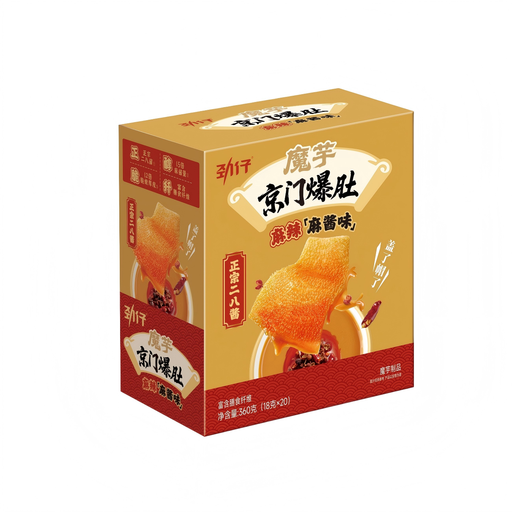
Why this fits the profile: For those who want a full flavour with sesame, peanut, chilli and Sichuan pepper rather than just sharp chilli.
The 20 packets of 18g make portion control straightforward. The higher energy value of 196 kcal per 100g is clearly stated in the product information.
71.37% konjac embryo according to the product data and a rich sesame-peanut flavour. Contains soya, peanuts and sesame.
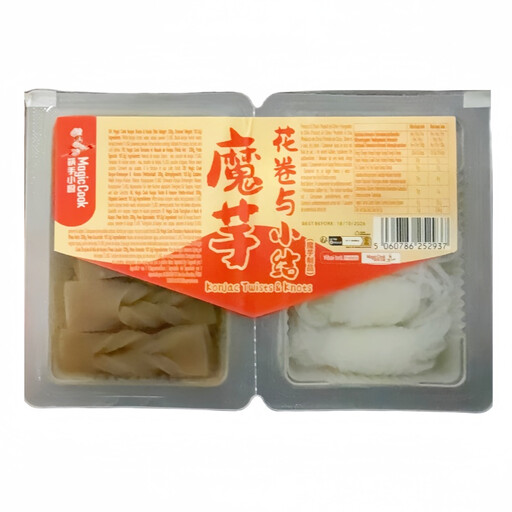
Why this fits the profile: For those who mainly want to use konjac in hotpot, soup, stir-fries or a cold salad.
This is not a loose snack with a heavy sauce, but a product you can rinse and add to a dish. Once opened, it must be refrigerated and used within two days.
330g with white knots and black twists. According to the product data, this variety contains no allergens.
We’ve put together a full, up-to-date list of products that fully meet these strict selection criteria and comply with current European safety regulations.
If you’re looking for a loose Chinese snack, you could also consider WEILONG Konjac Snack Spicy Flavour 50g. This states 84 kcal and 2.8g salt per 100g and contains soya and wheat. For a less sharp, tangier flavour, Huiji Low-Fat Konjac Sour Mustard Flavour 50g is an option; according to the product data, this contains 70 kcal per 100g and 3.9g salt.
The MOWON Sesame Paste Flavour pack contains 20 packets of 18g and states 92 kcal per 100g. With this vegan konjac snack, do check for soya, sesame and wheat in the ingredients list. “Vegan” here does not mean the product is free from common allergens.
Some varieties have a low energy value per 100g, but this varies greatly by recipe. Seasoned oil, sesame paste and peanuts can increase the value. Always compare the nutritional information table and calculate the value for the portion you actually eat.
Most of the snacks mentioned are ready to eat. Open the packet and consume the product according to the packaging. Konjac for hotpot or stir-fries sometimes needs to be rinsed and drained. After opening, check the storage instructions; some products must be refrigerated and used within a few days.
This varies by product. Individually wrapped portions remain practical for on the go or at the office when unopened. An opened pack should be sealed properly and stored according to the label. For the Kuai Shou konjac, according to the product information: refrigerate and consume within two days.
