
Vandaag of morgen in huis

Kwaliteit gegarandeerd

Welkomstaanbiedingen ontgrendelen: GRATIS bezorging | Tot 80% korting | Gratis 30 dagen JoyPlus-proefperiode
Download de app
Konjac jelly is popular with fans of Japanese and Korean snacks, mainly thanks to its soft to chewy texture and convenient individual portions. However, many varieties look similar while differing considerably in ingredients, calories, size and ease of use. If you focus only on an appealing fruit flavour or the term “low calorie”, you could end up buying a product that is less suitable for your eating habits or everyday needs.
This buying guide from the Joybuy Product Recommendation Officer helps you compare marketing claims with verifiable product information. That way, you can compare konjac jelly in a practical way.
A peach, mango, lychee or grape variety may be based mainly on flavourings and sweeteners. So check the ingredients list and fruit juice percentage. For example, Orihiro Prunto konjac jelly peach lists 23% peach and apple juice. By contrast, the WANT WANT apple variety lists 0.1% concentrated apple juice. Both have a fruit flavour, but their compositions are clearly different.
A brand’s own research may claim that a product tastes “authentic” or “refreshing”. That is a marketing claim, not an objective guarantee. For a fair comparison, check the nutritional information and ingredients on the packaging.
The term low-calorie snack only tells you about the energy content per quantity. Some Japanese konjac jelly products contain sugar or glucose syrup and provide around 100 kcal per 100 grams. For example, Shimonita Konjac Jelly Mango lists 100 kcal per 100 grams, while the Shimonita grape variety lists 106 kcal per 100 grams.
Other products use sweeteners. Jelly B Konjac Jelly Watermelon lists 1.6 kcal per 100 ml and contains, among other ingredients, erythritol, sucralose and acesulfame-K. So always check kcal, carbohydrates and sugars, as well as the portion size.
A drinkable pouch is suitable for a bag or lunchbox, but it must be used carefully. A firm jelly can pose a choking hazard if eaten incorrectly. Orihiro states that you should open the jelly along the dotted line, push the product out and chew it in several bites. Do not suck or swallow the jelly in one go.
Other packaging also carries a warning to chew carefully. Always follow the instructions on the current label. According to the product information, some varieties are not suitable for young children.
Compare products on the same basis. A 120-gram pack with 5 kcal per 100 grams is different from a 200-gram bag with 89 kcal per 100 grams. Look at:
Nutritional values may vary between batches or packs. Use the label on the product supplied as your reference.
Konjac powder is plant-based, but a complete jelly is not automatically vegan. Check the binding agents, flavourings and any animal-derived ingredients. The DELIEF lychee and mango varieties are listed as vegan and, according to the product information, contain none of the 14 main EU allergens. Here, the term “vegetarian collagen” refers to a plant-based alternative made from root vegetables, according to the ingredients list.
If you have an allergy, always check the current packaging. The Orihiro peach variety lists peach and apple as allergens. Cocon Kingo Grape Jelly with Nata de Coco lists milk as an allergen. This product is also a dessert with nata de coco rather than a classic konjac jelly.
A Japanese konjac jelly such as Orihiro or Shimonita often comes in individually wrapped portions. This is practical for eating on the go and helps with portion control. Korean konjac jelly, such as Jelly B and DELIEF, is also available in pouches or larger multipacks.
Also consider:
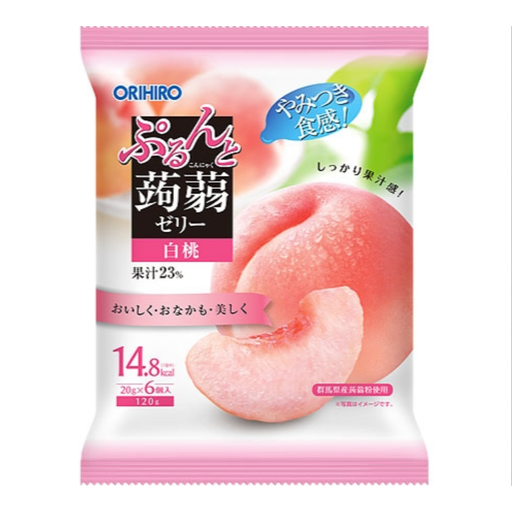
Why it suits this profile: Six individual 20-gram portions make this Japanese konjac jelly a manageable choice for anyone who wants to try the product first or is looking for small snacks for work and travel.
The product information lists 23% fruit juice and 14.8 kcal per portion. The push-out packaging is designed for eating the jelly in smaller bites.
Peach and apple juice, 6 × 20 grams, made in Japan and suitable as a ready-to-eat snack.
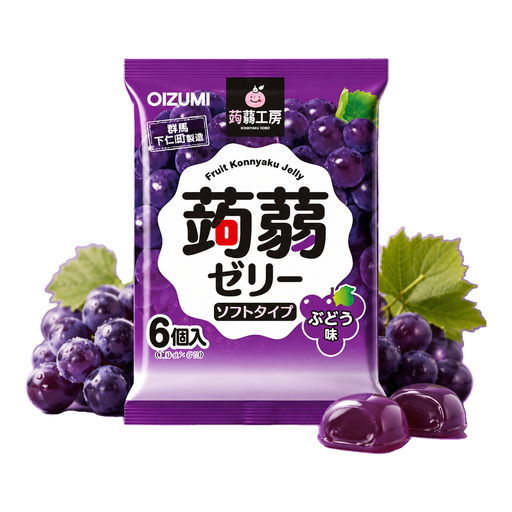
Why it suits this profile: This Japanese variety is aimed at fans of grape jelly with a soft, chewy texture and individually wrapped packaging that is easy to take with you.
The product information lists grape juice and 106 kcal per 100 grams. This allows you to compare the fruit flavour and energy content with other varieties.
Made in Japan, 0 grams of fat per 100 grams and a 106-gram portion size.
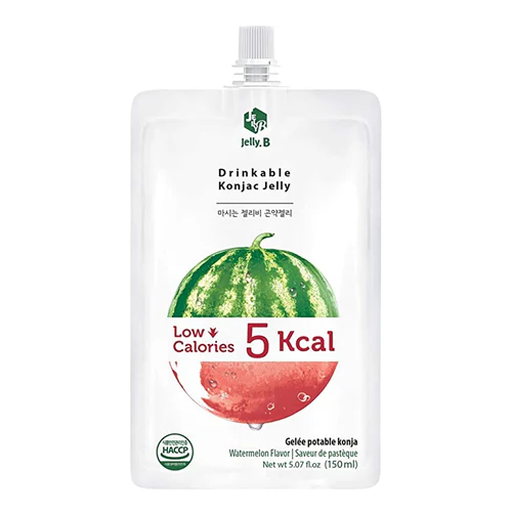
Why it suits this profile: This Korean konjac jelly comes in a 150 ml pouch, making it practical as a jelly on the go during work, travel or a day out.
The nutritional information lists 1.6 kcal per 100 ml. The packaging can be resealed after opening, but store the product according to the label.
150 ml portable pouch, 0 grams of fat per 100 ml and sourced from South Korea.
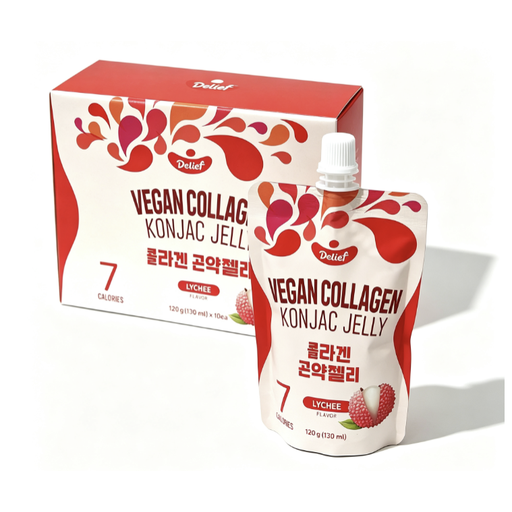
Why it suits this profile: This multipack of lychee jelly is aimed at vegans who want several portions at home and are looking for a very low energy content.
The product information states that it is vegan and halal. The nutritional value is 4 kcal per 100 grams; check the current packaging when it is delivered.
10 × 120 grams, lychee flavour, 4 kcal per 100 grams and sourced from South Korea.
We have put together a complete, up-to-date list of products that fully meet these strict selection criteria and the applicable European safety regulations.
That depends on the variety and portion size. Some products contain around 4 to 5 kcal per 100 grams, while sweetened Japanese varieties can provide around 100 kcal per 100 grams. So always check the nutrition table rather than just the front of the packaging.
Unopened products should generally be stored in a cool, dry place away from direct sunlight and heat. After opening, a pouch or tub often needs to be refrigerated and consumed within the stated period. Follow the product instructions, especially when the packaging cannot be resealed.
No. Konjac powder is plant-based, but other ingredients and allergens may vary. Only choose a product explicitly labelled vegan when this is essential for you. Also check the “may contain traces” warning and the current ingredients list.
