
Vandaag of morgen in huis

Kwaliteit gegarandeerd

Welkomstaanbiedingen ontgrendelen: GRATIS bezorging | Tot 80% korting | Gratis 30 dagen JoyPlus-proefperiode
Download de app
A konjac jelly is a soft, fruity snack in a handy jelly pouch. Take it to work, school, on the go or when travelling, and squeeze the contents straight from the packaging. It sounds simple, but the differences between products matter if you are watching your sugar intake, calories or ingredients, or following a vegan diet.
When searching for konjac jelly, you may also come across ordinary fruit jelly, gummies and supplements. So check exactly what you are buying first.
A fruity flavour tells you nothing about the sugar content. A product may combine fruit juice with sugar, glucose syrup or fructose-glucose syrup. According to the product information, the Strong Konjac Jelly Squeeze Pack contains at least 40% fruit, but also contains sugar and approximately 22.2 to 24.5 grams of sugar per 100 grams, depending on the flavour.
This makes this type of jelly different from a sugar-free jelly. Always check the nutrition table rather than relying only on words such as “fruit”, “natural” or “refreshing”.
A box may look appealing, but check whether you are receiving an individual pouch or a box containing multiple portions. Several Hethstia products are sold as a single pouch; the box shown in the product image may simply be packaging presentation. A multipack can be practical for everyday use, while an individual pouch is more convenient if you want to try a flavour first.
Sugar-free jelly often contains sweeteners such as erythritol. This can result in a low nutritional value, but the product will not automatically suit every way of eating. Check the total carbohydrates, polyols and serving size if you are looking for a keto snack or low-carb snack. Sweeteners may also cause discomfort for some people, so if you are unsure, start with one serving.
Compare the values per individual serving, not just per 100 grams. The range includes Hethstia pouches containing approximately 3 to 7 kcal per serving, depending on the flavour and product listing. Also check:
The nutritional information on the packaging takes precedence. Product details may vary by flavour or packaging.
For a vegan jelly snack, check that it contains no gelatine or collagen. The Hethstia Blueberry variant is listed as vegan in the product information and contains, among other ingredients, water, blueberry concentrate, erythritol, vitamin C, konjac powder and carrageenan.
If you follow a gluten-free diet, do not just look at the front of the packaging. Check the allergen information and any warnings too. “Gluten-free snack” is only useful if this information is clearly stated on the product label or in the product details.
Also note the difference between konjac jelly with collagen and vitamin C and a vegan version. Collagen peptides are not vegan. According to the product description, certain Hethstia flavours contain collagen peptides and vitamin C; the presence of vitamin C does not guarantee any medical effect from the snack. Only use nutritional claims as stated on the label and product page.
A jelly pouch is practical for taking with you, but pay attention to the seal, shelf life and storage instructions. Many individual pouches can be stored unopened outside the fridge in a cool, dry place. Once opened, follow the instructions on the label; some variants state that they should be refrigerated and consumed within one or two days.
Squeeze the jelly out of the pouch carefully and follow the instructions for use. Do not allow young children to use these products unsupervised. Also check the best-before date and do not consume a pouch if the seal is damaged.
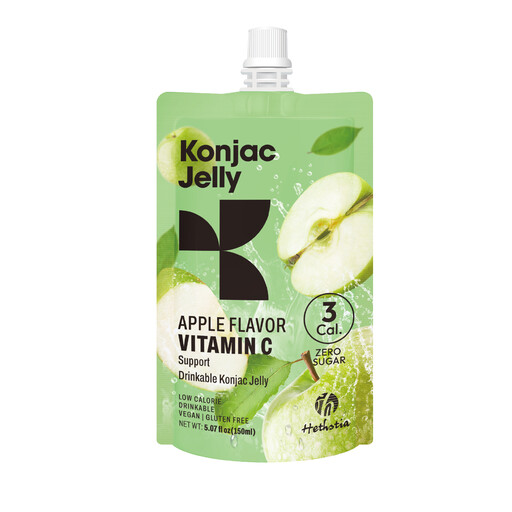
Why it suits this profile: An individual pouch is ideal if you want to try a fruit flavour without immediately buying a large fruit jelly assortment. The apple variant is ready to enjoy straight away.
The product information states that it is sugar-free and gluten-free. However, check the current nutrition table before buying.
Individual pouch, apple concentrate, erythritol and vitamin C according to the product description.
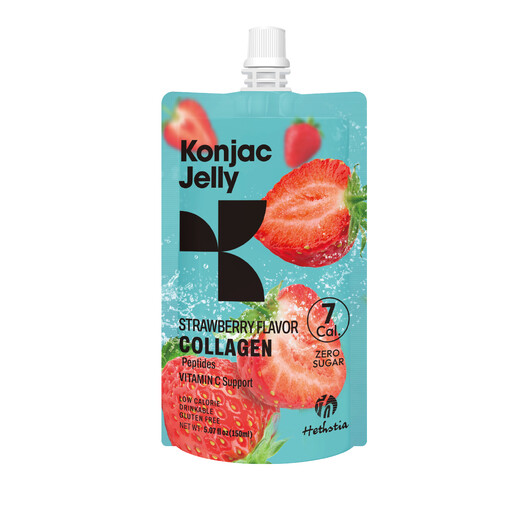
Why it suits this profile: This variant is ideal if you are looking for a fruity snack with additional ingredients such as collagen peptides and vitamin C, without added sugar according to the product listing.
The ingredients list identifies collagen peptides separately. This makes it clear that this is not a vegan jelly snack, helping you assess dietary claims more accurately.
Strawberry flavour, individual serving, konjac powder and collagen peptides according to the product information.
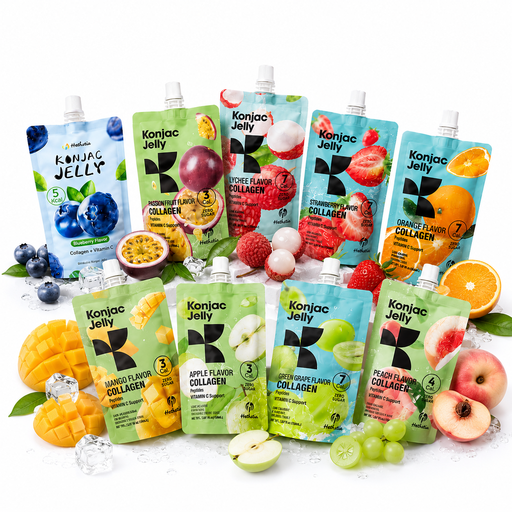
Why it suits this profile: A set with multiple flavours is practical if you regularly take a jelly pouch to the office, on journeys or as a snack for different occasions.
You are less reliant on a single flavour. Before ordering, check the exact ingredients and number of pouches in the current set.
Eight servings according to the product name, with an assortment of different fruit flavours.
We have put together a complete, up-to-date list of products that fully meet these strict selection criteria and the applicable European safety regulations.
That depends on the variant. Several Hethstia products list approximately 3 to 7 kcal per pouch. Other fruit jelly products contain sugar and more than 100 kcal per 100 grams. So compare the nutritional value per serving before making your choice.
Some variants are marketed as keto-friendly and contain little sugar. Always check the total carbohydrates, polyols and serving size. Whether a product fits your personal keto goals depends on your daily diet.
Follow the packaging instructions. For the Hethstia variants mentioned, the usual guidance is to refrigerate after opening and consume within one or two days. Store an unopened pouch in a cool, dry place according to the stated storage conditions.
