
Vandaag of morgen in huis

Kwaliteit gegarandeerd

Welkomstaanbiedingen ontgrendelen: GRATIS bezorging | Tot 80% korting | Gratis 30 dagen JoyPlus-proefperiode
Download de app
Konjac jelly is popular with people who want to eat less sugar, enjoy vegan snacks or are looking for a convenient jelly pouch for when they’re out and about. However, the products can vary considerably. Some varieties contain sugar and glucose syrup, while others provide hardly any calories or sugar. Terms such as “vegan collagen”, “keto” and “fruit jelly” also warrant a closer look at the ingredients list.
The following points will help you distinguish marketing claims from verifiable product information.
Mango jelly, peach jelly or green grape jelly may contain mainly flavouring. So check the order of the ingredients and the percentage of fruit concentrate. For some products, fruit concentrate is listed only in a small quantity. The fruit flavour may therefore come largely from flavourings.
Japanese and Korean snacks do not all have the same composition. According to the product information, Shimonita Konjac Jelly Mango contains sugar and glucose syrup, among other ingredients, and lists 100 kcal per 100 grams. Shimonita Grape Flavor lists 106 kcal per 100 grams. This is clearly different from a sugar-free jelly made with erythritol or other sweeteners.
Therefore, always compare:
For some products, “vegan collagen” refers to a plant-based ingredient or a collagen-like complex. For example, the product information for certain Delief varieties mentions plant-based collagen from carrots. This is not the same as collagen from an animal source. According to the brands’ own product information, some varieties may also contain vitamin C; this should not be confused with a medical effect.
If you follow a vegan diet, also check the full ingredients list and allergen information. Check the packaging every time you make a new purchase, as recipes and labels can change.
For a low-calorie snack, keto snack or low-carb option, the nutritional values are more important than the front of the packaging. Values vary across the range. DELIEF Green Grape lists 5 kcal and 0 grams of sugar per 100 grams. DELIEF Mango lists 4 kcal and 0 grams of sugar per 100 grams. Keumkang Lychee lists 3 kcal and 0 grams of sugar per 100 grams.
Please note: “0 grams of sugar” does not automatically mean zero carbohydrates. DELIEF Green Grape, for example, lists 1 gram of carbohydrates per 100 grams. If you follow a strict keto or low-carb diet, it is worth calculating both the total carbohydrates and the serving size.
A 120-gram pouch is not always comparable with a 150-millilitre serving. Check whether the nutritional values are given per 100 grams, per 100 millilitres or per entire pack. A konjac jelly multipack may offer better value if you use it regularly, but buy a single pouch first if you have not tried the flavour before.
Individual jelly pouches are practical for the office, school or travel. According to the product information, some varieties should be refrigerated after opening and consumed within a short time. Always follow the instructions on the packaging.
Konjac jelly often has a soft, elastic or slightly chewy texture. This makes the snack different from ordinary fruit jelly. Eat slowly and follow the instructions on the packaging. Do not give products with a firm jelly texture to young children without supervision. If you have swallowing difficulties or specific dietary restrictions, it is advisable to seek professional advice first.
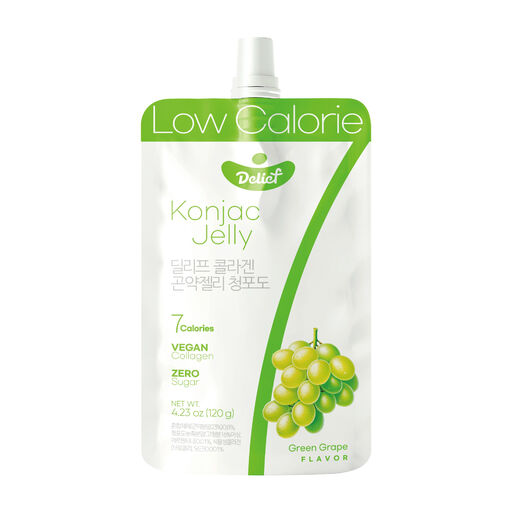
Why it suits this profile: A straightforward single pack for trying green grape jelly without committing to a multipack straight away.
The stated nutritional values are 5 kcal, 0 grams of sugar and 1 gram of carbohydrates per 100 grams. The ingredients list and allergen information are available.
120 grams per pouch; according to the product information, vegan and with no reported allergens.
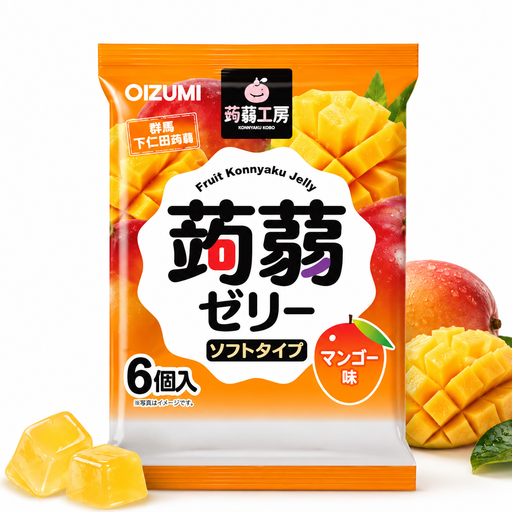
Why it suits this profile: Ideal if you are mainly looking for a Japanese mango-flavoured snack with a soft, chewy texture.
The product information lists sugar and glucose syrup. It is therefore clear that this is not a sugar-free jelly, despite the small serving size.
Product from Japan; 106 grams per pack; mango flavour with konjac as an ingredient.
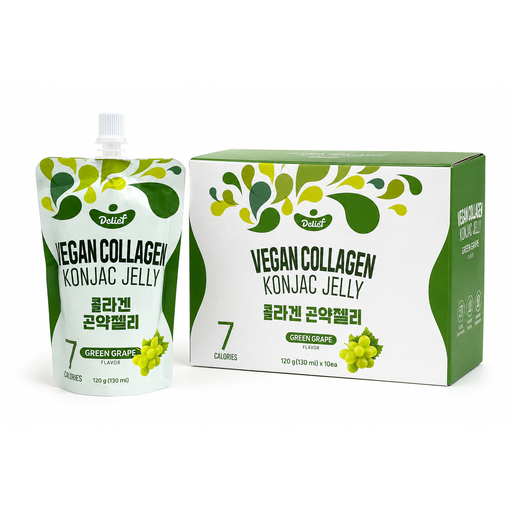
Why it suits this profile: A 10-pack is ideal if you take a pouch to work, school or on the go every day and already know you enjoy the green grape flavour.
The stated values are 5 kcal and 0 grams of sugar per 100 grams. The term “vegan collagen” is not presented as animal collagen; check the current packaging.
Ten individual 120-gram packs; according to the product information, no reported allergens.
We have put together a complete, up-to-date list of products that fully meet these strict selection criteria and the applicable European safety regulations.
No. Some varieties contain sugar, glucose syrup or fruit sugar. Check the nutrition table and ingredients list. Products containing erythritol, sucralose or steviol glycosides may contain less sugar, but the composition varies by brand.
That depends on the total carbohydrates per serving. A product with 0 grams of sugar may still list carbohydrates. Calculate the amount per pouch and check whether the ingredients fit your personal dietary choices.
Store the pouch according to the label, usually in a cool, dry place away from direct sunlight. After opening, some varieties must be refrigerated and used within two days. Always check the best-before date and the instructions on the packaging.
