
Vandaag of morgen in huis

Kwaliteit gegarandeerd

Welkomstaanbiedingen ontgrendelen: GRATIS bezorging | Tot 80% korting | Gratis 30 dagen JoyPlus-proefperiode
Download de app
A konjac jelly snack may seem simple: fruity jelly, a handy pouch and very few calories. However, products vary considerably in terms of recipe, sugar content, portion size and packaging. If you only look for words such as “light”, “fit” or “natural”, you could end up with a snack that is less suitable for your diet or preferred flavour.
A product can be low in calories while still containing sugar. Jelly B Konjac Jelly Blueberry 150ml, for example, lists 10 kcal and 2 grams of sugar per 100 ml. That is not the same as sugar-free jelly. Always check the nutrition table, preferably both per full pouch and per 100 ml or 100 grams.
Also look out for sweeteners such as erythritol, sucralose and acesulfame-K. These have different properties from sugar and are not the same as “without sweeteners”.
“Vegan”, “gluten-free” and “keto” are not synonyms. A jelly may be gluten-free but still contain, for example, milk ingredients. According to the ingredients list, Keumkang Jelly B Konjac Jelly Yogurt 150ml contains skimmed milk powder and whey permeate, among other ingredients. This variant is therefore not suitable for a vegan diet.
It is also wise to read the ingredients list for products labelled “vegan collagen”. DELIEF Vegan Collagen Konjac Jelly Green Grape lists plant-based collagen from carrot as an ingredient. If you follow a strict vegan diet, also check the current packaging and any certification.
A flavour name does not always give you the full recipe. Some variants use juice concentrate, while others rely mainly on flavourings and sweeteners. That is not necessarily good or bad, but it does affect what you can expect from the flavour. For example, the product description for Jelly B Konjac Jelly Peach lists pear flavouring and pear juice concentrate. So read the ingredients if you are looking for a specific fruit flavour.
A low-calorie jelly is most practical when you know how much you are actually consuming. A 150 ml pouch may contain 3, 7 or 10 kcal, depending on the recipe and brand. Compare the following:
Jelly B’s watermelon variant lists 1.6 kcal per 100 ml and 0 grams of sugar. The lychee flavour lists 3 kcal per 100 ml and also 0 grams of sugar. The exact nutritional value may vary between flavours.
Konjac jelly usually consists of water, konjac powder or konjac flour, acidity regulators, flavourings and one or more gelling agents. If you have allergies, always check the full EU ingredients declaration on the packaging. A product description that does not list allergens is not a substitute for checking the label.
Pay particular attention to:
According to the product information, Jelly B Blueberry is Halal-certified and contains none of the 14 major EU allergens. Always check the packaging when your order arrives, as labelling information may be updated.
A drinkable jelly, jelly pouch or squeeze pouch is handy for work, school, travelling and a quick break. A 150 ml pack fits easily into a bag, but it is not intended to be stored for a long time once opened. Several Hethstia variants state: refrigerate after opening and consume within two days.
Store unopened pouches according to the label, usually in a cool, dry place away from direct sunlight. Do not use a pouch if the packaging is damaged. Konjac jelly has a smooth, elastic texture. Eat it slowly and follow any usage warnings on the label. Do not give this type of jelly to young children if the packaging carries a warning; the texture may pose a choking risk if used incorrectly.
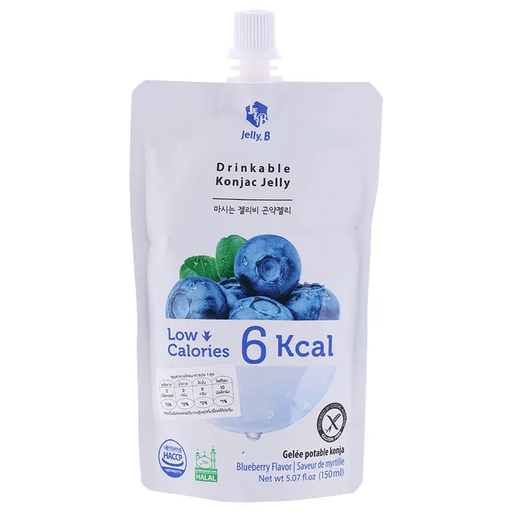
Why it suits this profile: A single 150 ml pouch is easy to manage if you are trying konjac jelly for the first time and are looking for a fresh berry flavour.
The nutritional information lists 10 kcal, 5 g of carbohydrates and 2 g of sugar, so you do not need to confuse “low-calorie” with sugar-free.
150 ml per pouch, blueberry flavour, Halal-certified according to the product information and made in Korea.
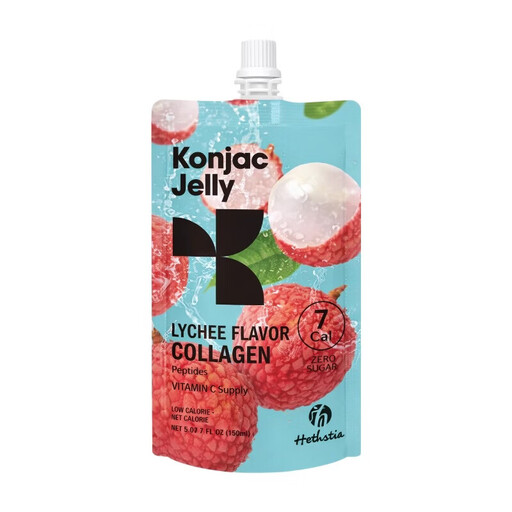
Why it suits this profile: This pouch is aimed at shoppers looking for very low energy content, a fruity flavour and dietary filters in one product.
The information lists 7 kcal, 0 g of sugar, 1 g of carbohydrates and no declared allergens per 100 g/ml; check this against the label on the product you receive.
155 g per pouch, lychee flavour, sugar-free according to the product information and suitable for enjoying on the go.
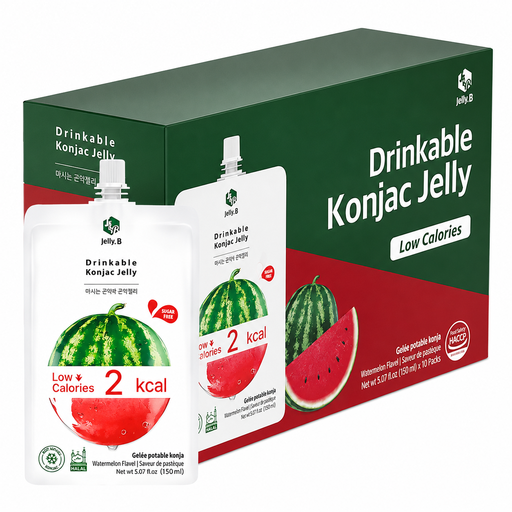
Why it suits this profile: A multipack of ten is handy if you regularly take jelly with you to work, school or when you are out and about.
The product information lists 0 g of sugar and 1.6 kcal per 100 g; the ten individual portions make the quantity clear in advance.
Ten 150 ml pouches, watermelon flavour and a recipe containing erythritol and sucralose.
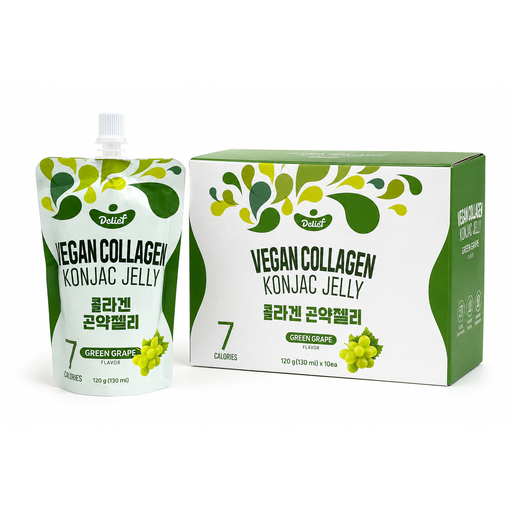
Why it suits this profile: This pack is designed for shoppers who want to keep several portions on hand and are specifically looking for a plant-based option with green grape flavour.
The stated nutritional value is 5 kcal and 0 g of sugar per 100 g. For a strict vegan diet, also check the current packaging and certification.
Ten 120 g pouches, green grape flavour and an ingredients list that includes plant-based collagen from carrot according to the product information.
We have put together a complete, up-to-date list of products that fully meet these strict selection criteria and the applicable European safety regulations.
That depends on the nutritional value and the definition of carbohydrates used in your diet. Some variants list 0 grams of sugar and very few carbohydrates, while other products do contain sugar. Always check the complete nutrition table and ingredients list. A product containing sweeteners is not automatically suitable for everyone.
Not always. According to the product information, many unopened pouches can be stored in a cool, dry place away from sunlight and heat. Chilling may make the flavour and texture more enjoyable. After opening, follow the instructions on the packaging; several Hethstia products require refrigeration and should be consumed within two days.
This varies by brand, flavour and size. The range includes examples from around 1.6 kcal to 10 kcal per 100 ml or 100 grams. So do not just look at the front of the packaging; check the portion size too. For example, a 150 ml pouch contains a different total amount from a 120-gram portion, even when the value per 100 ml appears similar.
