
Vandaag of morgen in huis

Kwaliteit gegarandeerd

Welkomstaanbiedingen ontgrendelen: GRATIS bezorging | Tot 80% korting | Gratis 30 dagen JoyPlus-proefperiode
Download de app
Konjac jelly is popular as a low-calorie snack, a fruit jelly in a pouch or an easy snack to take on the go. However, many varieties look alike, even though their ingredients, sweeteners and nutritional values can differ considerably. If you only look for terms such as “zero calorie”, “collagen” or “sugar-free”, you could end up buying a product that doesn’t fit your eating habits as well as you’d hoped.
A product labelled sugar-free jelly may still contain carbohydrates. For example, one blueberry-flavoured variety lists 6 grams of carbohydrates per pouch, including 1 gram of sugars and 4 grams of sugar alcohols. Other varieties list 1 gram of carbohydrates per 100 grams or millilitres.
So don’t just look at the front of the packaging. Always check:
Sugar alcohols can cause sensitivity in some people. If you’re looking for a keto snack, it’s best to check the full nutrition table rather than relying solely on the marketing claim.
Some products are collagen jelly or contain vitamin C. If so, check whether you eat a vegetarian or vegan diet. Collagen peptides aren’t vegan, although product information describes a blueberry-flavoured variety as vegan.
Claims about benefits should also be read with care. According to the manufacturer’s product information, the Hethstia range contains vitamin C. This alone says nothing about medical benefits or replacing a varied diet. A supplement or enriched snack is no substitute for regular meals.
A 150 or 155-gram pack may seem generous, but check whether the product is intended as one serving. Also check the storage instructions. Several varieties need to be refrigerated after opening and consumed within one or two days. This matters if you don’t finish a pouch in one go.
Take extra care with young children. Konjac jelly has an elastic texture. Always follow the instructions on the packaging, make sure children eat slowly and check the age and safety information for the specific product.
If you’re looking for a low-calorie snack, kcal per pouch and the pack size are more important than a standalone claim on the packaging. The range includes varieties with around 3, 4, 5 or 7 kcal per 100 grams, millilitres or serving, depending on the product.
Compare products on the same basis:
A low energy value can be useful when choosing a mindful snack, but it says nothing about how filling or nutritious the product is.
If you’re looking for a gluten-free snack, a vegan jelly snack or a sugar-free option, check the ingredients list and allergen information. Several Hethstia products list ingredients including water, fruit concentrate, erythritol, konjac flour, carrageenan and citric acid. The exact ingredients vary by flavour.
Pay particular attention to:
A pouch is handy for work, travel, walking or after a workout. Check whether the product is individually packaged and whether it needs to be refrigerated after opening. A stand-up pouch or portion pack can be convenient, but it isn’t automatically cheaper. Divide the price by the number of pouches, then compare the contents of each pouch.
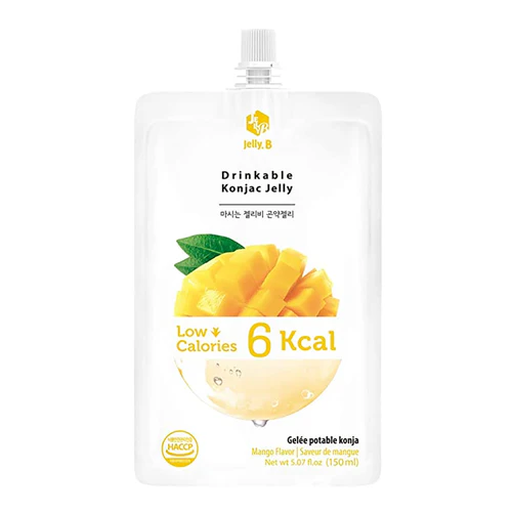
Why it suits this profile: An easy introduction to konjac jelly, with a familiar mango flavour and an individual 150 ml pouch.
The nutritional information lists 3 kcal per 100 ml and 0 grams of sugar per 100 ml, so you can assess the serving clearly.
150 ml per pouch, mango flavour, gluten-free according to the product information and ready to eat.
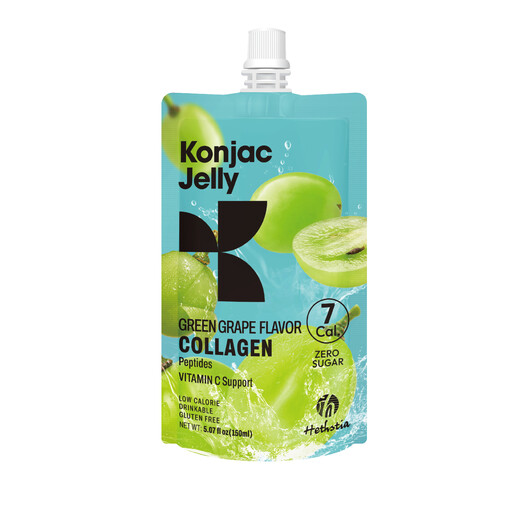
Why it suits this profile: For those who want a fruity flavour and are also interested in added ingredients such as collagen peptides and vitamin C.
The product information lists 7 kcal per serving, 0 grams of sugar per 100 grams and a clear ingredients list. Check that collagen fits your diet.
155 grams, green grape flavour, collagen peptides, vitamin C and an individual pouch.
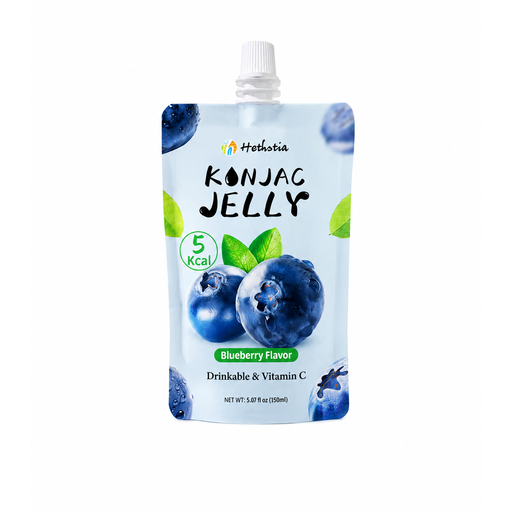
Why it suits this profile: A practical choice for work, travel, walks or a break after exercise, thanks to its individual pouch.
The nutritional values are listed per pouch: 5 kcal, 6 grams of carbohydrates, 1 gram of dietary fibre and 375 mg of vitamin C, according to the product information.
150 ml per pouch, blueberry flavour, vegan according to the product information, gluten-free and ready to enjoy.
We’ve put together a complete, up-to-date list of products that meet these strict selection criteria and the applicable European safety regulations.
That depends on the variety and serving size. The range includes products with around 3 to 7 kcal per 100 grams, millilitres or pouch. Always check the nutrition table, as the unit varies by product.
Yes. The individual pouches are ready to enjoy and fit easily into a bag. Do check the storage instructions, though. Some varieties need to be refrigerated after opening and consumed within one or two days.
No. Several products are labelled gluten-free, but always check the specific label. A product containing collagen peptides isn’t suitable for a vegan diet. In that case, choose a variety whose product information states that it’s vegan, such as the Hethstia Blueberry variety.
