
Vandaag of morgen in huis

Kwaliteit gegarandeerd

Welkomstaanbiedingen ontgrendelen: GRATIS bezorging | Tot 80% korting | Gratis 30 dagen JoyPlus-proefperiode
Download de app
Want to buy konjac jelly, but mainly seeing terms such as “light”, “sugar-free”, “vegan” and “low-carb”? Then comparing products based only on the front of the packaging can be risky. Differences in sugar, sweeteners, portion size, packaging and allergens are often listed only in the nutritional information or ingredients list.
Konjac jelly is a soft jelly snack made with konjac powder. You can find it in a konjac jelly pouch, as individual portions and in multipacks. Flavours range from grape and lychee to mango, watermelon and yoghurt. Below are the key points for consumers in the Netherlands.
A product may contain 0 grams of sugar according to the label, while still containing sweeteners or polyols. So do not just look at the line for “of which sugars”; also check the carbohydrates, sweeteners and portion size.
For example: Keumkang Jelly B Konjac Jelly Watermelon states that it contains 0 grams of carbohydrates and 0 grams of sugar per 100 grams. However, the ingredients list does include erythritol, sucralose and acesulfame-K. Other varieties, such as Japanese jelly snacks with fruit juice, have a higher carbohydrate content.
A konjac jelly multipack is convenient for work, school or when you are out and about, but compare the price per pouch or per 100 grams. A pack with six small portions may have a different total volume from a set containing ten 150 ml pouches.
Also check the difference between an individual pouch and a box that is shown only as outer packaging in the product photo. Some Hethstia varieties are sold as individual pouches.
“Peach”, “muscat” or “yoghurt” mainly refers to the flavour. Check how much fruit juice or concentrate has actually been added. For example, Keumkang Jelly B Yogurt lists a yoghurt base with milk powder and whey among its ingredients. This means it is not suitable for anyone who wants to eat exclusively vegan products.
Always compare products on the same basis. A label per 100 ml is useful for comparing flavours, while the total value per pouch gives a better indication of what you are actually consuming.
Examples from the range:
If you are looking for a low-calorie jelly snack, keto snack or sugar-free option, it is best to check the full table rather than relying only on the front of the packaging.
For vegans and vegetarians, the ingredients list is decisive. The product information for Konjac Jelly Green Grape (Vegan) 120 g states that it contains no allergens and describes the product as vegan. Always check the physical label when you receive the product, particularly if you are sensitive to certain additives.
If you are specifically looking for gluten-free jelly, look for an explicit statement. Jelly B Konjac Jelly Mango is described as “gluten-free” in the product information. Other products merely state that none of the fourteen main EU allergens are listed. This is not exactly the same as a general guarantee regarding possible cross-contamination.
A pouch is practical when you are out and about and can be squeezed directly. Check the storage instructions: several products need to be refrigerated after opening and used within two days. Store unopened jelly according to the instructions on the packaging, away from direct sunlight and heat.
Take extra care with young children and check the usage warnings and texture. Only give a jelly product according to the instructions on the label, and do not allow it to be eaten unsupervised.
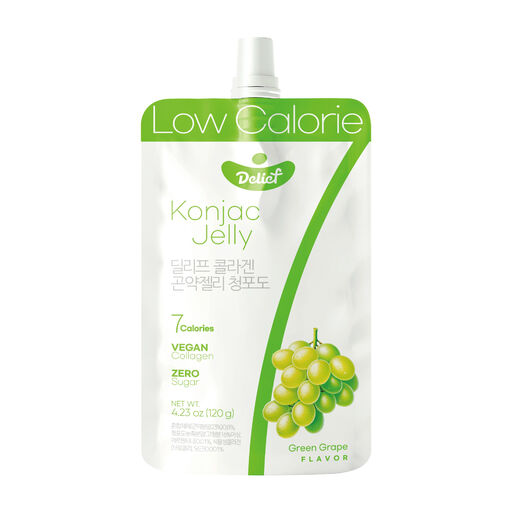
Why it suits this profile: A single portion with green grape flavour is ideal for trying konjac jelly for the first time without committing to a multipack. The product information states 5 kcal and 0 grams of sugar per 100 grams.
The product details show both the ingredients and the values per 100 grams. This allows you to check the sweeteners and nutritional values instead of relying solely on the “vegan” claim.
Vegan according to the product description, no declared allergens, green grape flavour and a content of 120 grams.

Why it suits this profile: This Korean konjac jelly is a good choice for anyone looking for a creamy yoghurt flavour and more detailed nutritional information. The product states 25 kcal, 5 grams of carbohydrates and 2 grams of sugar per 100 ml.
The table makes it clear that this is not a sugar-free variety: it contains 2 grams of sugar per 100 ml. This prevents the yoghurt flavour from automatically being seen as suitable for a diet.
150 ml per pouch, a yoghurt base with milk ingredients, plus calcium and vitamin C listed in the nutritional information.
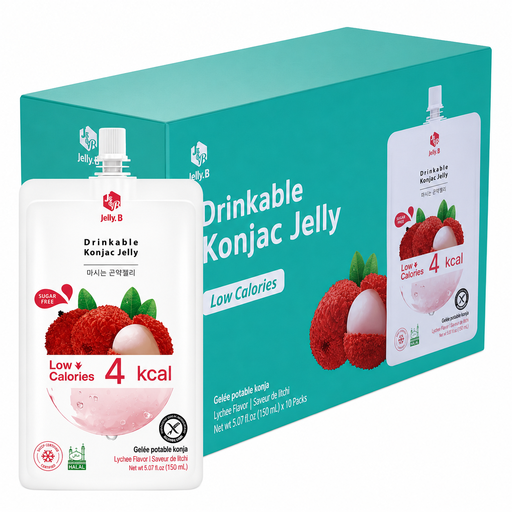
Why it suits this profile: A Korean multipack for anyone who regularly takes a pouch to the office, on the go or on a day trip. The lychee flavour is fruity and each portion is individually packaged.
The packaging clearly shows the number of portions: ten 150 ml pouches. The nutritional information states 3 kcal and 0 grams of sugar per 100 grams.
10 x 150 ml, individual pouches, 0 grams of sugar according to the product information and no allergens requiring special labelling.
We have put together a complete, up-to-date list of products that fully meet these strict selection criteria and the applicable European safety regulations.
No. Some varieties use erythritol and other sweeteners and state 0 grams of sugar. Japanese varieties containing fruit juice, fructose-glucose syrup or sugar may contain sugar. So always check the nutritional information and ingredients list.
That depends on the specific product and how you count carbohydrates. Varieties such as Jelly B Lychee and the watermelon variety state very low values per 100 grams. Other snacks contain several grams of carbohydrates per portion. Use the information on the current label as your starting point.
Store unopened pouches according to the packaging, usually somewhere cool and dry and away from direct sunlight. After opening, some varieties need to be refrigerated and consumed within two days. Also check the seal and best-before date before eating the snack.
