
Vandaag of morgen in huis

Kwaliteit gegarandeerd

Welkomstaanbiedingen ontgrendelen: GRATIS bezorging | Tot 80% korting | Gratis 30 dagen JoyPlus-proefperiode
Download de app
A konjac jelly might seem simple at first glance: a soft fruit jelly in a pouch, often low in calories. But products can vary considerably in their ingredients, sweeteners, portion sizes and nutritional values. If you only look for words such as “sugar-free”, “keto” or “with vitamin C”, you might end up with a snack that doesn’t fit your diet as well as you’d hoped.
This buying guide will help you compare a konjac snack, fruit jelly or spicy konjac snack in practical terms.
A sugar-free jelly may contain sweeteners such as erythritol, sucralose or acesulfame-K. So don’t just look for “sugar-free” on the front of the pack: check the full nutrition table. Pay particular attention to:
For example, Jelly B Konjac Jelly Mango 150 ml lists 0 grams of sugar and 0 grams of carbohydrates per 100 ml, while also listing 6.8 grams of erythritol. This gives it a different nutritional make-up from a traditional fruit jelly.
Always compare like with like. Some products list calories per pouch, while others give figures per 100 grams or 100 millilitres. For example, Hethstia varieties are described as containing around 7 kcal per pouch, while their nutritional values are given per 100 grams or millilitres.
A larger pack may therefore contain more calories than the front of the pack suggests. Also check whether the pack contains one serving or several individual pieces.
According to the Hethstia product description, some varieties contain collagen peptides and vitamin C. That alone doesn’t tell you anything about medical benefits. Consider these additions as part of the ingredients list, not as a substitute for a varied diet.
If you’re vegetarian, it’s also worth checking where the collagen comes from. Collagen is usually animal-derived. Check the allergens too, particularly for varieties containing milk or other added ingredients.
Konjac jelly usually contains water, konjac flour or konjac powder, and a gelling agent. Fruit concentrate, acidity regulators, preservatives, sweeteners and flavourings may also be added.
When comparing products, look out for:
Spicy konjac snacks call for a few extra checks. Be&Cheery Crispy Konjac Snack contains soya, sesame and ingredients containing wheat, among other things. According to the product information, per 100 grams it contains 685 kJ, 8.5 grams of fat, 12.5 grams of carbohydrates and 1.25 grams of salt. That’s a different nutritional profile from a sugar-free fruit jelly.
Konjac snacks come as crunchy, chewy pieces, soft jelly or individually wrapped portions. Choose based on how you plan to enjoy them:
Always follow the instructions on the packaging. Don’t swallow jelly in a hurry, and chew it well. Take extra care with young children, older people or anyone who has difficulty swallowing.
Unopened products should usually be stored in a cool, dry place, away from direct sunlight. According to the product information, Hethstia jelly should be refrigerated after opening and consumed within two days. Other products may need to be eaten straight after opening.
So check:
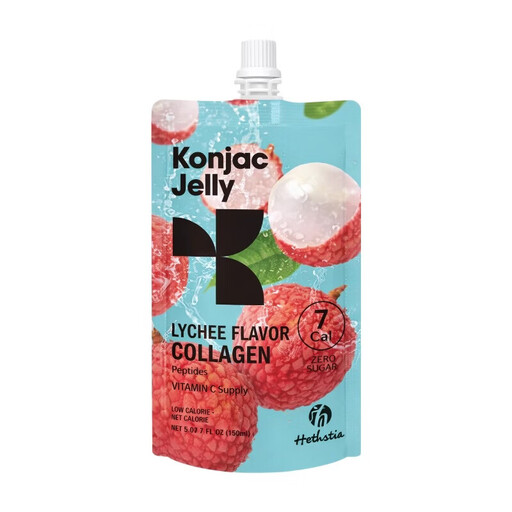
Why it suits this shopper: The gentle lychee flavour and individual squeeze pouch make this an easy introduction for anyone trying konjac jelly for the first time. According to the product information, one pouch contains 7 kcal and no sugar.
Calories and sugars are listed per pouch, making it easy to work out the portion size. Check the current packaging for the exact contents.
7 kcal per pouch according to the product information, fat-free, gluten-free and ready to eat.
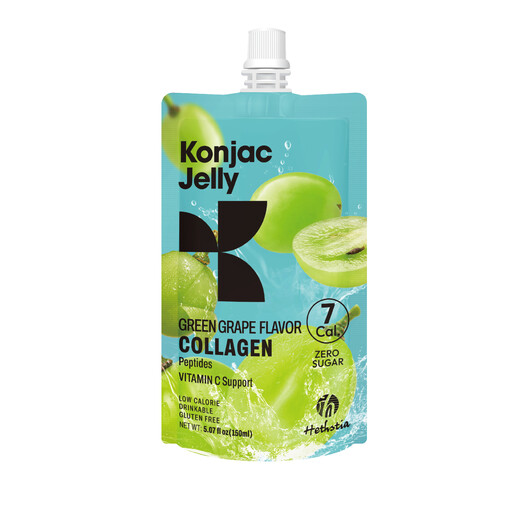
Why it suits this shopper: According to the product description, this variety combines a fruity green grape flavour with collagen peptides and vitamin C. The individual pouches are well suited to a regular snack routine.
The product information lists the ingredients and nutritional values separately. This lets you assess collagen and vitamin C as additions, without relying on health claims to make your purchase decision.
7 kcal per serving according to the product information, described as sugar-free and supplied in a handy pouch.
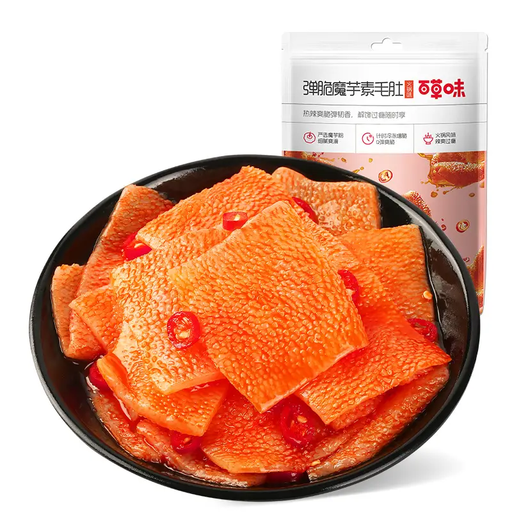
Why it suits this shopper: This savoury Sichuan-style snack is made for fans of spicy flavours and a springy, crunchy texture. The 120-gram pack is suitable for sharing or portioning out.
The nutritional values and allergens are clearly listed. This makes it clear that “low-calorie” doesn’t mean sugar-free or low in salt: 1.25 grams of salt is listed per 100 grams.
Spicy hotpot flavour, a konjac base and a chewy, crunchy texture; ideal if you prefer savoury snacks.
We’ve put together a full, up-to-date list of products that meet these strict selection criteria and current European safety requirements.
That depends on the full nutritional information. Some varieties are low in calories and contain no sugar, but always check the carbohydrates, sweeteners and portion size. The term “keto” in a product description is no substitute for checking the label.
For Hethstia products, the product information says to refrigerate after opening and consume within two days. Other products may have a shorter shelf life once opened. Always follow the instructions on the specific packaging.
No. Many konjac jellies are low in calories, but sauces, oil, sugar or sweeteners can change the nutritional profile. A savoury konjac snack, for example, may contain more salt or fat than a fruit jelly. So compare the nutritional values per 100 grams and per serving.
