
Vandaag of morgen in huis

Kwaliteit gegarandeerd

Welkomstaanbiedingen ontgrendelen: GRATIS bezorging | Tot 80% korting | Gratis 30 dagen JoyPlus-proefperiode
Download de app
Konjac jelly is popular with people who want to eat less sugar, are looking for a handy snack on the go or enjoy trying Japanese and Korean snacks. However, many pouches look similar, even though there can be significant differences in ingredients, nutritional values and portion size.
If you simply go by eye-catching packaging, you may come up against these common pitfalls:
Do not just compare the values per 100 grams or 100 millilitres. Also calculate the values for the entire pack. An individual konjac jelly pouch usually contains around 120 to 155 grams. As a result, a product with 5 kcal per 100 grams may have a different total value from a product with 7 kcal per pouch.
For a low-calorie snack, these points are particularly useful:
For example, Hethstia variants with lychee, apple, mango, peach and passion fruit generally state 0 grams of sugar and around 3 to 7 kcal per 100 grams or per pouch, depending on the product variant. Jelly B products with lychee, mango or watermelon also state very low energy values. The exact figures vary by flavour, so check the product page before ordering.
A sugar-free jelly can suit a more mindful snack choice, but “sugar-free” does not tell you everything about the recipe. Konjac jelly often contains a combination of konjac powder, carrageenan, other gelling agents, acidity regulators and sweeteners.
Pay attention to the following points:
Allergen information is more important than claims on the front of the pack. For example, Delief states that its products contain none of the listed allergens, but that they are made in a facility where milk, eggs, fish, shellfish, tree nuts and peanuts are also processed.
A konjac jelly pouch is handy for work, school, travelling or a walk. An individual pouch is ideal if you want to try a flavour first. A konjac jelly multipack is more practical if you regularly take a snack with you or want to share several flavours.
Also check:
For several Hethstia products, the guidance is to refrigerate after opening and consume within two days. The Hethstia Blueberry product information states a shorter period of one day after opening. Always follow the label for your particular variant. For a fresher texture, you can place the pouch in the fridge before eating.
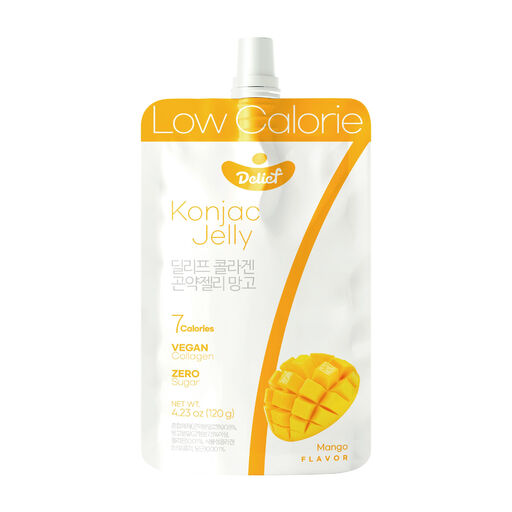
Why it suits this profile: A single 120 g pouch is an easy way to try konjac jelly without buying a multipack straight away. The mango flavour is ideal for fans of fruity snacks.
The product information states 4 kcal and 0 g of sugar per 100 g. The individual packaging also makes it clear what you are actually ordering.
Vegan recipe according to the product information, 120 g per pouch and a nutritional value of 4 kcal per 100 g.
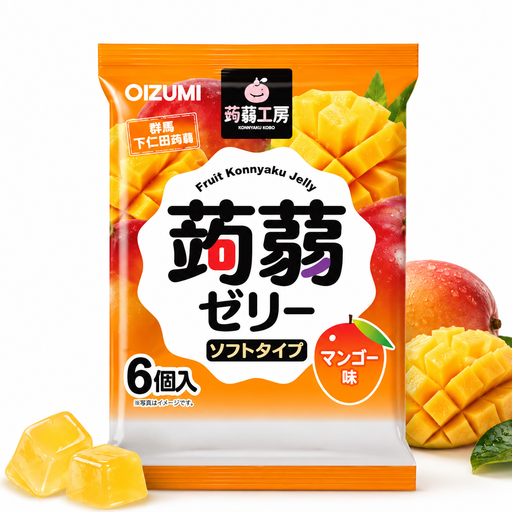
Why it suits this profile: This Japanese snack is aimed at shoppers who value provenance, traditional style and a full-on fruit experience.
The ingredients include sugar and glucose syrup, among other ingredients. This makes it clear that it is not a sugar-free or keto snack, despite its light jelly texture.
Japanese origin according to the product information, mango flavour and a net quantity of 106 g.
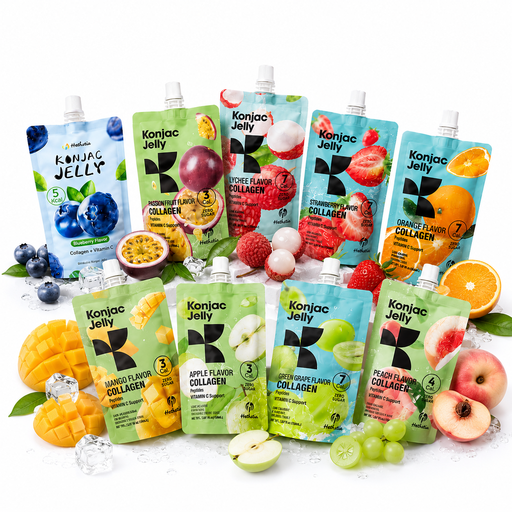
Why it suits this profile: With eight pouches, this multipack is practical if you often take a pouch with you, want to alternate between flavours or like to keep a supply at home.
The pack size is included in the product name: 8 × 155 g. You are therefore not buying a single pouch that only appears to be a multipack in the image.
Eight pouches, several flavours and a convenient size for regular use. According to the product information, the variants contain collagen peptides.
We have compiled a complete, up-to-date list of products that fully meet these strict selection criteria and the applicable European safety regulations.
That depends on the complete nutritional information and your personal keto goals. Some Hethstia and Jelly B variants state that they contain few carbohydrates and no sugar. Other products, such as Shimonita Mango, contain sugar and glucose syrup. Always check the values per pouch, rather than just looking at the front of the packaging.
Follow the storage instructions on the label. Several variants must be refrigerated after opening and consumed within one or two days. An unopened pouch should generally be stored in a cool, dry place away from direct sunlight. Do not use damaged packaging.
No. Many variants state that they contain no allergens, and some are explicitly vegan or gluten-free. Products containing collagen peptides are not automatically vegan. Also check the warning about production facilities where milk, eggs, fish, tree nuts or peanuts are processed. This will help you choose a gluten-free snack that better suits your own dietary choices.
